
Playluck Complaints and Player Feedback: How to Read the Evidence
 Available in GB
Public review and complaint pages contain a small number of historical Playluck reports involving withdrawals, account access and bonus-related disputes. Those reports can be useful reputation signals, but they do not prove how a current service performs. The UK-facing Trustpilot profile, for example, currently shows only four reviews and no reviews in the last 12 months. Treat each report as an anecdote with a date, evidence quality and resolution status, then cross-check formal issues against regulator records.
Table of Contents
- What the public feedback actually shows
- Why a complaint is not the same as a proven fact
- Withdrawal complaints need transaction-level context
- Bonus complaints should be compared with the terms in force at the time
- Separate operator-level enforcement from player anecdotes
- Historical versus current evidence matters more for Playluck than for an active review stream
- A practical complaint-quality test
- Star ratings are weak evidence when the sample is tiny
- Which Playluck complaint signals deserve the most weight
- How to assess player feedback
- Practical review points
- Information boundaries for readers
- Comparing feedback with confirmed details
- Playluck Payment Methods for UK Players
What the public feedback actually shows
The visible Playluck review footprint is thin. A current Trustpilot page shows four reviews in total, with examples dating from 2022 and 2025 and no reviews posted in the last 12 months. Several of those individual reports complain about withdrawals or account handling.
That is enough to say such complaint themes exist in historical public feedback. It is not enough to calculate a reliable current payout rate, support-quality score or probability that a new customer would have the same experience. A handful of self-selected reviews is not a controlled sample.
For the formal operator and domain record, use the Playluck licence and trust page. Regulatory evidence answers different questions from customer sentiment.
Why a complaint is not the same as a proven fact
A public complaint normally gives one side of a dispute. The reviewer may be accurate, partly accurate, missing context or wrong. Unless the operator responds with verifiable details or an independent dispute body publishes a finding, the report remains anecdotal.
This distinction is especially important for gambling complaints because withdrawal delays, verification requests and bonus disputes can have multiple causes. A player might describe a payment as “not paid” while the underlying issue is still under review; another report may document a genuine service failure. The headline alone does not tell you which.
| Signal | More useful when… | Discount when… |
|---|---|---|
| Date | The report is recent and clearly tied to the service being assessed | It predates major operator, terms or domain changes |
| Evidence | Dates, transaction references and correspondence are documented | The report is only a one-line accusation |
| Resolution | An outcome, operator response or mediator decision is visible | The case ends without enough information to judge |
| Pattern | Multiple independent reports describe the same narrow issue | One isolated complaint is treated as a systemic finding |
| Regulatory match | A formal regulator action supports a related control concern | Anecdotes are presented as if they were regulator findings |
Withdrawal complaints need transaction-level context
Historical Playluck reviews include complaints about withdrawals, but those posts do not establish a current withdrawal speed. To assess a payout complaint properly, you would want to know when the withdrawal was requested, whether account verification was complete, whether the payment method imposed processing stages, what the current terms said, and whether the operator gave a reason for delay.
None of that supports publishing a present-day Playluck payout time from anecdotes. The Playluck withdrawal guide deliberately avoids unsupported current limits, fees and processing times. That is a stronger approach than averaging old complaint stories into a made-up benchmark.
Bonus complaints should be compared with the terms in force at the time
Bonus disputes are particularly sensitive to dates because wagering requirements, game restrictions, maximum-bet rules and promotion eligibility can change. A complaint can only be judged fairly against the terms that applied when the offer was accepted.
Old Playluck material has described promotions that are not verified as current. That means a historical bonus complaint can illustrate the kinds of friction players experienced, but it should not be used to state today’s offer or today’s wagering rules. See the Playluck bonus guide for the distinction between legacy offer information and current UK bonus regulation.
Separate operator-level enforcement from player anecdotes
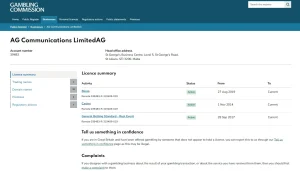
AG Communications Limited has a formal UKGC regulatory history: in March 2025 the Commission announced a £1,407,834 settlement after identifying anti-money-laundering and social-responsibility failings. That is regulator evidence and carries far more evidential weight than a star rating.
It would still be wrong to treat the settlement as proof that every Playluck complaint is true. The enforcement action addresses specific operator controls and periods. Individual disputes must still be evaluated on their own facts. The useful approach is cross-checking: if a complaint theme overlaps with an area where the regulator found control failures, note the connection without claiming they are the same incident.
Historical versus current evidence matters more for Playluck than for an active review stream
The UKGC domain register currently marks www.playluck.com as Inactive under AG Communications Limited. That status makes date separation essential. A 2022 review, a 2025 complaint and a present-day domain check describe different moments.
When a brand’s current operating status is unclear or changed, older reviews become a record of past customer experience rather than a direct forecast of current performance. The absence of recent reviews also should not be spun positively. “No recent complaints” and “no recent review activity” are not the same thing.
A practical complaint-quality test
- Check the date. Does the report relate to the same operational period you are evaluating?
- Identify the exact issue. Withdrawal delay, bonus terms, account restriction and verification are different claims.
- Look for evidence. Specific chronology and documented communication are more informative than insults or unsupported conclusions.
- Check the response. Did the operator or mediator explain the outcome? Was the complaint resolved, rejected or abandoned?
- Search for independent repetition. One report is a warning to investigate; a repeated narrow pattern deserves more weight.
- Cross-check formal sources. Licence status, sanctions and domain records should come from the regulator, not review sites.
Star ratings are weak evidence when the sample is tiny
A numerical rating looks precise, but precision is misleading when only a few people contributed. Four reviews can swing dramatically with one additional rating, and reviewers are not a random sample of all customers. People with unusually good or bad experiences may be more motivated to post.
For Playluck, the more useful information is the content and date of the reports, not the aggregate score. A reader should ask what happened, when it happened, whether the facts are documented and whether the issue was resolved.
Which Playluck complaint signals deserve the most weight
Give the most weight to recent, well-documented complaints that describe a specific issue, show a clear chronology and have an operator or mediator response. Give even more weight to formal regulator findings where they directly address the same control area.
Discount isolated accusations, old reports presented as current facts, star ratings built from a tiny sample and claims that turn one player’s experience into a universal rule. For Playluck specifically, the inactive domain record means historical complaints are best used as reputation context alongside the current licence and domain evidence, not as a proxy for present-day performance. The wider Playluck overview keeps those layers separate for the same reason.
How to assess player feedback
Player feedback can provide useful context, but individual comments should be viewed alongside verifiable information about an operator. Reviews may describe personal experiences, while account availability, licensing status and payment processes require separate confirmation.
For Playluck, feedback should be separated from confirmed operational facts. Historical opinions may show how users viewed the service at a particular time, but they do not automatically demonstrate the current status of registration, payments or support.
A balanced assessment considers recurring themes, the age of feedback and whether claims can be connected to reliable information. This approach helps avoid relying on isolated comments when evaluating an online gambling brand.
Practical review points
Additional evaluation should always start with confirmed information about the service itself. General industry practices can explain how a feature normally works, but they should not be presented as evidence that a specific Playluck function is currently active.
A careful review separates three areas: historical information, general UK gambling requirements and details that can only be confirmed through an active official platform. This structure makes it easier to understand what is known and what still requires verification.
Users looking at older casino brands often encounter descriptions that remain available after operational circumstances have changed. Checking the current status before relying on those details is therefore an important part of responsible research and decision-making.
Information boundaries for readers
Reliable information depends on keeping confirmed details separate from general explanations. A feature described by the wider gambling industry may explain a possible process, but it does not confirm that Playluck currently provides that feature.
This distinction is especially relevant for older brands, where historical pages can remain visible after changes to availability. Reviewing the current situation through trustworthy information helps avoid conclusions based only on archived descriptions.
Comparing feedback with confirmed details
Feedback can highlight common user concerns, but it should not replace direct information about account functions, payments or operator status. A review becomes more useful when comments are considered together with confirmed details.
For readers evaluating Playluck, the main task is understanding which parts describe past experiences and which parts reflect information that can be verified today. This approach keeps the assessment balanced and avoids treating individual opinions as definitive evidence.
Playluck Payment Methods for UK Players

Playluck Games: Slots, Providers and Casino Range
Playluck UK Guide Historical multi-source evidence supports a Playluck catalogue built around slots and live...
Is Playluck Legit? UKGC Licence, Operator and Current Brand Status
Playluck UK Guide The strongest current evidence is mixed but not contradictory once operator and...

Playluck Bonus in the UK: Historical Offers and 2026 Wagering Rules
Playluck UK Guide There is no verified current Playluck welcome offer to quote for UK...

Playluck Payment Methods for UK Players
Playluck UK Guide Historical Playluck sources support GBP and a cashier that included cards, bank...

Playluck Mobile Casino: Browser Experience and App Status
Playluck UK Guide Historical sources consistently describe Playluck as available through a mobile-optimised website. That...

Playluck Registration for UK Players: Account Setup and Checks
Playluck UK Guide There is no verified live Playluck registration route for UK readers today....