
Live Casino Lightning Roulette UK: How Play Works
 Available in GB

A physical wheel and dealer give live roulette a visible rhythm, while the interface presents the game without changing its rules.
How Live Roulette Changes the Pace of Play
A live roulette table has a human rhythm. A dealer spins a physical wheel, and the game unfolds around that action; computerized roulette instead relies on a Random Number Generator (RNG). The distinction is not merely a matter of appearance. One format places a person and a piece of equipment at the centre of play, while the other produces results through software.
That difference changes the tempo. Digital roulette can move quickly from one result to the next. Live play has the slower cadence of a table: the dealer’s actions take time, and each round has a visible beginning and end. For anyone considering Lightning Roulette in an online casino, the word “live” therefore describes more than a streamed image. It signals a different pace of play.
The contrast belongs to a longer history of gambling and machinery. A physical wheel makes chance visible: it is set in motion, the ball travels, and the result emerges in front of the table. An RNG removes that visible interval. It generates the result electronically, without a dealer turning a wheel. Neither format makes chance more knowable. The difference is in how the event is presented and how long it takes to arrive.
There is a social quality to the live format, even when the table is watched from a screen. The dealer’s presence gives the game a human centre; the wheel gives the round a physical one. Computerized roulette has no comparable pause for a person to act. It can feel more immediate because the software can move on without the small delays that belong to a live table. The machine is punctual. The table is not a machine.
That slower pace is a practical trade-off, not a flaw that can be edited away. Live games take longer than digital versions, so a session naturally contains more waiting between decisions. Some players may value the pause and the visible ritual; others may prefer the quicker sequence of a computerized game. The formats offer different experiences, rather than one being a simple replacement for the other.
Live Dream Catcher Casino UK: How It Works
The pace also matters when a game is played online. A live stream depends on a stable internet connection. If the connection falters, the picture or sound may become difficult to follow, and the live sequence can lose its continuity. Computerized roulette does not rely on a dealer’s studio feed in the same way. That makes the connection an essential part of the live experience, not a technical detail safely left outside it.
There is a financial difference to keep in view as well: live games have higher minimum bets than digital versions. This can shape the choice before a spin is even considered. A person comparing an online casino with Lightning Roulette against a computerized roulette game is not comparing only the wheel’s appearance. The format can affect both the amount required to take part and the time spent at the table. A more theatrical presentation does not make those conditions disappear.
Online play can make the live table feel close at hand, but the screen does not make it instantaneous. The stream carries the actions of a dealer and the movement of a physical wheel; it still needs time to show them. That is why the pace may feel unlike a game that advances as soon as the software is ready. In live roulette, waiting is part of the format.
A useful distinction, then, is between seeing a wheel and seeing a result generated by software. Live roulette gives the event a visible human and physical setting. Computerized roulette uses an RNG instead. The outcome remains uncertain in either case, but the route to it looks different and takes a different amount of time. The screen can bring a table into an online casino; it cannot make that table run at digital speed.
Live roulette is characterized by a slower pace of play, higher minimum bets compared to digital versions, and a reliance on a stable internet connection for the stream.
For a UK player weighing live casino options, Lightning Roulette belongs to the live category when it is presented with a dealer and physical wheel. The broader label does not erase the practical conditions shared by live games: a slower pace, higher minimum bets than digital versions, and reliance on a stable connection. Those are modest facts, but they are the ones that decide whether the format fits a particular evening.
The online setting has changed access to the table, not the nature of its tempo. A physical wheel still turns at its own pace, and a streamed game still depends on a connection that can carry the action clearly. The computerized alternative has no dealer to wait for and uses an RNG to produce results. One is a performance of chance; the other is a calculation made visible only through its result.
Different tempos, same uncertainty.
Lightning Roulette in the Live Casino
When considering live casino Lightning Roulette in the UK, payout timing is one practical detail to keep in view. The entries below provide that information for each listed operator.
1. SlotoSport
Payout speed: 1-3 business days SlotoSport lists a payout speed of 1–3 business days.
2. NightLuck
Payout speed: 1-3 business days NightLuck lists a payout speed of 1–3 business days.
3. Britsino
Payout speed: 1-3 business days Britsino lists a payout speed of 1–3 business days.
4. Dieselwin
Payout speed: 1-3 business days Dieselwin lists a payout speed of 1–3 business days.
5. SpinFormula
Payout speed: 1-3 business days SpinFormula lists a payout speed of 1–3 business days.
6. Revery Play
Payout speed: 1-3 business days Revery Play lists a payout speed of 1–3 business days.
7. Amunbet
Payout speed: 1-3 business days Amunbet lists a payout speed of 1–3 business days.
8. Jetsetspins
Payout speed: 1-3 business days Jetsetspins lists a payout speed of 1–3 business days.
9. x3bet
Payout speed: 1-3 business days x3bet lists a payout speed of 1–3 business days.
10. NightWin
Payout speed: 1-3 business days NightWin lists a payout speed of 1–3 business days.
The word “live” describes the setting as much as the screen. A live dealer game comes from a studio, where a human dealer conducts the session and a camera carries the action to players online. The picture is not an animation generated to resemble a table: it is a real-time broadcast. Bets, meanwhile, are entered through the casino’s on-screen interface.
That division gives the format its particular character. One part belongs to the studio: the dealer, the table and the event unfolding in front of the camera. Another belongs to the player’s device: the controls for making a selection and submitting a bet. The two are joined by a stream and an interface, not by a shared physical room. A player may watch a human-led game without being present at the table.
Lightning Roulette sits within this live-casino setting. Its name signals a particular roulette title, but it does not, by itself, explain every feature or condition of a session. Those details can depend on the game rules shown by the operator. What can be said of the live format is more basic: gameplay is streamed from a studio, and bets are placed through the digital controls displayed alongside it. The camera supplies the scene; the interface supplies the means to take part.
Online American Roulette in UK Casinos: Rules
A session therefore has two kinds of attention. The broadcast presents the dealer and the live table, while the interface presents the choices available for the current round. A player follows the footage and uses the controls to place a bet. The screen is not simply a window onto a studio, because it also has to organise decisions and transmit them to the game. Nor is it merely a computerised roulette display: the visible event is being conducted in real time by a person.
This arrangement has a quiet social dimension. A studio turns a solitary activity, often carried out on a phone or computer, into a performance with a human figure at its centre. The dealer makes the game legible as an event rather than a sequence of abstract prompts. Yet the room remains elsewhere, and the player’s participation remains mediated by a screen. The live casino borrows the theatre of a table without requiring the audience to occupy the same room.
That distinction matters when interpreting the phrase “live casino”. It does not mean that the player is physically seated beside the dealer, or that every aspect of the experience is handled by a person. The dealer conducts the game in the studio; the player interacts through an on-screen interface. The format combines a human-led broadcast with digital participation. Neither half makes the other disappear.
How live casino games work
A human dealer conducts the session in a studio, which is broadcast in real time via a stream. Players interact with the game and place their bets through a digital on-screen interface on their own device.
The same point applies when a title is described as Lightning Roulette in a live casino. The phrase identifies the kind of experience being sought, but the live label is not a complete set of rules. The studio stream explains how the game is presented; the rules and paytable explain what the bets mean. Keeping those things separate avoids treating a name or a camera angle as a substitute for the terms of play.
In the United Kingdom, live dealer casinos are legal when they hold a licence from the UK Gambling Commission. That requirement places the studio spectacle inside a regulated market rather than making “live” a special legal category of its own. The licence concerns the operator’s authority to offer gambling to customers in Britain; the stream concerns how a game is delivered. A polished broadcast is not, on its own, proof of regulatory status.
The live format also changes the emotional texture of a game. A dealer’s presence can make a digital session feel less like pressing through a menu and more like observing a table in motion. That impression comes from the real-time footage and the visible human role, not from a change in the player’s physical surroundings. The screen remains the meeting point: studio on one side, betting controls on the other.
There is a modest contradiction in the design. Live roulette is presented as a human encounter, but its participation is carefully organised by software: the stream arrives through a device, and the bet is sent through an interface. The dealer is real; the player’s route to the table is not a walk across a casino floor. It is a screen with a person on the far side.
French Roulette Online Casinos in the UK
That is the useful starting point for understanding Lightning Roulette in a live casino: a human-led studio broadcast paired with digital betting controls, under the rules displayed for that game and the licensing framework governing the operator. No more mystery than that.
What Makes a Casino Suitable for Live Roulette
A suitable Lightning Roulette casino in the UK is not simply one with a familiar name or a persuasive welcome banner. The first test is legal rather than theatrical: a remote operator offering gambling to customers in Great Britain must hold the relevant licence from the UK Gambling Commission. A current licence is a basic condition of lawful service, not a badge that settles every question about whether a particular live table will suit someone.
That distinction matters. Regulation establishes a framework for the operator; it does not make every game a good fit for every player. A sensible assessment separates the site’s legal status from the practical character of its live casino. One is a threshold. The other is a matter of pace, access and personal limits.
The live format asks for time. Unlike a digital game, a live table proceeds at a slower pace, and minimum bets are higher. Those features can make a session feel less hurried, but they can also make it less flexible for someone who wants quick rounds or very small stakes. A polished screen cannot alter the arithmetic of a table’s minimum. The terms displayed for the specific game are therefore more useful than a general claim that a casino offers “low stakes”.
Checking Casino Suitability
- Verify the operator holds a current UK Gambling Commission licence
- Check the specific live table’s stated minimum bet
- Confirm the internet connection is stable for streaming
- Review the table’s pace and terms to see if they fit your session
The connection is part of the experience, not a technical footnote. Live games need a stable internet connection; interruptions can break the continuity that gives a streamed table its appeal. A site may be legally sound and still be an awkward choice where the connection is unreliable. Practical suitability is often less glamorous than advertising suggests.
The format itself deserves a closer look before any deposit. The relevant question is not whether a casino calls its live area immersive, but whether the table’s pace and stated minimum fit the kind of session being considered. If a table’s terms are unclear, its suitability is unclear too. Names and promotional language cannot fill that gap.
A UK Gambling Commission licence should be checked against the operator serving the customer, rather than inferred from a logo or a broad statement about regulation. The regulator’s public register is the place to establish whether the business holds a licence. Legal online gambling in the UK is restricted to licensed and regulated sites; an offshore address does not replace the required UK licence. This is a condition of lawful operation, not a decorative credential.
There is also a difference between a casino being suitable in general and a particular table being suitable on a particular day. Minimum bets and game availability are table-level details, so they should be checked where the game is offered. No site-wide slogan can promise that every live table will match a preferred budget or remain available at every moment. The small print tends to be more candid than the banner.
Live Baccarat Online Casinos in the UK: How It Works
A useful assessment, then, is deliberately plain: establish the operator’s UKGC status, inspect the live table’s stated minimum, and consider whether a slower game supported by a stable connection fits the intended session. These checks do not predict a result or make roulette less uncertain. They establish whether the setting is lawful and workable before play begins.
This is entertainment, not gambling advice. A casino’s suitability is not measured by how confidently it sells the experience, but by whether its legal status and practical conditions are clear. The spectacle is optional. The licence is not.
The First-Person View: Interface, Not a New Set of Rules
“First person” suggests a view from inside the action: the table close at hand, the dealer in front of the camera, and the game unfolding in real time. In a live dealer roulette setting, however, the phrase is best understood as a description of how play is seen and entered, not as evidence of a separate set of rules. The stream shows a studio and a human dealer; bets are submitted through an on-screen interface. The player’s viewpoint is mediated by both.
That distinction matters when a game is described as first-person Lightning Roulette. The presentation may invite a more immediate impression than a conventional computer-generated display, but the screen does not place the player physically at the table. It presents a live view and a way to participate remotely. “First person” can name that sense of proximity without changing what the game is.
A first-person view is a description of the visual presentation and camera angle; it does not change the game rules, betting principles, or outcomes.
The interface has a practical, almost prosaic role. It is where the streamed event meets the player’s decision: the studio supplies the visual scene, while the screen provides the means to place a bet. Neither part should be mistaken for the other. A camera angle is not a rule, and an on-screen selection is not a new kind of roulette merely because it appears alongside live footage. The staging may shape the feeling of presence; it does not, by itself, redefine the game.
This is a familiar bargain in modern entertainment. A screen promises closeness while preserving distance. The dealer is visible, the table is presented as an unfolding event, yet participation still passes through an interface rather than through chips placed by hand. The arrangement is not a flaw; it is the structure of remote play. Its particular intimacy comes from watching a human-led game as it happens, not from being transported into the studio.
For anyone trying to play first-person Lightning Roulette, the useful question is therefore not whether the label guarantees a special mode. It is what the screen actually offers: a real-time studio stream and an interface for placing bets. A first-person view, if used to describe the presentation, concerns the player’s visual access and sense of involvement. It does not establish different outcomes, different betting principles, or a separate rulebook.
Live Blackjack at UK Online Casinos: How It Works
That point also guards against a small but persistent confusion between perspective and control. Seeing the action closely does not mean directing the dealer, and interacting with the interface does not make the streamed table a private simulation. The live event remains on one side of the screen; the player’s choices are entered on the other. The display joins them, but does not collapse the difference.
The phrase first-person Lightning Roulette casino game can sound like a technical category, as though it names a distinct version with its own mechanics. Without a clear description of what the format changes, it is safer to treat it as a presentation label. The meaningful distinction is between watching a live dealer through a stream and using a digital interface to take part. That distinction is plain enough, and more useful than an invented promise of immersion.
In the UK, the appeal of a live view rests on the visible human presence and the immediacy of a real-time feed. But a viewpoint remains a viewpoint. The rules belong to the game, not to the camera.
Choosing an Online Live Roulette Experience
An online live roulette session is shaped as much by the conditions around it as by the game itself. The screen brings a live table into a domestic setting, but it cannot make the table move at the speed of a digital game. Live games take longer to play, and their minimum bets are higher. Those differences affect the texture of a session: fewer decisions fit into the same stretch of time, while each decision may require a larger starting stake.
Attention: Live roulette games often have higher minimum stakes and a slower tempo than computerized RNG versions, which may affect your household budget and session timing.
That slower rhythm is not simply a technical drawback. It is part of what distinguishes a live table from a computerized version. There is more time between opportunities to bet, and the pace is set by the proceedings on screen rather than by a player clicking straight into another round. For some, that interval is the point; for others, it can make a session feel less immediate. The online format changes the room, not the tempo.
A stable internet connection matters for a more prosaic reason. A stream that falters can interrupt the view of a live game or make the timing of an on-screen bet uncertain. In a format where events unfold in real time, connection quality is part of the experience rather than a background convenience. A screen can bring the table close; it cannot make an unstable signal reliable.
The higher minimums also influence how online play fits into a household budget. A live table may not suit a small-stake session simply because its entry point is above that of a digital game. This is not a judgement on which format is better. It is a practical distinction, and one worth recognising before the screen becomes the setting for a longer session.
Online play can make a live game feel more private and informal than a public venue, though the underlying rhythm remains structured. The interface offers access from a personal device; the game still proceeds at its own pace. That contrast is characteristic of remote entertainment more broadly: convenience of location does not necessarily mean speed, flexibility or lower cost.
Crazy Time Live Casino Game Show in the UK
The phrase “best online Lightning Roulette casino” can suggest that the decisive difference lies in a single destination. For the experience itself, however, the more immediate questions are whether the connection can sustain a live stream and whether the table’s minimum fits the intended spend. No ranking can remove those constraints. A polished screen does not alter them.
There is also a social change in moving a table online. A live game arrives through a screen, in a space where other routines continue around it. That can make the session easier to fit into an evening, but it can also blur the boundary between play and everything else. The slower pace leaves intervals; what fills them depends on the setting. The format does not decide when a session should end.
Online live roulette is therefore neither a faster version of the table nor merely a digital game with a different picture. Its practical character comes from the combination of a slower rhythm, higher minimum bets and dependence on a steady connection. Those are not footnotes. They are the conditions under which the experience takes place.
This material is for entertainment purposes only, not gambling advice.
The Wheel, the Number and the Bet
Roulette reduces a complicated-looking table to a simple contest between a chosen number and the ball’s eventual resting place. The ball lands on a number; a player wins if that number was selected. Everything else on the table is a way of expressing a prediction about that outcome.
Roulette
A game where a player makes a selection (bet) before a ball is spun on a wheel, winning if the ball lands on the chosen number.
A bet is therefore not a claim about what ought to happen, or what happened in an earlier spin. It is a selection made before the result is known. Once the ball settles, the outcome can be read against that choice: a match wins; a non-match does not. The rule is spare enough to fit in a sentence, though the table around it can make the decision appear more elaborate.
That distinction matters in a Lightning Roulette casino game, too. The title may suggest a special spectacle, but the basic question at the heart of a roulette result remains: did the ball land on the number selected? The central mechanic is not a narrative about luck improving over time. A number that has appeared before does not become a promise, and one that has not appeared is not owed a turn. Each result is its own event.
There is a small cultural history in the neatness of the arrangement. A physical uncertainty is made legible by placing numbered choices in rows and boxes; a private hunch becomes a visible bet. The table turns chance into something that can be named and compared. It does not make chance obedient. The orderliness belongs to the layout, not to the result.
For anyone considering playing a Lightning Roulette casino game in the UK, the useful first distinction is between the bet and the outcome. A selection records what the player has chosen; it cannot influence where the ball lands. The winning condition remains exact, even when the surrounding presentation is more theatrical: the selected number must match the number on which the ball stops.
Hi-Lo Casino UK: Rules, Formats and Licensing
This is the simplest way to understand the game before considering its other features. Roulette does not ask the player to control the wheel or interpret a hidden signal. It asks for a selection, then supplies a result. The apparent drama lies in the interval between those two things. The rule itself is plain.
This content is for entertainment purposes only and is not gambling advice.
Demo Play and the Difference Between Practice and Stakes
A demo label can sound like a simple invitation to try a game before committing money. With roulette, however, the word does not by itself explain what is being shown. A practice version may be a computerized game, while live roulette is conducted with a dealer spinning a physical wheel. Those are different ways of producing a spin, even when the screen presents familiar roulette imagery.
Computerized roulette uses a Random Number Generator (RNG) to determine the result. A demo of that format, if offered, would let a player explore a digital version without making a real-money stake. It would not reproduce the physical process of a live table. The distinction is not cosmetic: the result in live play comes from a ball on a wheel, whereas a computerized game relies on its random-number system.
That matters when the aim is to try Lightning Roulette specifically. A search for a UK demo does not establish that a particular operator offers one, or that any version described as a demo follows the same format as its live game. Nor does the label explain whether the practice version includes the same features or conditions. These details need to be read on the game or operator page rather than inferred from the word “demo”.
Results achieved in a demo or practice version do not forecast future outcomes and cannot be used to predict a pattern of winning numbers in real-money play.
Practice should not be mistaken for a forecast. Outcomes in a demo do not tell a player what a later spin will produce, and a run of results is not a guide to future numbers. A practice screen can make the buttons and presentation less unfamiliar; it cannot turn chance into a pattern. The distinction is small on the screen, but important at the point where entertainment becomes staking.
There is also a plain difference between virtual credits and cash. A practice balance is not money that can be withdrawn, and demo play should not be presented as a way to win real payouts. If a game page uses promotional language, its terms determine what is actually being offered. A similar title or visual design is not proof that a free version mirrors every element of the live table.
For anyone comparing a practice game with live Lightning Roulette, the useful question is not merely whether both show a roulette wheel. It is whether the version is computerized or streamed from a physical game, and what the operator says about its use. That keeps the comparison grounded in format, rather than in the reassuring fiction that practice can reveal what comes next.
This material is for entertainment purposes only, not gambling advice.
A Human Dealer, a Physical Wheel
In a live dealer casino, roulette is not generated by a screen pretending to be a table. A human dealer spins a physical wheel, and the game is streamed in real time from a studio. Bets are placed through an on-screen interface, but the wheel itself remains a tangible object, turning under the dealer’s hand.
Monopoly Live Casino UK: Format and Gameplay
That distinction is easy to overlook when the table arrives through a phone or laptop. The camera narrows the room to a wheel, a dealer and the moments that matter to the game. The interface translates a player’s choices into on-screen bets; it does not make the wheel virtual. A computerized roulette game works differently: its outcome is produced by a Random Number Generator rather than a physical spin.
There is an old social arrangement concealed in this simple contrast. A dealer performs an action in view of an audience; the audience places wagers at a distance. The screen connects those roles without making them identical. One person handles the wheel, while players follow the stream and use the betting controls. It is theatre with a ledger attached.
For a UK audience looking at a Lightning Roulette live dealer casino, the useful distinction is between the game’s name and the format of its play. “Live dealer” describes the human and physical setting: a dealer, a wheel and a real-time stream. It does not, by itself, explain every rule or feature associated with a particular roulette title. The presence of a person on screen is not evidence that the underlying game has different roulette rules.
The dealer’s presence gives the broadcast a visible point of attention. The wheel supplies the physical event; the interface carries the player’s participation. Computerised roulette removes the human performance and physical wheel, replacing the spin with an RNG. Neither arrangement turns chance into certainty. One is presented as a witnessed act, the other as a calculation.
Live Dealer
Features a human dealer and a physical wheel in a studio, broadcast via a real-time stream.
Computerized Roulette
Relies on a Random Number Generator (RNG) to produce results electronically without a physical wheel.
A small difference, made visible.
Playing Online: Limits, Terms and a Set Budget
Playing Lightning Roulette online involves more than choosing a table and placing a stake. The terms attached to the game, any promotion and the account itself can shape what a session costs and whether a bonus is useful at all. Those details deserve attention before play begins, not after a balance has been committed.
Table rules and the paytable should be reviewed before joining. They explain how the table handles bets and what returns apply. A familiar game name is not a substitute for reading the rules displayed for that particular table; small print is still part of the game, even when it is not on the felt.
Bonuses call for separate scrutiny. The terms should state whether live casino play is eligible, how much it contributes towards wagering requirements, and what maximum bet applies while the offer is active. Live games can carry a low weighting: one stated example is 10%, meaning eligible play contributes only a small share towards the requirement. A bonus that looks generous in its headline may therefore be less useful at a live table. The calculation is in the terms, not the headline.
A specialist review reports that welcome offers it examined were free spins on slots and could not be used at live tables. That is a report about the offers covered by that review, not a rule for every UK casino or every promotion. The current terms remain decisive.
Before playing online in the UK, a set budget gives the session a boundary. It should be an amount that can be spent without affecting essential costs, and play should stop when that limit is reached. A win is not a reason to extend the session, and a loss is not an invitation to recover money by staking more. Limits matter most when they are inconvenient.
Deal or No Deal Casino UK: Game Format Explained
Payment choices also have a boundary: credit cards cannot be used for gambling in the UK. For a live table, the practical decision is not only whether the game is available, but whether its rules, promotional terms and stakes fit the planned budget. The copy is for entertainment purposes only, not gambling advice.
Roulette Variants and the House Edge
The green pockets are a small design choice with a large mathematical consequence. European Roulette has a single green zero; American Roulette has both zero and double zero. That extra pocket gives the American wheel more places for the ball to land without matching a numbered selection.
For a straight-up selection, the stated chance of winning is one in 37 on a European wheel and one in 38 on an American one. The difference is easy to miss on a screen, where both layouts can look like neat grids. Yet the extra pocket changes the odds behind every spin. The table’s appearance is not the whole calculation.
The house edge expresses the casino’s mathematical advantage over time. In roulette, a straight-up bet carries a stated house edge of 2.9%; other bets carry an edge of 2.7%. These figures describe the bet categories, not a promise about the result of any individual spin. A run of outcomes can look quite different from the long-run arithmetic. The arithmetic remains.
That distinction matters when a game is presented as an online Lightning Roulette casino game: the variant’s name does not, by itself, tell the player which wheel is in use or what the table’s rules say. The green-pocket count and the displayed paytable are the practical details to read, rather than assuming every roulette label means the same arrangement.
Roulette’s appeal has always rested partly on the visible simplicity of a wheel and a number. Its less visible feature is that a single additional pocket shifts the terms in the house’s favour. A modest alteration. A measurable one.
Live Tables
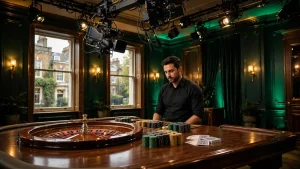
Live casino UK: how streams, licences and bets work
A guide to remote casino play, UK licensing, table decisions, bonuses and the limits that...

Crazy Time Live Casino Game Show in the UK
A guide to the live format, casino access, practice play, wagering terms and UK licensing...

Deal or No Deal Casino UK: Game Format Explained
A look at the Banker-offer decision, online play mechanics and which bonus or return details...
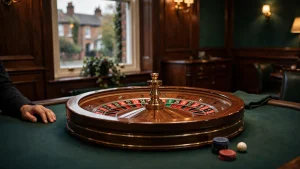
French Roulette Online Casinos in the UK
A practical guide to zero rules, table formats, bet payouts and bonus terms, with the...

Hi-Lo Casino UK: Rules, Formats and Licensing
Hi-Lo turns each exposed card into a higher-or-lower decision, with formats differing in ties, card...

Live Baccarat Online Casinos in the UK: How It Works
Live baccarat combines a human dealer and a video stream with online betting, while table...

Live Blackjack at UK Online Casinos: How It Works
Live blackjack streams a human dealer in real time, bringing physical cards, table chat and...

Live Dream Catcher Casino UK: How It Works
A camera shows a human dealer in a studio while an interface records bets, but...
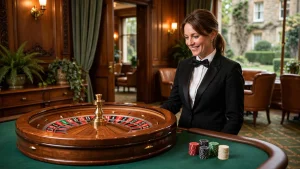
Live Roulette UK with English-Speaking Dealers
A practical guide to physical wheels, table layouts, live-game costs and the limits of roulette...

Monopoly Live Casino UK: Format and Gameplay
Live casino play combines a studio stream, a human dealer and an on-screen interface for...
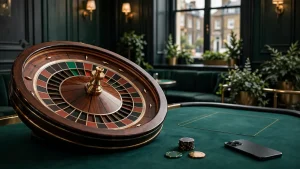
Online American Roulette in UK Casinos: Rules
American roulette adds a 00 pocket to the familiar wheel, affecting the outcomes behind every...

European Roulette at UK Online Casinos: Rules and Odds
Explore how the single-zero wheel affects risk, how online and live play differ, and what...