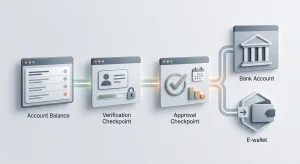
Playluck Payment Methods for UK Players
 Available in GB
Historical Playluck sources support GBP and a cashier that included cards, bank transfer and major e-wallets. Those method lists should be treated as historical until a current UK-facing cashier confirms them. One present-day rule is clear: a UK-licensed online casino cannot accept credit-card payments for gambling, including credit-card-funded payments routed through an e-wallet.
That means a current Playluck payment check should focus on debit-card, bank-transfer and eligible e-wallet routes actually shown to the player, then verify deposits and withdrawals separately. Do not assume that a method available for depositing can also receive a withdrawal, and do not rely on old fee, minimum-deposit or processing-time figures.
Table of Contents
- What historical Playluck payment evidence supports
- The UK credit-card ban is the first filter
- Debit card: familiar, but still verify the live cashier
- Bank transfer can be useful when method continuity matters
- E-wallets are a separate category, not a single method
- Deposit and withdrawal availability must be checked separately
- Do not copy historical minimum deposits into a current comparison
- GBP support reduces one layer of payment friction
- Payment checks should happen after account details are correct
- A current cashier checklist for Playluck
- How payment evidence affects the wider trust assessment
- Which Playluck payment route makes the most sense for a UK player
- Playluck Payment Methods for UK Players
What historical Playluck payment evidence supports
Historical sources support two durable points: Playluck supported pound sterling, and its UK payment coverage included cards, bank transfer and several e-wallet options. Those details describe the historical product and do not guarantee that every method is present in a current cashier.
The Playluck UK review separates that historical product evidence from current operator-status checks. Payment menus are highly account-specific. Availability can vary by country, verification status, payment provider and whether a method is enabled for deposits, withdrawals or both. For that reason, the live cashier is the right source for today’s method list, while historical evidence is best used to understand the categories Playluck previously supported.
| Payment category | Historical Playluck evidence | Current UK check |
|---|---|---|
| Cards | Cards were historically supported. | Confirm debit-card availability. Credit cards cannot be accepted for gambling by a UK-licensed operator. |
| Bank transfer | Historically present as a payment category. | Check whether it appears for deposits, withdrawals or both. |
| E-wallets | Several major e-wallets were historically supported. | Check the current list and ensure the wallet is not funded by a credit card for gambling use. |
| Currency | GBP support is historically verified. | Confirm the account and cashier still display GBP before transacting. |
The UK credit-card ban is the first filter
The Gambling Commission’s Licence Condition 6.1.2 requires remote gambling licensees not to accept payment for gambling by credit card. The rule also covers payments made through a money service business, which is why an e-wallet cannot be used as a route for credit-card-funded gambling.
The practical effect is simple: an old Playluck payment list that says “cards” cannot be read today as evidence that both debit and credit cards are acceptable. For a UK-facing cashier, the relevant card question is whether an eligible debit card is supported. The Commission’s current credit-card licence condition states that licensees must not accept credit-card payment for gambling.
Debit card: familiar, but still verify the live cashier
For many UK players, a debit card is the most straightforward conceptual alternative to a credit card because the transaction draws on available account funds rather than revolving credit. Historical Playluck evidence supports card payments as a category, but it does not establish which debit-card brands or issuing banks are currently accepted.
A current check should confirm the card type shown in the cashier, whether the account name must match the casino account, whether the card can receive withdrawals and whether any verification step is triggered. Those details should come from the live cashier and terms rather than from a legacy review.
Bank transfer can be useful when method continuity matters
Bank transfer is part of the historical Playluck payment evidence. Its practical appeal is that it can provide a direct bank-to-operator route without depending on a wallet account. The trade-off is that bank-based payments can follow different processing stages from card or wallet transactions.
Current Playluck transfer fees, minimums and processing times require fresh cashier evidence. Compare whether bank transfer is currently offered, which direction it supports and what timing the cashier states at the moment of use.
E-wallets are a separate category, not a single method
Historical Playluck evidence includes major e-wallets, and UK gambling payment guidance commonly discusses services such as PayPal and Skrill. A wallet can make deposits or withdrawals convenient, but availability is operator-specific and can change. The presence of one wallet should not be used to infer that another is supported.
Funding source is also important. The Gambling Commission’s player guidance explains that gambling businesses accepting e-wallet payments must ensure that the money was not loaded from a credit card. So the current check has two layers: whether the casino supports the wallet, and whether the wallet balance is eligible for gambling under the credit-card ban.
Deposit and withdrawal availability must be checked separately
One of the most common payment-page errors is to copy a deposit list and present it as a withdrawal list. Operators can support a method in one direction but not the other, and withdrawal routing may depend on previous deposits, identity checks or payment-provider restrictions.
For Playluck, historical method coverage is useful background but not enough to prove current withdrawal support. The dedicated Playluck withdrawal guide handles payout timing and verification issues separately. On the payment page, the safer rule is to record method direction exactly as the cashier displays it.
| Cashier check | Deposit question | Withdrawal question |
|---|---|---|
| Method shown | Can funds be added with this method? | Can winnings be returned through this method? |
| Currency | Is GBP accepted without conversion? | Will the payout arrive in GBP or involve provider conversion? |
| Limits | What current minimum and maximum are displayed? | What current payout limits are displayed? |
| Verification | Does the method trigger any account check? | Is additional KYC required before payout? |
Do not copy historical minimum deposits into a current comparison
Minimum-deposit figures are particularly easy to make stale. A value can change by method, promotion, currency or account status. Historical Playluck evidence does not establish a single current minimum, so any present amount should come from the live cashier.
If a current cashier is available, record the minimum shown next to each method. If the cashier only reveals values after login, that limitation should be noted rather than filled with a number from an old review. The same principle applies to fees and maximums: current account-facing evidence beats an archived list.
GBP support reduces one layer of payment friction
Historical sources support GBP as a Playluck account currency. For a UK player, using the same currency as the funding account can make deposits and withdrawals easier to understand because there is less need to interpret operator-side conversion. That does not guarantee that a bank or wallet will never apply its own charges, so external provider terms still matter.
A fresh cashier check should verify that GBP remains selectable or displayed for the account. If a current interface offered only another currency, that would change the cost comparison and should be recorded before depositing.
Payment checks should happen after account details are correct
Payment friction often begins before the cashier. A player using inconsistent personal details can create avoidable verification problems later, especially when withdrawing. The Playluck registration guide explains the account-side checks that should be completed before a payment method is treated as settled.
The practical rule is to keep the casino account, funding source and identity information aligned. That is not a promise that verification will be instant; it simply reduces obvious mismatches that can complicate a payout review.
A current cashier checklist for Playluck
- Confirm GBP. Check the account currency before depositing.
- Ignore credit cards. They are not a permitted gambling payment route for UK-licensed online gambling.
- Record each visible method. Do not infer support from a logo seen in an old review.
- Separate directions. Mark whether each method supports deposits, withdrawals or both.
- Read method-specific limits. Capture the current minimum and maximum rather than assuming one site-wide figure.
- Check fees where displayed. Distinguish operator fees from any fee charged by the bank or wallet.
- Check verification triggers. A payment route can interact with KYC even when the deposit itself is immediate.
- Save the withdrawal question for the payout page. Processing times and payout mechanics belong in a dedicated check, not a copied deposit table.
How payment evidence affects the wider trust assessment
Payment methods are not a shortcut to judging whether a casino is licensed or trustworthy. A familiar debit card or wallet logo can show that a payment rail is available, but it does not replace a regulator check, operator identity check or review of withdrawal terms.
For the regulatory side, use the Playluck licence and trust guide. Keeping the evidence streams separate avoids two opposite mistakes: treating a payment method as proof of regulatory status, or treating a licensing question as proof that every cashier method is unavailable.
Which Playluck payment route makes the most sense for a UK player
There is no single best route without a current cashier. Historical Playluck evidence supports GBP, cards, bank transfer and major e-wallets, but today’s comparison should begin with methods actually visible to the UK account. Credit cards can be ruled out immediately under current Gambling Commission rules.
Among the remaining routes, compare four things: whether the method is available for deposits, whether it can receive withdrawals, what limits or fees are shown now, and whether the funding source is in the same name as the casino account. That produces a more reliable choice than relying on an old list of logos. Once a deposit route is understood, move to the withdrawal guide for the separate payout decision.