
Curacao Casino Licence in the UK: What It Means
 Available in GB

A Curaçao licence identifies a jurisdiction, but does not establish UK regulation, customer access or the protections available.
What “Curacao Casino” Means for UK Players
“Curacao casino” describes a casino by the jurisdiction associated with its licence. It does not, by itself, describe where the operator is based, which countries it accepts customers from, or whether it is regulated in Great Britain. Those are separate questions, though casino advertising often compresses them into one neat label.
A Curacao online casino is generally understood to be an online gambling site licensed in Curaçao. The same shorthand appears in phrases such as “Curacao casino online” or “online casino licensed in Curacao”. The wording points to a licensing jurisdiction, not to a special kind of casino game or a distinct category of British regulation. In practice, non-UK-regulated casinos may be licensed in several places, including Malta, Curaçao, Gibraltar or Anjouan.
The distinction matters because a licence issued in one jurisdiction is not a UK Gambling Commission licence. A casino does not become UKGC-regulated simply because its website is available in English, displays prices in pounds or uses familiar payment options. Nor does a Curaçao connection tell, on its own, whether an operator is serving customers in Great Britain under the rules that apply there.
When researching Curaçao-licensed casinos from the UK in 2026, check the licensing and access terms carefully, as suitability can depend on your circumstances. This list offers a brief reference point based on the information available for each operator.
1. SlotoSport
Payout speed: 1-3 business days SlotoSport lists a payout speed of 1–3 business days.
2. NightLuck
Payout speed: 1-3 business days NightLuck lists a payout speed of 1–3 business days.
3. Britsino
Payout speed: 1-3 business days Britsino lists a payout speed of 1–3 business days.
4. Dieselwin
Payout speed: 1-3 business days Dieselwin lists a payout speed of 1–3 business days.
5. SpinFormula
Payout speed: 1-3 business days SpinFormula lists a payout speed of 1–3 business days.
6. Revery Play
Payout speed: 1-3 business days Revery Play lists a payout speed of 1–3 business days.
7. Amunbet
Payout speed: 1-3 business days Amunbet lists a payout speed of 1–3 business days.
8. Jetsetspins
Payout speed: 1-3 business days Jetsetspins lists a payout speed of 1–3 business days.
9. x3bet
Payout speed: 1-3 business days x3bet lists a payout speed of 1–3 business days.
10. NightWin
Payout speed: 1-3 business days NightWin lists a payout speed of 1–3 business days.
The market and the regulator are different coordinates. A company might be based in one place, hold a licence associated with another, and seek customers in a third. The country named beside a licence is therefore not a substitute for knowing which market the operator serves. A label can tell part of the story. Only part.
That distinction is especially important in Britain, where the relevant question is not merely where a casino was licensed or where its offices sit. Operators serving customers in Great Britain require a licence from the UK Gambling Commission, regardless of their base of operation. A foreign licence does not replace that requirement. The foreign jurisdiction and the British market each have their own regulatory significance.
This is why “Curacao casinos online” and “Curacao online casinos UK” can sound like descriptions of one settled category while actually combining two different ideas. One refers to the licensing jurisdiction; the other suggests a connection to British customers. The first does not establish the second, and neither phrase proves that a particular operator holds the authorisation needed to serve Great Britain.
The same caution applies to the phrase “best Curacao online casinos”. “Best” is an assessment, not a licensing status, and the Curaçao label alone cannot establish how a casino is regulated in Britain. A polished site, localised presentation or prominent licence reference may create an impression of familiarity, but familiarity is not regulatory oversight. These are different kinds of evidence.
Casino Licensing & Safety for UK Players
The phrase “non-UK-regulated casino” is useful because it makes the regulatory distinction explicit. Such a site operates without oversight from the UK Gambling Commission. That description does not depend on whether its licence is linked to Curaçao or another jurisdiction; it describes its relationship to British regulation. Conversely, the operator’s physical location does not decide the issue: a company’s base abroad does not exempt it from the UKGC requirement if it serves customers in Great Britain.
This is not a technicality invented for paperwork. Regulation is organised around who authorises an operator and which market the operator serves. A licence has meaning within the system that issued it; it does not travel automatically across borders as a universal permission slip. The distinction can be obscured when a website presents a foreign licence as its main badge of legitimacy, but the badge answers only the question of its stated licensing jurisdiction.
For British readers, then, “Curacao casino” is best treated as a geographical and licensing description, not as a synonym for “UK-licensed casino”. It may identify a site’s claimed regulatory home, but it does not establish UKGC oversight. The question of authorisation in Great Britain remains separate from the place named in the label.
A label is not a passport.
Outside GamStop, Outside Its Safety Net
GamStop is a self-exclusion scheme for online gambling. Its purpose is specific: a person who registers asks participating gambling businesses to prevent them from using their accounts. That boundary matters. A Curacao casino not signed up to GamStop is outside the scheme, so a GamStop registration does not extend its reach to that site.
GamStop Reach
A registration with GamStop does not extend to casinos that are not signed up to the scheme, meaning the exclusion does not prevent access to such sites.
The phrase “not on GamStop” can sound like a technical setting, as if a casino had simply switched off a feature. In practice, the distinction is institutional. A site outside the scheme does not participate in the shared arrangement through which a self-exclusion request is applied. Calling such a casino “exempt” may therefore give the wrong impression: it suggests a recognised exception within GamStop, rather than a service beyond its coverage.
This is why searches for Curacao casinos not on GamStop UK often gather together two different matters: a casino’s licensing jurisdiction and whether it participates in the UK self-exclusion system. The first concerns where the operator claims to be licensed; the second concerns whether GamStop’s exclusion applies there. A Curacao label does not itself establish participation, and the scheme does not cover casinos that are outside it.
Self-exclusion is meant to create distance at a moment when distance may be difficult to maintain alone. Within the scheme’s reach, it is not merely a personal promise or a reminder on a screen: it is an instruction shared with participating operators. Outside that reach, the same instruction cannot be assumed to travel. A person may have excluded themselves through GamStop and still find that the exclusion does not prevent access to a non-participating casino.
That is the practical limit, not a flaw in the meaning of the word “self-exclusion”. No single arrangement can bind businesses that are not part of it. But the consequence is important: someone relying on GamStop as a barrier should not treat a Curacao online casino without GamStop as another door already locked by the same mechanism. It is not.
Casino Without a Swedish Licence: UK Player Guide
What the boundary leaves behind
The boundary also changes what support is built into the gambling relationship. When gambling at an offshore casino, players lose access to the UK’s Financial Ombudsman Service and to responsible-gambling tools that UK-regulated operators are required to provide. Those protections are not interchangeable with a self-exclusion registration, but they form part of the surrounding safety net. Outside it, the ordinary routes and required tools cannot simply be presumed.
This is less dramatic than a casino banner promising a bonus, and more consequential. A promotion may occupy the most visible space on a site; the limits of an exclusion scheme are quieter, often noticed only when someone assumes that registration has done more than it can. A welcome offer, or a no-deposit offer, does not change whether the casino participates in GamStop. Nor do payment methods: the way money reaches an account has no bearing on whether a self-exclusion request is recognised there.
The same caution applies to language used to describe these sites. “Curacao casinos outside GamStop” is a useful shorthand, but it should not be read as a category with one shared set of safeguards. The defining point here is simply non-participation in GamStop. It does not mean a casino has been individually assessed for suitability, and it does not make the scheme’s protections follow the player beyond its scope.
For someone who has chosen self-exclusion, this distinction is not abstract. The exclusion may be a carefully chosen barrier, perhaps established after repeated attempts to control gambling through willpower alone. A site beyond GamStop does not become covered merely because the same person visits it, or because its pages are accessible. The scheme cannot provide a block where the operator is not part of its arrangement.
GamStop is a self-exclusion service, not a gambling regulator or a licensing authority.
The phrase “Curacao casinos not regulated by GamStop” is also imprecise. GamStop is not a gambling regulator; it is a self-exclusion service. A casino is either within the scheme’s participation or it is not. That difference matters because describing a site as “unregulated by GamStop” can make a voluntary, shared exclusion system sound like a licensing authority. It is neither a licence nor a general safety certification.
The sober reading is narrower. GamStop can support self-exclusion across participating businesses. It cannot guarantee that every gambling site will be covered, and it should not be treated as a universal barrier to gambling. Where a casino sits outside the scheme, the protection stops at the boundary. A boundary, not a lock.
The Licence Question Behind the Curacao Label
A Curacao casino licence answers a question about the operator’s regulatory home. It does not, by itself, answer whether that operator is authorised to offer gambling to customers in Great Britain. Those are separate questions, even when a website presents its overseas credentials as a single reassuring badge.
For operators, the British rule is directed at the market they serve, not the address on their letterhead. An operator offering gambling services to customers in Great Britain needs a licence from the UK Gambling Commission, whether its business is based in Britain or abroad. A licence issued in Curacao does not replace that requirement. The same distinction applies to other overseas licences: a foreign regulator’s permission and the UKGC’s permission are not interchangeable.
Merkur Casino Online in the UK: Games and Rules
That is the answer behind the phrase “Curacao casino license UK 2026”. A Curacao licence may describe the jurisdiction under which a casino claims to operate; it does not grant authority to serve the British market. The operator’s location cannot make the market-facing obligation disappear. Nor does the word “licensed”, standing alone, settle which regulator is responsible for an operator’s activity.
The Gambling Act 2005 places its focus on businesses supplying gambling services into the UK market. Its target is the operator’s conduct, rather than the mere act of an individual placing a bet on a site licensed abroad. British citizens are not expressly barred by UK law from using gambling services authorised in another country, and a player who uses a site lacking a UK licence does not thereby commit a criminal offence.
This distinction can sound like a technicality. It is not. It separates the legal position of a company choosing to serve customers in Great Britain from that of a person using its service. The company’s overseas base does not remove the UKGC licensing requirement if it serves that market; meanwhile, the absence of that licence does not turn the customer’s act into a criminal offence. Two different actors, two different legal questions.
The gap between them is easy to blur in casino advertising. A site may use “licensed” to mean that it claims approval in its home jurisdiction, while a British reader may reasonably hear the word as a signal that the site is regulated for Britain. The legal meaning depends on which authority issued the licence and what market the operator is serving. The Curacao label alone cannot establish UKGC oversight.
Do
- Understand that the licensing burden lies with the operator
- Distinguish between accessibility and authorisation
Don’t
- Assume a foreign licence equals British permission
- Mistake a website loading on a UK device for UKGC regulation
This is why “Curacao casinos UK” is not a single legal category. The phrase can refer to casinos licensed in Curacao that are accessible to people in Britain, but accessibility and authorisation are not synonyms. A website opening on a British device does not prove that its operator holds the licence required to serve Great Britain. Equally, a casino’s foreign licence does not make the player criminally liable for using it under UK law.
The UK’s framework assigns the licensing burden to the operator. That is the central point: overseas permission does not become British permission through geography, branding or a prominent seal on a webpage. The player’s legal position is different, but the operator’s obligation remains. A small distinction with large consequences.
How to Read a Casino’s Licence Claims
A licence badge in a website footer can look conclusive. It is not. It may tell something about the jurisdiction an operator says it is licensed in, but it does not turn the site into a UK Gambling Commission-regulated casino. Non-UK-regulated casinos operate without the Commission’s oversight; operators may instead be licensed in places such as Curacao, Malta, Gibraltar or Anjouan.
The distinction is easy to blur because “licensed” sounds like a complete description. It is only the beginning of one. A claim about an overseas licence identifies a regulator or jurisdiction the operator associates with its business. It does not, by itself, establish that the operator is regulated in Britain, or that every page using the same branding belongs to the same company.
Safe Online Casinos in the UK: Player Protections
The company behind the name
The name displayed above the games may be a brand rather than the legal entity running the gambling service. The terms and conditions are therefore more revealing than a logo: they should identify the company responsible for the account and state which jurisdiction it says governs the service. If the footer names one entity and the terms name another, the difference matters. A familiar brand name cannot resolve it.
This is not a technicality invented for paperwork. A player enters a relationship with an operator, not with a colour scheme or a slogan. If a dispute arises, the company named in the account terms is the one whose rules are relevant. A vague reference to a “Curacao licence” does not answer who is responsible, or which legal entity is making the claim.
Nor should “Curacao licensed” be read as a synonym for “approved for Britain”. The label concerns a claimed overseas licensing jurisdiction. UK regulation is a separate status. That separation is the central detail that a badge can hide in plain sight.
Lists and reviews
A Curacao casino list can be useful as a starting point for research, but a list is not a regulator’s decision. Entries may repeat branding without clarifying which company operates the site or what jurisdiction its terms specify. A directory’s inclusion, just like a casino’s own claim, is not proof of UK regulation.
Curacao casino reviews have a similar limitation. They may describe the games, payments or customer service, but favourable impressions do not establish the operator’s regulatory status. Nor does the presence of a Curacao slot or a payment option such as Paysafecard settle the question. Those are features of a product or service, not evidence that the casino is overseen by the UK Gambling Commission.
Attention: A licence badge in a footer identifies a claimed jurisdiction but does not prove the operator is regulated by the UK Gambling Commission.
The useful habit is to read claims narrowly. A named foreign jurisdiction is a claim about an overseas licensing arrangement; the operator’s legal identity is a separate question; UKGC regulation is another. Treating those as interchangeable makes a small badge carry more meaning than it can bear.
That is why a list of Curacao licensed casinos should not be presented as a list of UK-regulated sites. The wording may be similar; the status is not. A licence label is a beginning, not a verdict.
UK Players, Offshore Sites and the Question of Access
A casino website can be available to someone in Britain without being authorised to serve the British market. Those are separate facts, though online, where a sign-up page can look much like a licence to operate, they are easily mistaken for one another.
A Curacao-licensed site may present itself as open to customers abroad, or may allow a person in Britain to create an account. Neither circumstance establishes that the operator has permission to provide gambling services in Great Britain. The relevant distinction is not simply where a company is based, or which licence appears in its footer, but whether it holds the authorisation required for the market it serves.
For operators serving customers in Great Britain, that means a licence from the UK Gambling Commission, irrespective of the company’s home jurisdiction. A foreign licence does not replace this requirement. Nor does a website’s willingness to accept a British customer turn that acceptance into lawful authorisation for the operator.
The distinction can be obscured by the ordinary mechanics of the internet. A site may load, display its games and offer registration while its regulatory position remains unchanged. Access is a technical fact; permission to operate is a legal one. The first can be established with a browser. The second depends on the operator’s authorisation.
International Casinos for UK Players: Licensing
British citizens are not expressly barred by UK law from using gambling services licensed overseas. That point concerns the individual’s position, not the operator’s right to target or serve customers in Great Britain. It does not make an overseas site equivalent to a UK-licensed casino, and it does not transfer UK regulatory oversight to a foreign-licensed business.
This is why the phrase “accepts UK players” is incomplete on its own. It can describe a site’s apparent practice, but it says nothing conclusive about whether that practice is authorised. A Curacao casino accepting registrations from Britain and an operator properly licensed to serve Great Britain are not interchangeable descriptions.
The same applies when a site accepts cryptocurrency or another payment method. A payment option may make a transaction possible; it does not determine the operator’s regulatory status. Money can cross a digital boundary more easily than legal responsibilities do. A small administrative inconvenience, by comparison.
The practical question of access therefore has two parts: whether a site permits a person in Britain to use it, and whether the operator holds the licence required to serve the British market. Confusing those questions turns a working sign-up page into a misleading measure of legitimacy. Availability is not authorisation.
Bonuses and Slots: Terms Matter More Than the Banner
A welcome offer is a promise with its own small print. On Curacao casino sites, the headline may draw attention to a deposit match or free spins; the terms determine what must happen before any resulting balance can be withdrawn. Those conditions are not a reliable guide to every operator, and a promotion can change or disappear.
Reported Bonus Terms
Some offshore welcome bonuses have wagering requirements of 35x or more, while free-spin winnings may be subject to 30-50x wagering and withdrawal caps between £5 and £50.
Additionally, some packages expire within 24 to 72 hours.
One specialist casino review reported offshore welcome bonuses with wagering requirements of 35 times the bonus or more. That figure should be read as a reported offer, not a standard attached to every Curacao casino bonus. The important distinction is what the multiplier applies to: the bonus, the deposit as well, or winnings from free spins. A large multiplier can make an apparently generous offer difficult to convert into withdrawable funds.
Free spins have their own clock and ceiling. A specialist review reported packages expiring within 24 to 72 hours. It also described free-spin winnings as subject to wagering of 30 to 50 times those winnings, alongside withdrawal caps of £5 to £50. These are reported terms, not a promise that every site uses them. The offer’s own rules matter: expiry may apply to activating spins, using them, or completing the playthrough, while a cap can limit what is payable even after a win.
The banner rarely gives enough space for any of that. The full promotion terms may specify which games count towards wagering, whether a maximum stake applies while a bonus is active, and what happens when the stated period expires. A slot’s presence in a casino does not mean its play will contribute equally—or at all—to a bonus requirement. Book of Dead and Starburst are examples of well-known slots, not evidence that any particular Curacao casino offers them.
USA Casinos for UK Players: Access and Licensing
This is where the word “bonus” becomes a little theatrical. A credit that cannot yet be withdrawn is not the same thing as cash, and a free spin is not a free-standing prize. The usable value depends on conditions attached to the offer, not the size of the number printed above it.
For UK players comparing Curacao casino sites, promotion terms deserve attention as a contract, not decoration. The headline may be brief; the obligations can be longer.
A Gaming Licence Is Not a Single Standard
A gambling licence is not a passport that travels with a casino from one market to another. It identifies a jurisdiction whose rules apply to the operator; it does not, by itself, establish permission to serve customers everywhere. Non-UK-regulated casinos may hold licences associated with jurisdictions including Malta, Curaçao, Gibraltar or Anjouan, but those names do not describe a common regulatory system.
For customers in Great Britain, the relevant permission is a licence from the UK Gambling Commission. Operators offering real-money gambling to people in England, Scotland and Wales need that licence, wherever the company is based. A Curaçao gambling licence and a UKGC licence therefore answer different questions: one concerns regulation in the licensing jurisdiction; the other is required for serving the British market.
That distinction can disappear in advertising. “Licensed” sounds like a universal stamp of approval, although a licence has a defined territory and conditions. A Curacao gaming licence should not be read as equivalent to UK regulation, and a high place in Curacao casino ratings cannot change the legal scope of an operator’s permission. Ratings may compare features or present editorial judgments; they do not turn one jurisdiction’s authorisation into another’s.
Curaçao Licence
Describes the jurisdiction under which a casino claims to operate but does not grant authority to serve the British market.
UKGC Licence
Required for any operator offering real-money gambling to people in England, Scotland, and Wales.
Anjouan Licence
Does not authorise operation in the UK and does not require connection to GAMSTOP or independent dispute-resolution.
Anjouan illustrates the point, but only as an example of a separate jurisdiction. An Anjouan licence does not authorise operation in the United Kingdom or in other restricted markets specified by that framework. Anjouan-licensed casinos are also not required to connect to GAMSTOP or to offer an independent dispute-resolution process comparable to services approved under UK regulation. Those are facts about Anjouan, not rules that should be transferred to Curaçao simply because both jurisdictions may appear in discussions of non-UK-regulated casinos.
The words “Curacao eGaming casinos” may suggest a neat category, but the practical meaning depends on which company holds the licence, what jurisdiction it names and which customers it is authorised to serve. The mere presence of a foreign licence does not settle whether a site may lawfully supply gambling to Great Britain. That question is governed by the British requirement, not by the confidence of a badge or the familiarity of a licensing label.
A licence is a boundary, not a universal guarantee. The label alone is not enough.
Licensing Claims, Crypto and the Limits of Verification
A licence label and a payment button answer different questions. The first names a regulator or jurisdiction an operator says is relevant to its business; the second shows how money may be moved. Neither, by itself, establishes that a casino is regulated by the UK Gambling Commission.
For a British player, that distinction matters even when a site accepts cryptocurrency. Non-UK-regulated casinos operate outside UKGC oversight. A crypto option may make a deposit possible, but it does not bring the operator under British rules or create a UK complaint route. Payment access is not regulatory protection.
UK Online Casino Trustworthiness: Start with the Licence
The same separation applies to claims about Curacao casino licensing. A site may describe itself as licensed in Curacao, but that statement should not be treated as proof that the UKGC supervises it. Nor does the word “licensed” settle which company runs the casino, what jurisdiction its terms name, or whether the claim is current. Those are separate matters, and a polished badge cannot do their work.
There is a further limit to what can responsibly be said about lists of Curacao-licensed casinos. Without checking a reliable, current public register and matching an entry to the operator’s legal identity, it would be misleading to present a directory as verified. No individual operator can be confirmed on the strength of a general label alone. A list assembled from promotional pages may repeat claims; repetition is not verification.
Crypto also has a particular place in the British payment landscape. Offshore casinos may accept cryptocurrencies, alongside cards, e-wallets or bank transfers, sometimes using alternative payment processors. Crypto can bypass the UK ban on credit-card-funded gambling. That describes a route for payment, not an endorsement of the site or evidence that its licensing claim is sound.
This distinction is easy to lose because deposits are immediate and visible, while regulatory responsibility is abstract. A wallet address can receive funds without showing who will resolve a dispute, or which authority oversees the operator. The technology moves value. It does not supply a regulator.
A Curacao claim, a crypto cashier and a UKGC licence are therefore not interchangeable signs of legitimacy. Each refers to something different; only the last indicates UKGC oversight. The rest requires independent verification, not inference from the payment menu.
Regulatory Realities
- A foreign licence is not a substitute for UKGC oversight
- Payment options, including cryptocurrency, do not determine regulatory status
- Verification requires matching the operator’s legal identity to a public register
- Availability of a site in the UK does not equal lawful authorisation
E-Wallets, Bank Transfers and Withdrawal Conditions
A payment logo on a casino’s cashier page can look like a promise of a straightforward route in and out. It is only a description of what may be accepted at that point in time. Non-UK-regulated casinos may take credit cards, e-wallets, bank transfers or cryptocurrency, sometimes using alternative payment processors; the available methods can vary between operators.
That distinction matters for people looking for Skrill, Neteller or Trustly. A name associated with e-wallets or bank payments is not evidence that a particular Curacao-branded site supports it. Nor does a method appearing among deposit options necessarily mean it can be used to withdraw winnings. The operator may set separate rules for each direction, and the cashier or terms may change. The label is not the transaction.
Timing is also difficult to reduce to a single expectation. Accounts of non-UK-regulated casino withdrawals disagree: one description gives a range from 24 hours to five business days, depending on payment method, while another says a withdrawal may take as long as three or four weeks. Without a regulatory clock for enforcement, a stated processing estimate does not carry the same force as a deadline backed by a UK regulator.
Online Casinos With No Sister Sites in the UK
The method itself may be only one part of the wait. A casino can have its own processing stage before a payment provider handles the transfer. So a quick-looking option at deposit does not establish how quickly a withdrawal will arrive—or whether the same option will be offered when cashing out. Payment access and payment certainty are different things.
Limits can alter the practical value of a payout as well. One specialist review reports that some non-UK-regulated casinos set daily, weekly or monthly withdrawal ceilings, which can split a large win into instalments. That is not a universal rule, but it is a condition worth distinguishing from the advertised payment method: a casino may permit a withdrawal while restricting how much can leave at once.
The ordinary-looking cashier is therefore a small piece of the contract. The provider, direction of payment, processing stages and any limits all matter. A deposit route is not a withdrawal guarantee.
VPN-Friendly Casinos UK: Access, Licensing and Risk
What “Legit” and “Safe” Can—and Cannot—Mean
A casino can hold a licence issued outside Britain and still sit beyond the UK’s regulatory protections. “Legitimate” may describe a company operating under a foreign authority’s rules; it does not mean the operator is authorised to serve Great Britain, or that British standards apply to its conduct. The distinction is less tidy than the word suggests.
Safety is not a single badge. It can mean that funds are protected if a business fails, that games are independently tested, that personal information is handled carefully, or that a dispute has somewhere credible to go. Non-UK-regulated casinos may impose weaker requirements on responsible gambling and data protection than UK Gambling Commission-licensed operators. A licence alone does not settle those questions.
The consequences emerge when something goes wrong. At a UK-regulated casino, formal safeguards and complaint routes sit within a domestic framework. At a non-UK-regulated casino, the UK regulator cannot provide the same route for resolving a dispute. Protection depends instead on the rules and institutions of the jurisdiction named by the operator. That may be a thinner net.
Anjouan illustrates why licences should not be treated as interchangeable. Under Anjouan’s framework, operators are not required to arrange independent game testing, audits or separation of player funds. Its authority does not investigate or decide player complaints. These are Anjouan-specific features, not rules that can be attributed to Curaçao.
So the question of whether a Curaçao-licensed casino is “safe” cannot be answered from the label alone. The label identifies a claimed regulatory connection; it does not, by itself, establish the quality of safeguards, the handling of a complaint or the security of player funds. Nor does “legit” mean the same thing as UK-regulated.
The practical risks are not abstract: weaker responsible-gambling measures and data protections can leave players with fewer protections when an account, payment or personal detail becomes a problem. A foreign licence may be real and still offer no equivalent of the UK system. Both things can be true.
Are sites that are not on GamStop legal for players in the UK to access?
UK law does not explicitly prohibit British citizens from using gambling services licensed abroad, and players do not commit a criminal offence by gambling on an unlicensed site. However, operators serving customers in Great Britain need a UK Gambling Commission licence, and GamStop does not cover sites outside its scheme.
Are gaming sites not on GamStop permitted for UK players?
A site’s absence from GamStop does not itself make it illegal for a player to use. But operators serving customers in Great Britain require a UK Gambling Commission licence, and a GamStop registration will not block access to sites outside the scheme.
Are non UK regulated casinos legal for UK players to use?
UK law does not explicitly prohibit British citizens from using gambling services licensed in other countries, and players do not commit a criminal offence by gambling on unlicensed sites. Operators serving customers in Great Britain are still required to hold a UK Gambling Commission licence.
Safety

Anjouan Casino Licence in the UK: What It Means
An Anjouan authorisation applies under its own jurisdiction and does not by itself permit an...

Best foreign casinos for UK players: what to know
The label refers to accepting British customers without a UK Gambling Commission licence, not simply...
International Casinos for UK Players: Licensing
Understand how UK authorisation differs from overseas access, and why bonuses, withdrawals and player safeguards...

Offshore Casino Sites for UK Players: Rules and Risks
The guide examines licensing, business relationships, bonus terms, crypto withdrawals and safeguards beyond a site's...

Offshore casinos for UK players: risks and rules
Offshore sites may accept British visitors, but access does not mean authorisation or the safeguards...

British Casinos Not on GamStop: What It Means
GamStop applies to UK-licensed operators, so a site's regulatory status affects whether a registered self-exclusion...

Casino Sites Not Registered with GamStop in the UK
GamStop blocks registered UK residents from gambling at UKGC-licensed online casinos, but does not cover...

Casino Without a Swedish Licence: UK Player Guide
A foreign licence is not a UKGC licence, and a casino’s location does not determine...

Casinos That Bypass GamStop: What UK Players Should Know
GamStop applies to UKGC-licensed operators; access beyond that system does not carry the same regulatory...

Gibraltar Casino Licence and UK Legal Status
A Gibraltar link identifies an operator’s declared regulatory setting, but does not determine its UK...

Merkur Casino Online in the UK: Games and Rules
Merkur titles are products in an operator’s changing catalogue, while the casino platform is responsible...
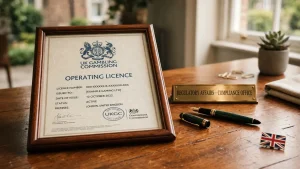
UK Online Casino Trustworthiness: Start with the Licence
Trust depends on verifiable UK licensing and how operators handle safeguards, terms, payments and withdrawals....

Non-GAMSTOP Casinos in the UK: What It Means
A site's absence from Gamban does not establish whether GAMSTOP applies or whether the casino...

Non-GamStop Curaçao Casinos and UK Oversight
The article separates offshore licensing claims from UK authorisation and explains why exclusion status and...

Non-GamStop European Casinos: UK Rules
A casino’s location, branding and audience do not determine whether its UK-facing operations fall within...

Non-UK Licence Casinos: How Overseas Regulation Works
The issuing authority shapes oversight and complaint options, so an overseas licence is not equivalent...

Non-UK-Registered Casinos: Licensing Explained
The guide separates a casino’s business location from its gambling regulator and examines the practical...

Non-UK Regulated Casinos: What UK Rules Cover
UK licensing depends on serving customers in Great Britain, while offshore permissions and safeguards vary...

Non-UKGC Licensed Casinos: UK Rules and Risks
The distinction between an operator’s UK licensing duty and an individual’s position shapes the risks...

Malta MGA Licence for UK Online Casinos: What It Means
A Malta licence regulates an operator in Malta, while real-money offers to Great Britain require...

Online Casinos With No Sister Sites in the UK
Shared ownership or technology can shape casino features, but familiar games, layouts and promotions are...

Online slots not on GamStop: what to know
GamStop blocks access at participating UKGC-licensed casinos; mobile play and unfamiliar offers do not change...

Safe Online Casinos in the UK: Player Protections
A practical guide to licensing, gambling limits, payments, bonus terms and security, without treating a...

Trusted Casinos Not on GamStop UK: What to Check
The guide weighs licensing, player protections, payments and promotional terms at casinos operating outside the...

Trusted UK Casino: Licensing, Checks and Safeguards
Licensing, identity checks, public records and payment terms help explain what can—and cannot—be verified about...

USA Casinos for UK Players: Access and Licensing
A guide to how licensing, safeguards, payments, bonuses and recourse differ for UK players at...
VPN-Friendly Casinos UK: Access, Licensing and Risk
A casino accepting VPN connections does not necessarily hold a UK licence or offer the...