
Casino Without a Swedish Licence: UK Player Guide
 Available in GB

A foreign licence is not a UKGC licence, and a casino’s location does not determine whether it has UK regulatory oversight.
What “Without a UK Licence” Means
A casino described as operating without a UK licence is an online gambling site that is not overseen by the UK Gambling Commission (UKGC). The phrase is about the regulator responsible for the site, not simply the country where its offices, servers or owners are based. A business can be located outside Britain and still hold a UKGC licence; conversely, a foreign licence does not turn into a UK one because the site is available in English or accepts customers from Britain.
That distinction matters because a licence is not a general certificate for every market. It is permission and oversight tied to a particular regulator’s rules. A non-UK-regulated casino may hold a licence issued elsewhere, but that does not place it under the UK Gambling Commission’s supervision. The two descriptions can therefore be true at once: an operator may be licensed abroad and still be without a UK licence.
The UKGC’s role is not determined by the operator’s postal address. Operators serving customers in Great Britain need the relevant Gambling Commission licence, wherever they are based. A company’s overseas headquarters, a foreign corporate registration or a licence from another jurisdiction does not replace that requirement. In regulatory terms, the market being served matters more than the place from which the service is run.
If you are considering casinos without a Swedish licence in 2026, check the details that matter to you before choosing. The information available for these entries gives one practical point to consider: stated payout speed.
1. SlotoSport
Payout speed: 1-3 business days SlotoSport lists a payout speed of 1–3 business days.
2. NightLuck
Payout speed: 1-3 business days NightLuck lists a payout speed of 1–3 business days.
3. Britsino
Payout speed: 1-3 business days Britsino lists a payout speed of 1–3 business days.
4. Dieselwin
Payout speed: 1-3 business days Dieselwin lists a payout speed of 1–3 business days.
5. SpinFormula
Payout speed: 1-3 business days SpinFormula lists a payout speed of 1–3 business days.
6. Revery Play
Payout speed: 1-3 business days Revery Play lists a payout speed of 1–3 business days.
7. Amunbet
Payout speed: 1-3 business days Amunbet lists a payout speed of 1–3 business days.
8. Jetsetspins
Payout speed: 1-3 business days Jetsetspins lists a payout speed of 1–3 business days.
9. x3bet
Payout speed: 1-3 business days x3bet lists a payout speed of 1–3 business days.
10. NightWin
Payout speed: 1-3 business days NightWin lists a payout speed of 1–3 business days.
This is why “foreign casino” and “unlicensed casino” are not exact synonyms. The first describes a connection with another country; the second can imply that no regulator has licensed the operator at all. Some non-UK-regulated casinos do have licences from jurisdictions such as Malta, Curaçao, Gibraltar or Anjouan. The more precise description is that they are not regulated by the UKGC, rather than that they are necessarily unlicensed everywhere.
Nor does a foreign licence make an operator UK-regulated by another name. Different authorities issue their own permissions and supervise businesses under their own frameworks. A licence from one of them can establish a regulatory relationship in that jurisdiction, but it does not transfer the UK Gambling Commission’s authority to that body. Regulatory labels are local things.
The words “without a UK licence” can also describe more than one arrangement in everyday use. A site might display a foreign regulator’s details; it might state that it operates under a licence from a particular jurisdiction; or it might provide little clear information about its status. Those cases should not be collapsed into one. The shared point, where the UKGC licence is absent, is that the site is outside UKGC oversight. The strength and clarity of its other regulatory arrangements are separate questions.
A licence claim and a UKGC licence claim should therefore be read as different statements. “Licensed” on its own does not answer which authority issued the permission, what company it covers, or which market it concerns. “UKGC-licensed” is specific: it refers to oversight by the UK Gambling Commission. A foreign regulator’s name, meanwhile, identifies a different licensing relationship. The wording is not decorative; it tells which rulebook is being invoked.
Online Casinos With No Sister Sites in the UK
This distinction helps make sense of phrases such as “online casino without a UK licence” or “casino without a UKGC licence”. They generally refer to a site outside the Commission’s regulatory system, whether or not that site presents itself as licensed abroad. “International” and “offshore” are looser terms. They can suggest that an operator is based overseas, but location alone does not tell the whole licensing story. The regulator, not the geography in the marketing copy, supplies the key distinction.
The term “non-UK-regulated casino” is consequently more exact than “foreign casino” when the point is regulatory status. It avoids implying that every foreign-based operator has the same arrangement, while making clear that UKGC oversight is absent. It also avoids the opposite misunderstanding: that a foreign licence amounts to a UK licence. It does not.
None of these labels, by itself, describes the games, ownership structure or day-to-day operation of a site. They identify the regulatory boundary. In a market where businesses can be run across borders and websites travel more easily than regulators do, that boundary is easy to blur in casual language. The licence remains specific to its issuer. A foreign permission stays foreign; UKGC oversight is its own category.
The distinction is plain, even if the terminology is often made to look otherwise. A casino may hold a licence somewhere and still be without a UK licence. That is the central meaning.
A casino may hold a foreign licence (such as from Malta or Curaçao) and still be without a UK licence, as these are separate regulatory frameworks.
A Swedish-Licence Search, in a UK Market
A search for a casino without a Swedish licence can sound like a question about where an operator is regulated. In a UK context, however, Sweden is not the deciding jurisdiction. The relevant distinction is whether the operator holds the licence required to serve customers in Great Britain: a licence from the UK Gambling Commission.
That remains true whichever country an operator calls home. A company’s base of operation does not remove the UK requirement. If it serves customers in Great Britain, it needs the appropriate UKGC licence. A Swedish licence, where one is held, is not a substitute for that authorisation; equally, the absence of a Swedish licence does not by itself establish whether the UK requirement has been met.
The wording can therefore point in two different directions. Someone searching for a casino without a Swedish licence may mean a site regulated outside Sweden. Someone asking about a casino without a UK licence is asking about a different distinction: whether the operator is authorised by the regulator responsible for Great Britain’s market. Those descriptions should not be treated as interchangeable.
This is less a matter of geography than of jurisdiction. A licence is issued within a particular regulatory system, and its significance depends on the market in question. For a service offered to customers in Great Britain, the operator’s overseas location does not change which regulator’s licence is required. The name of another country on a licence, or in a company address, cannot do that work.
What the Swedish wording can—and cannot—tell
The phrase “casino without Swedish licence” describes the absence of one kind of national authorisation. It says nothing conclusive about whether the operator holds a UKGC licence. The same is true in reverse: learning that a site does not have Swedish authorisation would not establish that it lacks UK authorisation. The two questions concern different regulatory systems.
British Casinos Not on GamStop: What It Means
That distinction matters because licence labels can look like a simple ranking of countries, as if one credential could be exchanged for another. They cannot be read that way. A foreign licence does not become a UK Gambling Commission licence merely because an operator accepts customers from more than one country. For the Great Britain market, the required UK authorisation remains the relevant test.
The same logic applies to searches for an MGA casino without a UK licence. A reference to Malta’s regulator may identify a different licensing context, but it does not answer the UK question. Nor does the word “new” alter the test: a newly launched casino serving Great Britain would still need the required UKGC licence, regardless of where it is based or which other licence it may hold.
“Best” is also a word that can obscure the underlying issue. A list of sites described as the best casinos without a UK licence would not answer whether they hold the authorisation required to serve Great Britain. Nor would a favourable description of a foreign licence change that requirement. The central distinction is not which non-UK credential sounds most reassuring; it is whether the operator has the UK Gambling Commission licence relevant to this market.
There is a dry oddity in the phrase “without a UK licence”: it is often used as though it described a particular type of casino. It describes an absence instead. The words do not identify a common standard of service, ownership or conduct. They say only that the UKGC licence is not present—and that fact should not be softened by the presence of another country’s licensing label.
Do
- Distinguish between a Swedish licence and a UKGC licence
- Verify if the operator is authorised by the UK Gambling Commission
Don’t
- Treat a foreign licence as a substitute for UK authorisation
- Assume “best” lists confirm UKGC regulatory status
Reading the terms in their proper frame
A Swedish licence and a UKGC licence are not competing answers to one question. The first concerns Swedish authorisation; the second is the relevant licence for operators serving Great Britain. The fact that both may appear in descriptions of an online casino does not make them equivalent, and a reference to either one should not be used to infer the other.
This is why the search wording can lead to an unhelpful detour. The question may begin with Sweden, Malta or another jurisdiction, but the UK market has its own licensing requirement. The operator’s country of establishment is not an exception, and a foreign licence does not displace the UKGC requirement for services offered to customers in Great Britain.
So a “casino without a Swedish licence” and a “casino without a UKGC licence” are not two spellings of the same category. One describes the absence of Swedish authorisation; the other identifies the absence of the licence required for operators serving Great Britain. For this market, that difference is the point.
The Legal Position for Players in Great Britain
The law draws an important distinction between the business supplying gambling and the person taking part in it. Under the Gambling Act 2005, the focus is on operators who provide gambling services into the UK market. A company serving customers in Great Britain needs the relevant UK Gambling Commission licence, wherever its business is based. That requirement is directed at the operator, not framed as a criminal prohibition on the individual player.
Casino Licensing & Safety for UK Players
This distinction can be obscured by the phrase “casino not licensed by the UKGC”. It describes a site’s regulatory position, but does not, by itself, settle the question of a player’s criminal liability. British citizens are not expressly barred by UK law from using gambling services that hold a licence in another country. Nor does a player commit a criminal offence under UK law simply by gambling on a site that lacks a UK licence.
That is a narrow point, not a declaration that every such service is lawful for every purpose, or that its operator is entitled to serve Great Britain. The licensing obligation remains with the business offering gambling to people in the British market. A foreign licence and a UK operating licence are different things; the former does not remove the latter’s requirement.
For the player, the practical distinction is therefore between personal criminal exposure and the regulatory status of the service. The available legal position does not make those equivalent. A person may not be committing a crime merely by placing a bet, while the operator may still be supplying a service without the authorisation required for the British market. The law’s attention falls first on the arrangement that makes gambling available, rather than treating each customer as the operator’s accomplice.
A non-UKGC casino can consequently occupy an awkward space in everyday speech: accessible to a British customer, yet outside the regulatory framework required for operators serving Great Britain. Access should not be mistaken for official approval. Equally, the fact that the operator’s status raises a regulatory issue does not mean that the player automatically faces prosecution. Those are separate propositions, and collapsing them produces more heat than clarity.
Legal Liability
While players may not commit a criminal offence by using non-UKGC sites, operators supplying services to Great Britain without a licence are in breach of regulatory requirements.
The absence of a criminal offence for the player is also not a guarantee that a particular transaction, account or service will be free of other consequences. Anyone considering an offshore gambling service remains responsible for checking the local legal position and understanding what using it may entail.
This is why “legal for the player” can be an imprecise shorthand. It may refer only to the absence of a player offence, while leaving unanswered whether the operator is properly authorised to supply gambling in Great Britain. The operator’s licensing duty does not disappear because the customer’s conduct is treated differently. A legal distinction, not a loophole.
GamStop’s Boundary—and What Lies Beyond It
GamStop is the UK Gambling Commission’s self-exclusion scheme. A casino outside it is not brought within the scheme simply because it accepts customers from Britain or displays a foreign licence. “Not on GamStop” describes a boundary: the site does not participate in that UK system. It does not mean that GamStop has blocked the site, or that the scheme has closed an account there.
That distinction matters because self-exclusion is only as broad as the services connected to it. A person may have taken a decisive step within the UK scheme and still encounter gambling sites beyond its reach. The scheme’s name can sound comprehensive; its actual reach is institutional.
A boundary, not a barrier
A casino not on GamStop is outside the network of operators covered by the scheme. Its customers’ exclusion status within GamStop does not, by itself, make that casino part of the arrangement. Nor does the label “non-GamStop” tell anything reliable about how the site handles a request to close an account or restrict gambling. Those are separate matters, governed by the operator’s own practices and rules.
Trusted UK Casino: Licensing, Checks and Safeguards
This is why the phrase can be misleading in both directions. It may sound like a warning that a site is inaccessible to someone who has self-excluded. It may also be presented as a selling point, as though separation from GamStop were a neutral feature. Neither interpretation changes the underlying point: exclusion through the UK scheme does not extend to casinos that are not enrolled in it.
A Malta Gaming Authority or Curaçao licence, if a site holds one, is not proof of GamStop participation. The regulator named on a casino’s paperwork and the self-exclusion scheme it joins are different things. The same applies to a site described as an MGA casino or a Curaçao casino: the licence label alone cannot establish that the operator is inside the UK scheme. Labels travel more easily than safeguards.
Self-exclusion has a practical limit
Self-exclusion works by restricting access to participating gambling services. When an operator sits outside that arrangement, the exclusion does not automatically follow the person to the site. A search for non-GamStop casinos may therefore lead to services that remain available despite a GamStop exclusion. That availability should not be mistaken for an extension, exception or reversal of the original exclusion.
The gap is practical as well as administrative. Non-UK-regulated operators may apply less demanding standards to responsible gambling and the handling of personal data than operators regulated by the UK Gambling Commission. They may also lack mandatory responsible-gambling tools familiar from UK-regulated services, including tools such as deposit limits and self-exclusion schemes. An operator may offer its own restrictions, but that does not make those controls part of GamStop or give them the same reach.
Attention: Self-exclusion via GamStop does not extend to casinos that are not enrolled in the scheme; these sites remain accessible despite a UK exclusion.
The difference is not merely one of terminology. A UK scheme provides a shared boundary across the services that participate; an individual offshore operator’s controls, where offered, belong to that operator. An account-level restriction at one site should not be assumed to cover another. Nor should the presence of a responsible-gambling page be treated as proof that an exclusion has been applied across a wider group of services.
There is a second boundary: support and redress. People gambling at offshore casinos give up access to the UK’s Financial Ombudsman Service and to the mandatory responsible-gambling tools that apply to UK-regulated operators. Those protections do not travel with a player’s GamStop status. An exclusion can be real within its own system and still leave other routes open.
What the label cannot promise
“Casinos not on GamStop” is a broad description, not a certification of conduct. It does not guarantee that a site is safe, unsafe, well managed or willing to honour a voluntary request for a break. It says nothing on its own about how personal information is protected or what support is available when gambling becomes difficult. Those questions require attention to the operator’s actual terms and controls, not the shorthand label.
For someone who has self-excluded because gambling is causing harm, an outside site can undermine the purpose of that decision. The scheme cannot be treated as a universal lock on every gambling service available online. Its boundary is the participating network, and sites beyond it remain beyond that boundary.
That is the limit. Not a technicality, but a gap between an individual’s decision and the services able—or required—to respect it.
UK Online Casino Trustworthiness: Start with the Licence
Bonuses and Payments: Read the Conditions, Not the Headline
A bonus headline is a poor guide to what can eventually be withdrawn. An offer described as a welcome bonus may attach wagering conditions to the bonus, the deposit, or both; a no-deposit offer, where one is advertised, still needs to be read for its own restrictions. The label tells little about the route from an initial credit to cash that can leave the account.
A specialist review has reported offshore welcome-bonus wagering requirements of 35x or more. That figure should not be treated as a fixed market rule: offers differ, and their terms can change. The important detail is what the stated multiple applies to and whether the bonus must be used before a withdrawal is allowed. A large headline can conceal a long obligation. Terms first; fanfare later.
Payment menus can include credit cards, e-wallets, bank transfers and cryptocurrencies, sometimes handled through alternative processors. Crypto payments can bypass the UK ban on gambling funded by credit card. That describes a payment route, not an endorsement or a guarantee that a deposit method will also be available for withdrawals. A “pay and play” label likewise says little by itself about how an operator processes a later payout.
Timing is less tidy than a menu suggests. Estimates for withdrawals conflict: one account gives a range from 24 hours to 5 business days, depending on the payment method, while other accounts allow for substantially longer waits. Without a regulatory clock to enforce a stated timeframe, a displayed estimate should not be mistaken for a promise. Payment method, verification and the casino’s own terms all matter to the practical journey from balance to bank account.
Withdrawal Timeframes
Estimated withdrawal times for offshore casinos can vary significantly, with some reports citing 24 hours to 5 business days, while others warn of waits lasting three to four weeks.
The same scrutiny applies to the route in. A deposit option may be available through a processor whose name differs from the casino’s, and the terms may set out how that channel connects to withdrawals. The presence of a familiar logo is not proof that money can travel back by the same route. Payment systems are plumbing, and the visible tap does not reveal the pipes.
Bonuses and payment methods belong in the same calculation: what must be done before winnings become withdrawable, which route can be used to cash out, and how much uncertainty remains around timing. A headline offer cannot answer those questions. The small print can.
Non-UK Casinos and the Protections They May Lack
A casino operating outside UK Gambling Commission regulation sits beyond the system of safeguards attached to a UKGC licence. That difference is not merely administrative. UK players at such sites do not have access to the UK’s Financial Ombudsman Service or the mandatory responsible-gambling tools required of regulated operators. Rules on responsible gambling and data protection may also be less demanding.
The consequences become tangible when money is due back. Published accounts of withdrawal times do not agree: some describe payments arriving within 24 hours to five business days, while others warn that withdrawals can take three or four weeks. Outside UKGC oversight, there is no regulatory clock to enforce a stated timetable. A delay can therefore leave a player waiting without the familiar means of pressing a UK regulator to intervene.
Verification can add another layer of uncertainty. A specialist review has reported that some operators may ask for notarised documents or a video call before releasing a withdrawal. Such requests should not be treated as a standard feature of every non-UK-regulated casino, but they illustrate how the process can become more demanding after a balance has been built up. A successful deposit is not proof that a withdrawal will be equally straightforward.
Online slots not on GamStop: what to know
There is also a difference between holding money in an account and having protection if the operator fails. An Anjouan casino licence does not require player funds to be kept separate from the operator’s own money. If the business collapses, players are unsecured creditors rather than people whose balances are guaranteed to be returned. The distinction is stark.
These risks do not establish that every non-UK-regulated casino will delay payment or mishandle funds. They do mean that familiar UK safeguards cannot be assumed. The apparent convenience of access may sit beside weaker avenues for redress, less demanding protections and uncertainty about whether winnings can be recovered. A licence issued elsewhere is not a substitute for UKGC oversight.
Non-UK Casinos: Where Their Licences Come From
A non-UK-regulated casino is defined by the oversight it lacks: it operates without supervision from the UK Gambling Commission. That description does not mean the site necessarily has no licence at all. Many such operators are licensed elsewhere, under another jurisdiction’s rules and regulatory authority.
The distinction is easy to blur because a licence badge can look like a universal certificate. It is not. A licence identifies a regulatory framework associated with the operator; it does not turn that framework into UK Gambling Commission oversight. For operators serving customers in Great Britain, a foreign licence does not replace the required UKGC licence.
Common licensing locations include Malta, Curaçao, Gibraltar and Anjouan. Each name points to a different jurisdiction, rather than to a single international system. The label on a casino’s website therefore tells only part of the story: it identifies the place connected with its licence, not the full extent or quality of the oversight a player might expect.
Malta
One of the common jurisdictions for operators serving customers outside the UKGC framework.
Curaçao
A frequent licensing location for non-UK-regulated casinos.
Gibraltar
A jurisdiction associated with operators that may lack UK Gambling Commission oversight.
Anjouan
A licensing authority whose framework does not require the segregation of customer funds.
This is why “non-UK casino” can be an imprecise shorthand. It may suggest that the company itself is based abroad, when the more important distinction is regulatory: whether the casino operates under UKGC supervision. A business’s base and the authority named on its licence are related details, but neither should be mistaken for a British operating licence.
The geography of online gambling has a faintly old-fashioned quality. A service can be reached across borders, while the rules attached to it remain rooted in particular jurisdictions. The internet makes the storefront seem placeless; the licence gives it an address of sorts. That address matters, but it does not make every licence equivalent.
So the useful question is not simply where a casino says it comes from. It is which authority is named, and whether UKGC oversight applies. Malta, Curaçao, Gibraltar and Anjouan are among the jurisdictions associated with non-UK-regulated casinos; naming one of them does not, by itself, settle what protections or rules govern a particular operator. A badge is a beginning, not a passport.
New Offshore Casinos and the Anjouan Paper Trail
A newly launched casino can make a licence badge look like a settled fact. It is only a claim until the details behind it line up. For an Anjouan casino licence, the useful trail is not the badge’s design or the wording on a homepage, but the public register entry and the identity attached to it.
Safe Online Casinos in the UK: Player Protections
The operator’s legal company name should match the name recorded by the authority. The licence should also remain within its stated validity period. A mismatch, an expired entry or a company name that cannot be connected to the site leaves a gap between the website’s presentation and the paperwork it relies on. That gap matters more when a business has little operating history: there may be less public evidence with which to test what its promises mean in practice.
Even a matching entry has a limited meaning. An Anjouan casino licence does not grant permission to operate in the United Kingdom, nor in other markets named as restricted. It identifies a regulatory arrangement elsewhere; it is not a passport into every country where a website can be opened. A fresh site’s availability to British users should not be mistaken for authorisation to serve them.
The framework itself also has boundaries. It does not require independent random-number-generator testing, routine audits or the segregation of customer funds. The absence of those requirements does not prove that a particular operator has failed to test its games or mishandled money. It does mean that the licence alone cannot establish that such checks took place or that balances are held apart from company funds.
That distinction becomes stark if the business fails. Anjouan-licensed casinos do not guarantee that player funds are segregated; customers may therefore rank as unsecured creditors rather than having a protected claim to money kept separately for them. A licence entry can confirm a regulatory record. It cannot turn that record into a guarantee of solvency, independent testing or UK permission.
Paper, then practice. A new non-UK regulated casino may be recent, but the questions are old: whose company is named, whether its licence remains current, and what the framework actually obliges it to do. A badge answers only the first question it was designed to suggest.
Verifying New Casinos
- Check that the legal company name matches the public register entry
- Confirm the licence is within its stated validity period
- Verify if the licence framework requires segregation of customer funds
- Check for mandatory independent random-number-generator testing
Overseas Online Casinos: What Happens When a Dispute Arises
A complaint about an Anjouan-licensed casino follows a different path from one involving a UKGC-regulated operator. The Anjouan authority does not take up player complaints, mediate between a customer and a casino, or decide who is right. Its role therefore should not be mistaken for that of a consumer-facing complaints body.
The operator is expected to respond to a complaint within 30 calendar days under Anjouan’s framework. That is a response period, not a promise that the dispute will be resolved within it. A reply may explain the casino’s position without changing it; the framework does not give the player an independent adjudicator to review the disagreement.
That missing step matters most when the dispute concerns an account restriction, a refused withdrawal or how a term has been applied. If the casino’s answer is unsatisfactory, Anjouan-licensed casinos do not offer an independent dispute-resolution route comparable to the services approved by the UK Gambling Commission. There is no equivalent external process within that framework for an impartial decision on the player’s case.
The distinction is procedural, not merely symbolic. A complaints channel gives a player somewhere to send an account of events; independent resolution gives someone outside the operator a role in assessing the dispute. Where the latter is absent, the operator’s own handling becomes the centre of the process. The regulator is not a substitute.
A careful record of messages, account notices and transaction details may help clarify what has happened, but it cannot create a review body that the licensing framework does not provide. In a disagreement, the practical question is not only whether a complaint can be made. It is who, if anyone, can require a fair examination of the answer.
A reply is not a remedy.
Non-GamStop European Casinos: UK Rules
For UK Players, Access Is Not the Same as Protection
For people in Great Britain, a casino’s accessibility and its regulatory standing are separate matters. A site may accept customers from the country while operating under a licence issued elsewhere; that licence does not bring the operator under the UK Gambling Commission’s oversight. Operators serving the British market are required to hold a UKGC licence, wherever their business is based. A foreign licence is not a substitute.
That distinction matters even when a site appears polished, accepts familiar payment methods or has only recently opened. Newness is not a safeguard, and a ranking of the best Casinos not on GamStop cannot establish that an operator offers protections equivalent to those required in Britain. The practical question is not simply whether an account can be opened, but what rules govern the service and what recourse exists if something goes wrong.
Some non-UK-regulated casinos may set more flexible deposit and withdrawal policies, with fewer restrictions and potentially quicker payouts. Flexibility, however, describes the operator’s terms; it does not amount to UK oversight. Anjouan-licensed casinos, for instance, are not required to connect to GAMSTOP or to provide an independent dispute route comparable to UKGC-approved services. The familiar framework may simply be absent.
Merkur Casino Online in the UK: Games and Rules
Payment options can also differ. A specialist review has described some offshore sites as permitting deposits billed to a mobile phone or taken from a prepaid balance. Such a report is not evidence that the option is broadly available, or that a deposit method will also work for withdrawals. Each operator’s terms determine what can be paid in and how funds may be returned.
The wider social bargain behind British regulation is that access to gambling is paired with defined obligations on operators. Outside that system, the same activity may come with fewer familiar safeguards. That is not a judgment about every individual site; it is a difference in the rules that can be relied upon.
Anyone considering an offshore service remains responsible for checking the laws that apply and understanding the implications of using it. A licence from another jurisdiction may establish a relationship with that authority, but it does not create UKGC protection. Access is the easier part. Protection is another matter.
What happens if I have a dispute with an Anjouan-licensed casino as a UK player?
The Anjouan authority does not handle or adjudicate player complaints, and there is no independent dispute-resolution route comparable to UKGC-approved ADR. The operator must respond to complaints within 30 calendar days.
Are sites that are not on GamStop legal for players in the UK to access?
UK law does not explicitly prohibit players from using gambling services licensed in other countries, and players do not commit a criminal offence by gambling on an unlicensed site. However, operators serving customers in Great Britain need a UK Gambling Commission licence, and non-GamStop casinos are outside the UKGC’s self-exclusion scheme.
Is it legal for a UK player to gamble at an Anjouan-licensed casino?
UK law does not explicitly prohibit players from using gambling services licensed abroad, and players do not commit a criminal offence by gambling on an unlicensed site. An Anjouan licence does not authorise the casino to operate in the United Kingdom.
Are non UK regulated casinos legal for UK players to use?
UK law does not explicitly prohibit players from using gambling services licensed in other countries, and players who gamble on unlicensed sites do not commit a criminal offence. Operators serving customers in Great Britain must still hold a UK Gambling Commission licence.
Can UK players legally play at casinos licensed in Anjouan?
UK law does not explicitly prohibit players from using gambling services licensed abroad, and players do not commit a criminal offence by gambling on an unlicensed site. An Anjouan licence does not authorise the operator to serve the United Kingdom market.
Safety

Anjouan Casino Licence in the UK: What It Means
An Anjouan authorisation applies under its own jurisdiction and does not by itself permit an...

Best foreign casinos for UK players: what to know
The label refers to accepting British customers without a UK Gambling Commission licence, not simply...

International Casinos for UK Players: Licensing
Understand how UK authorisation differs from overseas access, and why bonuses, withdrawals and player safeguards...

Offshore Casino Sites for UK Players: Rules and Risks
The guide examines licensing, business relationships, bonus terms, crypto withdrawals and safeguards beyond a site's...

Offshore casinos for UK players: risks and rules
Offshore sites may accept British visitors, but access does not mean authorisation or the safeguards...

British Casinos Not on GamStop: What It Means
GamStop applies to UK-licensed operators, so a site's regulatory status affects whether a registered self-exclusion...

Casino Sites Not Registered with GamStop in the UK
GamStop blocks registered UK residents from gambling at UKGC-licensed online casinos, but does not cover...

Casinos That Bypass GamStop: What UK Players Should Know
GamStop applies to UKGC-licensed operators; access beyond that system does not carry the same regulatory...

Curacao Casino Licence in the UK: What It Means
A Curaçao licence identifies a jurisdiction, but does not establish UK regulation, customer access or...

Gibraltar Casino Licence and UK Legal Status
A Gibraltar link identifies an operator’s declared regulatory setting, but does not determine its UK...

Merkur Casino Online in the UK: Games and Rules
Merkur titles are products in an operator’s changing catalogue, while the casino platform is responsible...
UK Online Casino Trustworthiness: Start with the Licence
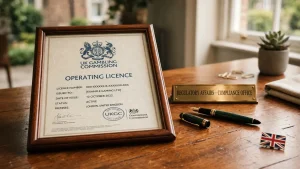
Trust depends on verifiable UK licensing and how operators handle safeguards, terms, payments and withdrawals....

Non-GAMSTOP Casinos in the UK: What It Means
A site's absence from Gamban does not establish whether GAMSTOP applies or whether the casino...

Non-GamStop Curaçao Casinos and UK Oversight
The article separates offshore licensing claims from UK authorisation and explains why exclusion status and...

Non-GamStop European Casinos: UK Rules
A casino’s location, branding and audience do not determine whether its UK-facing operations fall within...

Non-UK Licence Casinos: How Overseas Regulation Works
The issuing authority shapes oversight and complaint options, so an overseas licence is not equivalent...

Non-UK-Registered Casinos: Licensing Explained
The guide separates a casino’s business location from its gambling regulator and examines the practical...

Non-UK Regulated Casinos: What UK Rules Cover
UK licensing depends on serving customers in Great Britain, while offshore permissions and safeguards vary...

Non-UKGC Licensed Casinos: UK Rules and Risks
The distinction between an operator’s UK licensing duty and an individual’s position shapes the risks...

Malta MGA Licence for UK Online Casinos: What It Means
A Malta licence regulates an operator in Malta, while real-money offers to Great Britain require...

Online Casinos With No Sister Sites in the UK
Shared ownership or technology can shape casino features, but familiar games, layouts and promotions are...

Online slots not on GamStop: what to know
GamStop blocks access at participating UKGC-licensed casinos; mobile play and unfamiliar offers do not change...

Safe Online Casinos in the UK: Player Protections
A practical guide to licensing, gambling limits, payments, bonus terms and security, without treating a...

Trusted Casinos Not on GamStop UK: What to Check
The guide weighs licensing, player protections, payments and promotional terms at casinos operating outside the...

Trusted UK Casino: Licensing, Checks and Safeguards
Licensing, identity checks, public records and payment terms help explain what can—and cannot—be verified about...

USA Casinos for UK Players: Access and Licensing
A guide to how licensing, safeguards, payments, bonuses and recourse differ for UK players at...

VPN-Friendly Casinos UK: Access, Licensing and Risk
A casino accepting VPN connections does not necessarily hold a UK licence or offer the...