
Crazy Time Live Casino Game Show in the UK
 Available in GB
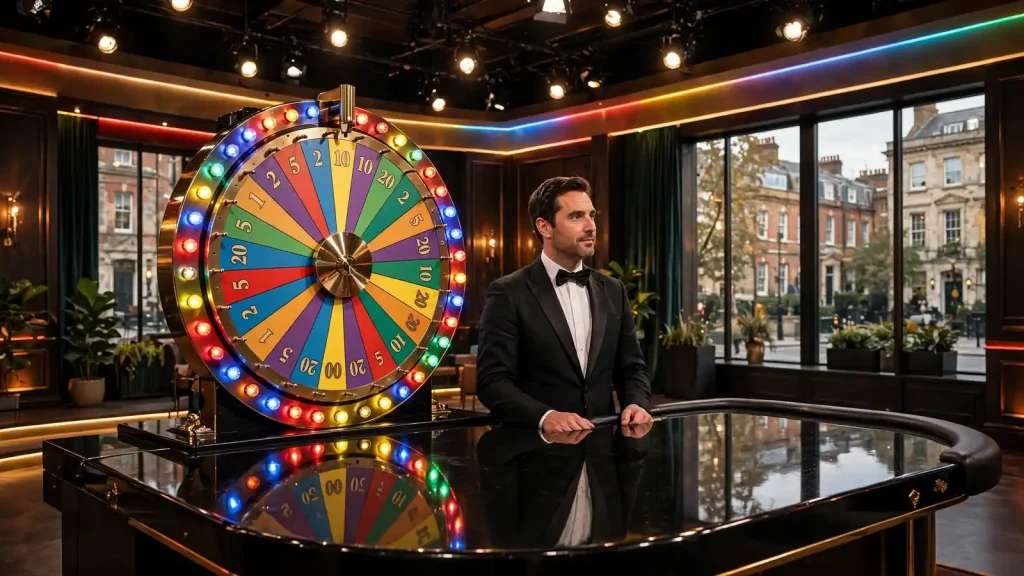
A guide to the live format, casino access, practice play, wagering terms and UK licensing questions around Crazy Time.
Crazy Time Online: The Live-Casino Setting
The phrase “Crazy Time online casino” points towards a particular kind of setting: a casino reached through a screen, with live dealer games among the options it may offer. In the United Kingdom, that setting is not simply a website with a gambling theme. A live dealer casino serving the market is legal only if it holds a licence from the UK Gambling Commission. The licence is the dividing line between a lawful online casino and one that merely presents itself as a place to play.
That distinction matters because the internet makes the operator’s location easy to overlook. A site can be designed for British customers, use familiar language and display games in a polished interface while being run from elsewhere. For operators selling into the British market, being based abroad does not remove the requirement to hold the relevant Gambling Commission licence. The regulatory question is about the service offered to people in Britain, not the distance between a server and a living room.
Live Roulette UK with English-Speaking Dealers
There is a peculiarly modern contrast in that arrangement. Casino play once suggested a named building, a threshold and a visible public authority. Online, the threshold has become an account page, and the building may be a studio in another country. The licence supplies a formal boundary where architecture no longer can. It does not turn a screen into a traditional casino; it establishes that the operator falls within the UK regulatory system.
This is the background against which a UK player encounters a live-casino lobby. A game’s appearance there is only one part of the setting. The operator providing access is also a gambling business, subject to the licensing requirement that applies to remote gambling offered to the British market. The distinction can sound administrative, but it is not ornamental. A recognisable game name cannot, by itself, establish that the casino carrying it is authorised to serve local customers.
The Gambling Act 2005 governs gambling in England, Wales and Scotland, while Northern Ireland has a different legal framework. Across Great Britain, the UK Gambling Commission is the regulator responsible for licensing remote operators serving consumers. In practical terms, the central point for a British online casino is direct: a legal operator must hold a current operating licence. A live dealer table does not sit outside that rule because it is streamed rather than generated entirely by software.
Deal or No Deal Casino UK: Game Format Explained
The word “live” can make the venue feel more immediate, but it does not change the legal character of the transaction. The player is still using a remote gambling service. The operator remains the party whose licence matters. This is an important correction to the way digital entertainment often presents itself: a studio feed may look like an event, yet the route into it is still a regulated commercial service.
The UK framework also reflects a broader judgement about gambling. It permits licensed businesses to offer online casino games to adults, while making permission conditional on regulation. That is neither a prohibition nor an open invitation to every site on the internet. It is a system of authorised participation. The rules are less theatrical than the games, but they define which businesses may legally provide them.
For Crazy Time, the setting is therefore best understood in layers. There is the game as a named attraction; there is the casino platform through which a player might encounter it; and there is the licence governing whether that platform may serve the British market. Those layers should not be collapsed into one another. A game title is not a regulatory credential, and a professionally presented casino is not proof of authorisation.
Nor does the presence of a licence mean that every detail of a particular game or its availability follows automatically. Licensing establishes the operator’s legal status within the relevant framework; it does not, by itself, answer every question about a game’s rules, presentation or place in a casino’s catalogue. The modesty of that distinction is useful. Regulation is a boundary, not a decorative promise that every feature will suit every player.
Online casinos have made access feel detached from geography. British regulation puts geography back into the picture, not by locating every studio at home, but by requiring operators serving the market to answer to the relevant authority. The screen may conceal the business behind it. The licence names the standard that business must meet to offer live dealer gambling legally in the UK.
A recognisable game name cannot, by itself, establish that the casino carrying it is authorised to serve local customers.
That is the setting.
The Game-Show Appeal of Crazy Time
The phrase “live casino game show” joins two kinds of entertainment that have usually kept different hours. A television game show gathers an audience around a host and a sequence of events; a casino game asks participants to risk money according to its rules. In a live-dealer setting, the two are brought together on a screen. The studio supplies the visible performance, while an on-screen interface carries the betting.
That arrangement is the essential point behind the appeal of a title such as Crazy Time. The attraction is not simply that a casino game has been filmed. It is that play is presented as something happening now, in a shared room rather than in the private, silent space of a digital game. The stream shows real-time gameplay from a studio, with a human dealer present. Players place bets through the interface displayed alongside the broadcast.
The division of labour is neat. The dealer belongs to the visible scene; the software interface belongs to the player’s decision-making. One can watch the broadcast and use the controls on screen to participate, without being physically present in the studio. The screen therefore acts as both window and counter: it shows a live performance, then translates a player’s choice into a bet.
There is an old social idea underneath this modern arrangement. Games have long made spectatorship part of the occasion. People gather not only to take turns, but to watch turns being taken: a card revealed, a contest settled, a decision made in public. A studio stream borrows some of that theatre. It gives an online game a visible setting and a human centre, even though the audience is dispersed and each participant operates through a separate device.
The dealer matters because a person changes the character of a broadcast. A digital animation can present outcomes, but a human presence gives the scene the signs of an event: gestures, speech, attention to the table and the sense that another person is there at the same time. That does not make the game a television programme in the ordinary sense. The dealer is not simply performing for passive viewers; the interface allows viewers to place bets. Spectacle and participation occupy the same screen.
Live Dream Catcher Casino UK: How It Works
That screen also makes the arrangement unusually clear about the border between watching and wagering. The stream can feel like entertainment, but the interface is not merely a set of viewing controls. It is where a player commits a bet. The distinction is easy to overlook when both elements sit together, which is precisely why it deserves notice. A polished presentation does not turn a stake into a ticket to a show.
Nor does the game-show label, by itself, establish what happens within a particular title. It may suggest an atmosphere or a style of presentation, but it cannot stand in for verified rules, rounds or special features. A title’s name is not a rulebook. The sound of spectacle can travel further than the evidence about its mechanics.
For Crazy Time, then, the broad live-casino idea is the useful starting point: a studio stream, a human dealer and betting through an on-screen interface. Beyond that general frame, claims about the precise format would need support. That restraint is not a failure of description. It keeps the familiar language of television from smuggling in details that belong to the game itself.
There is a small cultural bargain in the format. The casino borrows the intimacy of a studio and the attention of a show; the player receives a real-time scene, but remains at a distance, acting through controls. The theatre is live. The seat is remote.
Finding Crazy Time at an Online Casino
A casino’s live-games page can make a site look like a single, well-lit room: tables, studio streams and game titles arranged for browsing. The more important detail sits behind the display. In the UK, a live dealer casino is legal only when it holds a licence from the UK Gambling Commission. That is the first check when considering a site that appears to offer Crazy Time or other live games.
The licence is about the operator, not the theatrical polish of a game page. A familiar logo, confident marketing or a catalogue labelled “live casino” does not establish that the business is authorised to serve customers in the UK. The relevant question is whether the operator responsible for the site holds a current UK Gambling Commission operating licence. The Commission is the regulator; its licence is the concrete point against which a site’s claims can be assessed.
French Roulette Online Casinos in the UK
That distinction matters because a game listing and a regulatory status answer different questions. A page may promote live entertainment, but that alone says nothing about whether the operator is licensed. Conversely, a UK licence establishes a regulatory baseline, not that a particular title is available, currently running or offered under particular conditions. The licence should not be mistaken for a promise about a game catalogue.
A careful check begins with the operator named in the site’s legal information. The name attached to the casino’s brand may not, by itself, make clear which business holds responsibility for the service. The licence should correspond to the operator behind the site, rather than merely to an associated name or a broad claim that the casino is “regulated”. Where those details cannot be reconciled, the gap is meaningful. A badge is not a licence.
This is also why a search for Crazy Time casino sites in the UK should not end at a page title or a promotional banner. The title can describe what a site hopes to be found for; it cannot establish the operator’s status. The sensible order is the reverse of the usual sales pitch: establish the UK Gambling Commission licence first, then treat any game-specific claim as a separate matter to confirm with the operator. No ranking or glowing score can replace that distinction.
The same caution applies when a casino presents an extensive live section as evidence of trustworthiness. A broad menu may be useful for identifying what the site says it offers, but breadth is not regulatory approval. Nor does a licence settle every practical question about a particular game. It marks the legal boundary for a casino serving UK players; it does not certify every description, promotion or item in the lobby.
There is a social difference between a studio designed to feel informal and the rules governing the business that streams it. Live games borrow the intimacy of a room—human presence, visible activity, a sense that events are unfolding together. Regulation is less theatrical. It asks who is supplying the service and whether that operator holds the required authority. The less glamorous check comes first.
Do
- Identify the operator
- Establish a current UK Gambling Commission licence
Don’t
- Rely on promotional banners
- Assume a badge equals a licence
For anyone comparing sites that advertise Crazy Time, the useful starting point is therefore narrow and verifiable: identify the operator and establish whether it has a current UK Gambling Commission licence. That does not rank casinos, verify a game’s availability or endorse a bonus. It does separate a lawful UK-facing casino from a page that merely looks convincing. A plain test.
Playing Live: Pace, Stakes and Connection
Playing a live casino game is less like tapping through a digital version and more like waiting for a small public performance to reach its next beat. A dealer or game process has to complete each round before another begins. That gives the experience a human tempo, but it also means there is less room to hurry. A pause that would barely register in software can become part of the rhythm when a live game is unfolding.
That distinction matters for anyone considering Crazy Time in a live-casino setting. The appeal of a streamed game may depend on watching events happen in real time, yet the same format places a limit on how quickly play can move. Digital games can proceed without waiting for a studio sequence to finish; live games cannot. The pace is not a fault to be corrected, but a condition of having an event take place in front of the camera.
Stakes are another practical difference. Live dealer games tend to have higher minimum bets than digital versions. A table’s entry point therefore shapes who can join and how long a set budget may last. It is worth looking at the displayed minimum before play begins, rather than assuming that a live table will accept the same stake as a digital game. The difference may make a live session less suitable for someone who wants to keep each decision small.
That is the less theatrical side of the studio. A camera can make a game feel like an occasion; the minimum stake remains a financial condition. A budget set in advance gives the session a boundary, and sticking to it matters more than trying to recover a loss or extend a winning run. Neither pace nor presentation changes the basic uncertainty of gambling.
Live dealer games typically have higher minimum bets than digital versions, which may affect how long a set budget lasts.
Connection is part of the game’s practical equipment. Live play depends on a stable internet connection, since the video and the on-screen interface need to remain in step. If the stream freezes or becomes unreliable, the experience can be interrupted at precisely the point when timing matters. A steady connection is not a promise of uninterrupted play, but an unstable one makes following a live round harder.
The interface may show controls and information alongside the stream, but that does not remove the need to understand the conditions of play. Table rules and the paytable should be reviewed before starting, and the minimum stake should be treated as part of those conditions. A live setting can encourage attention to the screen; it should not replace attention to the terms.
For a person seeking to play Crazy Time live, these practicalities are more useful than imagining that the studio format makes play effortless. The experience asks for patience, a stake that fits the budget, and a connection capable of keeping up. The camera supplies the spectacle. The rest is still a casino game, and this description is for entertainment, not gambling advice.
What “Best” Can Mean Without a Ranked List
Choosing where to watch and play Crazy Time in the UK involves considering the practical details alongside the game itself. This reference focuses on the payout-speed information available for each listed operator.
1. SlotoSport
Payout speed: 1-3 business days SlotoSport lists a payout speed of 1–3 business days, a useful detail to consider when choosing a place to play Crazy Time.
2. NightLuck
Payout speed: 1-3 business days NightLuck lists a payout speed of 1–3 business days. This gives readers a clear practical detail to weigh up.
3. Britsino
Payout speed: 1-3 business days Britsino lists a payout speed of 1–3 business days, offering a specific point of reference for players considering Crazy Time.
4. Dieselwin
Payout speed: 1-3 business days Dieselwin lists a payout speed of 1–3 business days. Readers can use this stated timeframe as part of their choice.
5. SpinFormula
Payout speed: 1-3 business days SpinFormula lists a payout speed of 1–3 business days, providing a practical detail for players to consider.
6. Revery Play
Payout speed: 1-3 business days Revery Play lists a payout speed of 1–3 business days. That stated timeframe is the available practical detail for this listing.
7. Amunbet
Payout speed: 1-3 business days Amunbet lists a payout speed of 1–3 business days, giving readers a concrete detail to consider when choosing where to play.
8. Jetsetspins
Payout speed: 1-3 business days Jetsetspins lists a payout speed of 1–3 business days. This timeframe provides a practical reference for prospective players.
9. x3bet
Payout speed: 1-3 business days x3bet lists a payout speed of 1–3 business days, the available specific detail for readers comparing their options.
10. NightWin
Payout speed: 1-3 business days NightWin lists a payout speed of 1–3 business days. Readers can take this stated timeframe into account when considering the operator.
“Best” sounds like a verdict, but a useful verdict needs something firmer than a prominent logo or confident wording. For a UK live-dealer casino, the clearest baseline is whether the operator holds a licence from the UK Gambling Commission. Live-dealer casinos may operate legally in the UK when they hold that licence; without it, the comparison has missed the point before it begins.
That baseline does not make every licensed casino identical, nor does it establish that one is best for a particular game. It draws a boundary around the market in which a comparison can sensibly take place. A ranking that mixes licensed operators with sites outside the UK regulatory system would make the word “best” do very little work.
There is a difference between a site being licensed and a site being shown to offer a particular live game. A casino’s general live-dealer offering does not, by itself, prove that Crazy Time is available there. Nor does a claim of availability establish that the operator is superior to another. Each statement needs its own evidence; one does not quietly certify the others.
A careful comparison therefore has to distinguish among three questions: whether the operator is licensed for the British market, whether the specific game is actually offered, and what evidence supports any claim of quality. The first has a concrete public reference point: the UK Gambling Commission. The other questions cannot be settled by the word “best” in a heading.
This matters because casino rankings often compress several kinds of judgement into a single label. A site may be described as best because it is visually polished, because it promotes a welcome offer, or simply because it appears near the top of a list. Those are not interchangeable measures, and promotional prominence is not a regulatory status. A licence is a threshold, not a trophy.
The phrase “best Crazy Time casino UK” can thus be treated as a request for a comparison, not as proof that a definitive winner exists. Without operator-specific evidence, naming a winner would manufacture certainty. A more restrained standard asks first whether a casino is within the UK licensing framework, then whether any further comparison is supported by information that can be checked. If those details are absent, the honest result is an incomplete comparison.
Online American Roulette in UK Casinos: Rules
The same caution applies when a casino is described as a slot destination or when result-related language is attached to it. Labels can travel faster than the evidence behind them. They do not establish a game’s format, its availability, or an operator’s standing. A category name is not a credential.
There is no universal “best” detached from proof. For UK players, licensing is the baseline against which any live-casino comparison should begin, not a substitute for one. Claims beyond that need evidence of their own. Anything else is advertising dressed as measurement.
This article is for entertainment purposes only and is not gambling advice.
Strategy Claims and the Limits of What Can Be Verified
The language of strategy promises order: observe, record, compare, then act with greater confidence. That promise has a long life in gambling, where a table of past outcomes can look less like a record and more like a map. For Crazy Time, however, no game-specific strategy, history or statistical advantage can be established here. The distinction matters. A method can sound precise without being shown to change the terms of play.
The same caution applies to claims about a Crazy Time tracker. A tracker may present past results in a tidy sequence, but recording what has happened is not evidence that the record can forecast what happens next. Historical information is descriptive, not predictive. Treating it as a signal risks turning coincidence into a system—and a system into a reason to stake more.
That is a familiar human habit. People notice patterns because patterns help make an uncertain world legible. In a gambling setting, the habit can become expensive: a run of results may feel as if it is due to continue or reverse, although the record alone gives no basis for either expectation. More elaborate charts do not resolve that problem. They only make the story look more organised.
Monopoly Live Casino UK: Format and Gameplay
Nor should strategies from other casino games be carried across by analogy. Blackjack, for instance, has its own rules and decisions; its strategic discussion does not establish a method for a different game. Even in blackjack, staking systems such as Martingale can lead to losses. Similar-sounding advice is not transferable evidence. A name, a spreadsheet or a confident explanation cannot substitute for rules specific to the game in question.
The history of a game is a separate matter from a history of results. A chronological account would need reliable information about its development, rather than a list of outcomes gathered by a player or a tracker. Without that distinction, “history” can blur into folklore: scattered observations assembled after the event and presented as explanation. The past may be interesting. It is not, by itself, a betting edge.
This is not a claim that records are useless for every purpose. They can document what has been observed. But documentation and prediction are different jobs, and a tracker’s display should not be mistaken for proof of an advantage. No past-result system should be represented as a way to influence future outcomes.
European Roulette at UK Online Casinos: Rules and Odds
A sensible boundary is plain: any claim of a Crazy Time casino strategy or statistical edge needs evidence that directly supports it, not borrowed rules or patterns noticed after the fact. Gambling remains entertainment, not financial planning or advice. A pre-set budget belongs outside the tracker, where it cannot be persuaded by a colourful sequence of results.
The chart can count. It cannot promise.
Free Play and the Difference Between Practice and Payouts
A demo can make a casino game feel less consequential: no deposit is at stake, and a session can serve as a low-pressure introduction to an interface. But that general idea does not establish that a Crazy Time demo is available at any particular casino. Its presence should not be assumed from the game’s name, a promotional headline or a page describing live games in broad terms.
The distinction matters because “practice” can suggest rehearsal for a cash game. In a demo, any balance or result shown on screen is not money available to withdraw. Free play does not produce real payouts or winnings. Cash play, by contrast, involves real stakes and the possibility of losing money. The two settings may look similar while having very different consequences.
Cash Play
Cash play involves real stakes and the possibility of losing money, unlike demo sessions where results are not withdrawable.
Nor can a practice session be treated as proof of a repeatable advantage. A few outcomes on a screen do not establish a reliable pattern, and demo results should not be used to predict what will happen in later cash play. That is true even when the presentation feels familiar or the session lasts long enough to give an impression of rhythm. Impressions are not evidence.
Searches for Crazy Time casino tips often sit beside interest in a demo, but the two ideas should not be collapsed. Trying an interface, where a demo is actually offered, may help with basic navigation; it does not establish game-specific tactics or improve the odds of a real-money result. No named strategy follows merely from having played without a stake.
The same caution applies to pages that use phrases such as “top slot” or promise a place among the leading casinos. A live game should not be mistaken for a slot simply because promotional language groups different casino products together. Labels can attract attention; they do not establish that a particular demo exists or that a practice version pays out.
If a session moves from practice to cash play, it becomes a different financial decision, not simply the next stage of a tutorial. A spending limit set in advance belongs to that decision, and should not expand to recover a loss or extend a winning run. Modest discipline. The entertainment is not income.
Any demo description should therefore be read narrowly: as a claim about a non-cash experience, not a promise of availability, a rehearsal that guarantees success, or a route to winnings. This section is for entertainment purposes only, not gambling advice.
Live Baccarat Online Casinos in the UK: How It Works
Crazy Time for Free: What the Evidence Does—and Doesn’t—Show
“Free” can describe several different things in casino promotions, and the word alone does not establish what is being offered. A page might use it to attract attention, refer to a promotional credit, or describe access that does not involve a cash stake. Those meanings are not interchangeable, and none should be read as a promise of money back.
For Crazy Time, a free version or free spins should not be assumed to be available. Nor does promotional wording establish that a free-play session exists or explain how it would work. A claim about free access needs clear terms attached to it: what the offer covers, whether it applies to this particular game, and whether any winnings can be withdrawn. Without those details, the word “free” remains a label, not a dependable description.
Free spins, where a casino offers them, are not the same as cash winnings. They may be restricted to named games or governed by conditions, and a promotion’s wording may not mean that a live game is included. The distinction matters especially when an advertisement places a familiar game name next to a general offer. A headline can be broader than its terms.
A free-play feature, if presented, should likewise be understood as separate from real-money play. It does not produce real payouts or withdrawable winnings. That boundary is simple; promotional language often is not.
Casino reviews can help explain how a site describes its offers, but a review is not a substitute for the operator’s current terms. The material point is whether the promotion explicitly names Crazy Time and spells out what participation means. General references to casino games or free spins do not answer that question.
The broader convention is worth keeping in view: “free” describes the price of access, not the value of an outcome. It does not turn play into income, and it does not remove the possibility of loss when real money is involved. Gambling content is for entertainment purposes only, not gambling advice.
Live Casino Lightning Roulette UK: How Play Works
UK Licensing and Searches for Casinos Not on GamStop
The phrase “not on GamStop” can make a casino sound like a separate kind of venue, but it does not replace the legal test for offering live dealer games in the UK. A live dealer casino is legal here when it holds a licence from the UK Gambling Commission. The regulator’s licence, rather than a label attached to a site, is the relevant baseline.
GamStop is a self-exclusion programme. Its name may appear in descriptions of casinos, including pages presenting themselves as outside the scheme, but that wording alone does not establish a site’s regulatory status. Nor does it show that a particular live game is available there. Whether a casino is described as being on or off GamStop does not, by itself, confirm a connection with Crazy Time.
That distinction matters in searches for a Crazy Time casino not on GamStop. A phrase used in an advert or site description is not evidence that the operator holds a UK Gambling Commission licence, or that it offers the game. The same caution applies to claims about a “non-GamStop” casino serving UK players: the label does not answer the licensing question.
For British customers, the regulatory line is straightforward. Remote gambling operators serving the market must hold the relevant UK Gambling Commission licence. A foreign location or a different description of a site does not change that requirement. Live dealer games are lawful in the UK when offered by a licensed casino.
There is no established link between GamStop status and Crazy Time availability. A site’s use of the game’s name alongside claims about GamStop should therefore be treated as two separate claims, not as proof that one entails the other. The game’s presence, where stated, is not a substitute for checking the operator’s licensing position.
Hi-Lo Casino UK: Rules, Formats and Licensing
A label is not a licence.
Bonuses, Free Spins and Live-Game Wagering Terms
A casino welcome offer can look like a route to a live table, yet the promotional wording and the eligible games are separate matters. A specialist review describes many UK welcome offers as slot free spins, which cannot be used at live tables. That is a reported pattern, not a promise about every offer.
This distinction matters when a promotion is described as a Crazy Time bonus or a deposit bonus. The title alone does not establish that the game is eligible, that bonus funds can be staked on it, or that any resulting balance can be withdrawn without conditions. Those details belong to the offer’s terms, not its headline.
Wagering rules can also treat game categories differently. A specialist review reports that live games may count for only a small share of wagering requirements, with a 10% weighting as one example. A contribution rate changes how quickly qualifying play accumulates; it does not make a bonus larger or turn it into cash. The precise weighting is offer-specific.
“No deposit” wording deserves the same careful reading. It describes a promotional structure, not proof that a particular live game is included or that a bonus can be withdrawn as a payout. Likewise, a Crazy Time casino bonus in the UK is not a special class of offer simply because the game’s name appears beside it. Eligibility and conditions still govern.
Before opting in, the relevant terms are the eligible games, their contribution to wagering, any maximum bet limits, and the conditions attached to withdrawing bonus-related funds. A slot promotion may be of no practical use at a live table; a live-game offer may count only fractionally. Small print doing its usual work.
Live Tables
Live casino UK: how streams, licences and bets work
A guide to remote casino play, UK licensing, table decisions, bonuses and the limits that...

Deal or No Deal Casino UK: Game Format Explained
A look at the Banker-offer decision, online play mechanics and which bonus or return details...
French Roulette Online Casinos in the UK
A practical guide to zero rules, table formats, bet payouts and bonus terms, with the...

Hi-Lo Casino UK: Rules, Formats and Licensing
Hi-Lo turns each exposed card into a higher-or-lower decision, with formats differing in ties, card...

Live Baccarat Online Casinos in the UK: How It Works
Live baccarat combines a human dealer and a video stream with online betting, while table...

Live Blackjack at UK Online Casinos: How It Works
Live blackjack streams a human dealer in real time, bringing physical cards, table chat and...

Live Casino Lightning Roulette UK: How Play Works
A physical wheel and dealer give live roulette a visible rhythm, while the interface presents...
Live Dream Catcher Casino UK: How It Works
A camera shows a human dealer in a studio while an interface records bets, but...
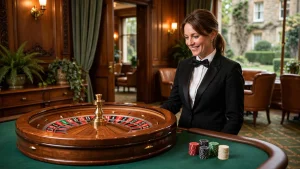
Live Roulette UK with English-Speaking Dealers
A practical guide to physical wheels, table layouts, live-game costs and the limits of roulette...

Monopoly Live Casino UK: Format and Gameplay
Live casino play combines a studio stream, a human dealer and an on-screen interface for...
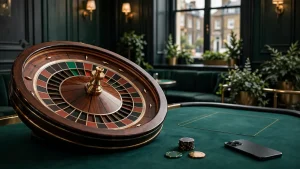
Online American Roulette in UK Casinos: Rules
American roulette adds a 00 pocket to the familiar wheel, affecting the outcomes behind every...
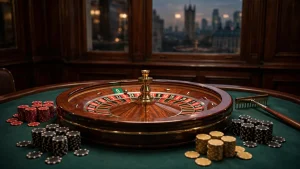
European Roulette at UK Online Casinos: Rules and Odds
Explore how the single-zero wheel affects risk, how online and live play differ, and what...