
Hi-Lo Casino UK: Rules, Formats and Licensing
 Available in GB
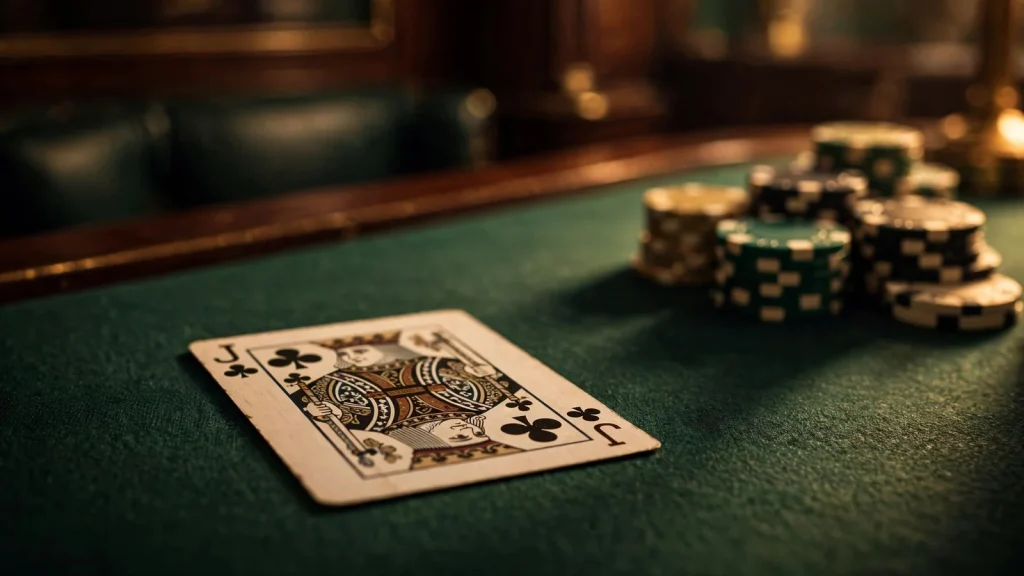
Hi-Lo turns each exposed card into a higher-or-lower decision, with formats differing in ties, card reuse and when a round can stop.
The Hi-Lo Table: One Card, Two Directions
A card lies face up. The next one has not yet appeared. The wager is a small act of comparison: will the coming card rank higher, or lower, than the one already showing? That is the whole hinge of Hi-Lo. Some versions add a third possibility, allowing a bet that the next card will have the same value.
Its appeal is easy to understand. The question is plain enough to be grasped at a glance, but the answer remains hidden until the card turns. There is no long sequence of rules to learn before the central choice becomes clear. A player reads the exposed value, forms a view about what might follow, and chooses a direction. Then the uncertainty is resolved.
The table gives chance a shape. “Higher” and “lower” divide the unknown into two imaginable futures, with the visible card serving as the boundary between them. A same-value option, where offered, complicates that neat division: the next card might land exactly on the line. It is a modest change in the menu of choices, but it alters what the wager asks the player to judge.
Live Roulette UK with English-Speaking Dealers
That simplicity can make the game look almost like a test of instinct. Yet the choice is not a statement about a player’s character or skill; it is a prediction made with incomplete information. A confident guess is still a guess. The exposed card makes the question concrete, not the answer certain.
There is also something revealing in the game’s economy of attention. One card is enough to organise the moment. The player need not imagine a whole hand or a complicated pattern; the mind narrows to a single comparison. This is a familiar human habit, turning an uncertain future into a choice between directions. The casino supplies the frame, and the card supplies the immediate fact around which expectation gathers.
For anyone exploring Hi-Lo casino games in the UK in 2026, the name describes a family resemblance rather than every detail of play. The shared idea is the higher-or-lower prediction, sometimes accompanied by the option to call a match. What happens around that decision can differ between formats, so the simple premise should not be mistaken for a promise that every table or game handles it in the same way.
Live Baccarat Online Casinos in the UK: How It Works
The distinction matters because a clean rule can conceal several different experiences. A card game may put the comparison at the centre of a round; another format may translate direction into a different kind of display. Those differences belong to the game being played, not to the basic meaning of Hi-Lo. At its most stripped-back, the wager asks whether the next value will rise or fall from the one already visible.
One card, two directions—and, in some versions, the possibility of neither. The tension is brief, but complete.
Live Hi-Lo: The Shoe Has a Memory
A live Hi-Lo table makes a small ceremony of uncertainty. A card is visible; the next one is hidden; the wager turns on whether that next card will be higher or lower. In a live casino, the suspense is not supplied by a graphic animation or a changing pot, but by a physical sequence of cards moving through a shoe. The machinery is ordinary. The waiting is the point.
French Roulette Online Casinos in the UK
A specialist review describes a setup of six decks, each containing 48 cards because the tens have been removed. Still, the detail matters to the way that version is understood: the cards available for the next result are not simply a complete, familiar pack. Removing a rank changes the possible composition of the shoe and, with it, the landscape of the guesses.
There is a faintly bureaucratic quality to such a rule. A card does not become important because of its face or its history, but because a system has decided it should not be there. The shoe is made legible by subtraction. What remains is the material from which the next uncertainty will be assembled.
Before the next winning card is revealed, three cards are burned. They are set aside rather than presented as the result of the round. This is a quiet but consequential part of the live sequence: the card that settles the wager is not simply the next card a viewer might imagine coming out. The burn intervenes between the visible reference and the winning card, adding a small interval in which the outcome remains unknowable.
Live Sequence
In this version, three cards are burned before the winning card is revealed, ensuring the outcome remains unknowable for a brief interval.
That interval is part of the table’s theatre, though it is not theatre in the grand sense. No elaborate plot is required. There is a pause, a dealer’s movement, and the knowledge that unseen cards have passed without becoming the answer. In a game built around one comparison, even a modest delay acquires weight. The procedure turns a simple prediction into an event.
The terms Higher and Lower can sound like two balanced doors. They are not perfectly so in their consequences. If the next card matches the reference card’s value, a Higher or Lower wager loses. A tie is not a neutral pause, nor does it return the stake under this rule. It falls on the losing side of the wager.
That matters because the ordinary language of comparison can suggest that equality is a third, separate result, waiting outside the choice. At the live table, the player has chosen a direction, and equality defeats either direction. The card has not gone higher or lower, but the wager still has an outcome. The rule is crisp; the intuition may be less so.
The stripped tens and the burned cards also make a useful distinction between what is visible and what is known. A player can see the exposed card and know the stated structure of the shoe, yet cannot see the cards that remain available at that moment. The live format gives the game a physical memory, but not a readable one. Its history is present in the shoe without being fully available to the people watching it.
Live Blackjack at UK Online Casinos: How It Works
That is part of the old appeal of cards: they carry traces of what has happened while withholding a complete account of what may happen next. A live Hi-Lo table gives that tension a particularly narrow stage. There is no long hand to follow, only a comparison, a burn, and a reveal. The rules compress attention.
The six-deck description should therefore be read as a description of one stated arrangement, not as a promise that every live Hi-Lo table is built the same way. The more dependable feature of the account is the structure it draws: tens are absent, three cards are burned before the winning card appears, and a matching value loses a Higher or Lower bet. Together, these rules give the shoe its character. It remembers, but it does not explain.
When the Previous Card Is Still in View
In a live Hi-Lo game, a round does not leave the table cleanly behind it. Its winning card stays exposed, and that card becomes the point of comparison for the next hand. The display therefore carries a small piece of history forward: the new prediction begins not from an unseen starting value, but from the result that has just been dealt.
That continuity can make the table feel like a sequence rather than a set of isolated turns. The previous card remains legible while the next decision takes shape. It is not merely a record of what happened; it supplies the reference for what happens next. A card that has already settled one wager thus acquires another job. The past is kept in view, but only in a very particular way.
The Role of the Previous Card
The winning card from the previous round remains exposed to serve as the reference point for the next hand, providing a visual link between consecutive decisions.
The physical handling of the cards follows a different kind of continuity. A continuous shuffler receives the cards from the completed round straight back into circulation. The visible card remains the reference on the table, while the cards used in play are returned to the machine. Those two movements—one card retained as a display, the dealt cards sent back—are the defining detail of this version of live Hi-Lo.
It is an arrangement that resists the familiar image of a shoe gradually emptying as cards are dealt. In a game where used cards stay out, the sequence itself can become a record of what remains possible. Here, by contrast, the previous round’s cards are put back into the shuffler immediately. The table remembers the outcome in public, while the card supply is refreshed through the equipment. Memory and circulation occupy the same game, but they are not the same thing.
That distinction matters when interpreting the exposed card. It is the visible benchmark for the next round, not a complete account of the cards that have passed through the game. The displayed value tells the table where the next comparison starts. It does not, by itself, show which other cards are available, which have already appeared, or how the shuffler has mixed them. Reading too much into a face-up card would confuse a reference point with a running inventory.
Live Casino Lightning Roulette UK: How Play Works
The design has a quiet theatrical quality. The card remains on show, giving the next hand a visible link to the last, while the machinery takes care of returning the used cards to circulation. A human eye can follow the succession; the equipment handles the reset. The game’s continuity is therefore partly visual and partly mechanical: one card is carried forward as context, while the rest of the previous deal does not simply remain out of play.
For live Hi-Lo casino sites, this is a useful point of distinction from formats in which the deck is depleted card by card. A live table may look as though its exposed history offers a map of what is coming, but the retained card has a narrower role. It anchors the next comparison. The shuffler’s return of used cards means the prior hand is not preserved as a growing list of unavailable cards.
The result is a table that keeps just enough history to connect one decision to another. It does not wipe the slate visually; nor does it leave the previous hand’s cards permanently spent. The reference card stays in view, and the rest goes back into circulation. A tidy compromise.
What “Best” Can Mean Without a League Table
Choosing a hi-lo casino in the UK means checking the practical details as well as the games. This list offers a concise reference to help you assess the options.
1. SlotoSport
Payout speed: 1-3 business days SlotoSport lists a payout speed of 1–3 business days, a useful detail to consider when assessing its fit.
2. NightLuck
Payout speed: 1-3 business days NightLuck lists a payout speed of 1–3 business days. This gives readers a clear practical detail to weigh when considering the operator.
3. Britsino
Payout speed: 1-3 business days Britsino states that payouts take 1–3 business days, providing a specific detail for readers comparing casino options.
4. Dieselwin
Payout speed: 1-3 business days Dieselwin lists payouts at 1–3 business days. That stated timeframe is the available practical point for readers to consider.
5. SpinFormula
Payout speed: 1-3 business days SpinFormula gives a payout speed of 1–3 business days, offering a clear detail to factor into your choice.
6. Revery Play
Payout speed: 1-3 business days Revery Play lists a payout speed of 1–3 business days. This is a useful practical consideration when exploring the operator.
7. Amunbet
Payout speed: 1-3 business days Amunbet states a payout speed of 1–3 business days, giving readers a concrete detail to consider.
8. Jetsetspins
Payout speed: 1-3 business days Jetsetspins lists payouts at 1–3 business days. Its stated timeframe offers a practical point of reference for readers.
9. x3bet
Payout speed: 1-3 business days x3bet gives a payout speed of 1–3 business days, a specific detail to keep in mind when assessing this option.
10. NightWin
Payout speed: 1-3 business days NightWin lists a payout speed of 1–3 business days. Readers can use this stated timeframe as one practical consideration.
A comparison of Hi-Lo games does not need to begin with casino names. The more useful question is what the game pays for a particular decision. When the choice is between Higher and Lower, the recommended approach is to select the side carrying the larger payout. That is a comparison of the terms attached to the two bets, not a promise that one direction will win more often.
The distinction matters. A larger award can make a bet look more attractive, but the payout is only one part of the wager. It does not, by itself, establish how likely the chosen result is. In Hi-Lo, the current card shapes the next prediction: a low reference card leaves more values above it, while a high one leaves more below it. The payment attached to each side can therefore be read as part of the game’s balance, not as a simple verdict on which side is “best”.
Do
- Select the side with the larger payout
- Compare terms attached to the bets
- Keep card thresholds beside return figures
Don’t
- Use broad labels like “best casino”
- Treat return figures as operator rankings
- Assume a universal guarantee from a maximum return
That makes the pay table a better starting point than a broad label such as the best Hi-Lo casino. A site may offer a game with familiar rules, yet the practical comparison rests on the terms of the wager being considered. If the Higher and Lower options pay differently, the larger listed payment is the relevant choice under the stated strategy. If the payments are the same, that particular comparison offers no advantage in one direction. The numbers on the table do the talking; the marketing language can wait.
A specialist review reports a highest return of 96.23% for bets on Higher when the reference card is above 4, or on Lower when it is below 10. The conditions are part of the claim. It is not a general return for every Hi-Lo wager, every card position or every game carrying the name. Nor does it describe a guaranteed result for an individual run. The figure belongs to those specified betting situations, as reported by that review.
That qualification is more than a footnote. A return figure stripped of its conditions can make unlike games appear directly comparable when they are not. A stated maximum attached to particular card thresholds says something narrower than a universal measure of value. Anyone comparing Hi-Lo offers on measurable terms needs to keep the threshold beside the percentage. Otherwise, the attractive number survives while the actual wager that produced it disappears.
Crazy Time Live Casino Game Show in the UK
There is also a difference between choosing the better-paying side and treating a return figure as a ranking of casinos. The first is a decision within a game’s own terms. The second would require a basis for comparing operators, and the figure above does not provide one. It identifies neither a league table nor a winner among British casino sites. It is a reported game return under defined conditions, not a medal.
The word “best” can thus mean something modest and useful: a game whose stated terms can be examined, with the payout for each direction visible and any return claim kept in its proper scope. It need not mean a site crowned above all others. A ranked list would imply a comparison that this measure alone cannot support. On this evidence, the sensible unit of comparison is the bet, not the brand.
There is a quiet social history in that preference for tables and percentages. Gambling has long translated uncertainty into rules that can be printed, displayed and compared. The translation is not the same as control. A pay table gives a wager a legible shape; it does not make the next card obedient. The exactness belongs to the terms, not to the outcome.
For a player assessing a Hi-Lo offer, the useful questions are therefore narrow: what does Higher pay, what does Lower pay, and does a published return apply to the card position being considered? The available return claim answers only the last question for its specified thresholds. It should not be stretched into a promise about all rounds or all versions of the game.
Comparing Hi-Lo
The most useful comparison is based on the specific payout for a bet and its associated conditions, rather than operator rankings.
A better comparison is not necessarily a longer one. It is one that keeps the payout beside the condition, distinguishes a game statistic from an operator ranking, and refuses to turn a reported maximum into a universal guarantee. That is less dazzling than a podium. More useful, too.
Hi-Lo Online: A Pot Built One Guess at a Time
Online Hi-Lo turns a card’s rank into a small wager on what comes next. The current card is the reference; the player predicts whether the next one revealed will sit above or below it. In the version described here, ranks run from ace, worth one point, to king, worth thirteen. The interface may make the decision look like a tap on a screen, but the underlying habit is older: take a known result, then stake something on an unknown one.
A correct prediction adds winnings to the pot. That growing total gives the game its particular rhythm: each sound decision appears to build on the last, and success can make the next choice feel more inviting. Yet a wrong guess costs the money placed on it, and the winnings already accumulated in that game are forfeited. The pot is not a protected balance merely because it has been assembled one correct call at a time. The screen keeps count; it does not confer ownership in advance.
Monopoly Live Casino UK: Format and Gameplay
The card’s value is plain enough, but the deck behind the display is less settled. One account of online Hi-Lo describes a single 52-card deck, with cards removed from play after they appear. Another describes six 48-card decks, with continuous shuffling. Those are materially different arrangements: in the first, the known cards alter what remains available; in the second, cards return to a circulating supply. The distinction changes what can be inferred from previous turns, not the basic higher-or-lower wager.
That disagreement matters because a digital table can look self-explanatory while concealing the mechanism that produces its next card. A player watching ranks rise and fall may imagine a stable sequence, but the picture alone cannot establish whether the deck is finite, replenished, or continually shuffled. The rules shown for the particular game, rather than the familiar label “Hi-Lo”, determine which account applies.
There is a small social history in the pot, too. Gambling has long made uncertainty legible by giving it a counter, a pile, a balance, a number that seems to turn chance into progress. Online, the pot performs the same work without a physical heap of coins. It marks success, encourages continuation and makes a loss feel like the removal of something already earned. That is the design’s quiet persuasion: accumulated winnings can look more secure than they are.
The game’s simplicity should not be mistaken for uniformity. Card values may be easy to read, and the choice may be reduced to two directions, but deck structure determines whether earlier cards remain relevant to later probabilities. A single-deck version and a continuously shuffled multi-deck version are not interchangeable simply because both ask for a higher-or-lower call.
One guess at a time.
Attention: Accumulated winnings in the pot are forfeited if a wrong guess is made; the total is not protected.
Hi-Lo Sites and the Rules Behind the Licence
A Hi-Lo game may be presented as a small wager between two cards, but the site offering it sits inside a much larger system of commercial gambling regulation. In Great Britain, that system has a single central regulator: the UK Gambling Commission. Its remit covers commercial gambling, including online casinos, rather than only games played in a physical venue.
The location of a casino’s servers or other key equipment does not, by itself, place its remote gambling beyond the Commission’s reach. The relevant point is that the service is offered to consumers in Great Britain. A company based elsewhere can still fall within the regulator’s scope when it provides remote gambling to that market. The machinery may travel; the regulatory responsibility does not simply travel with it.
That principle matters for Hi-Lo casino sites because the game’s simple format does not create a separate legal category. An online casino remains part of the regulated gambling sector whether its catalogue centres on cards, reels or another casino game. The Commission’s role concerns the commercial activity and the businesses and people responsible for it, not the particular sequence of guesses on a screen.
The licensing system distinguishes between organisations and individuals. Businesses operating gambling services require operating licences from the Gambling Commission. Individuals who perform relevant roles in the operation of gambling businesses may require personal licences. These are not interchangeable permissions: one attaches to the business providing the service, the other to people whose work falls within the licensing framework.
That division reflects a familiar feature of regulation. A company can be responsible for the service as a whole, while decisions and duties also rest with named people inside it. Licensing both levels makes the operator more than a logo on a screen and its staff more than invisible hands behind the interface. The distinction is administrative, but it has consequences for who is answerable.
Online American Roulette in UK Casinos: Rules
The Commission is the sole regulator for commercial gambling in Great Britain. That does not mean every gambling-related question belongs to it, or that the same territorial arrangements apply uniformly across the United Kingdom. Its stated remit over remote gambling is specifically tied to services offered to Great Britain consumers, regardless of where the key equipment is located.
For a player, the licence framework is the legal backdrop to the game, not a promise about whether a particular round will be fair or entertaining. It identifies the public body regulating the market and the kinds of operators and individuals subject to licensing. A card can go either way. Regulation is less mysterious: responsibility is assigned to businesses, and in relevant roles, to people.
The Reel Version: Direction, Payout and the Choice to Stop
A reel-based Hi-Lo game borrows the language of card prediction but not its materials. There is no exposed card waiting to be compared with the next one. Instead, the player selects a reel and chooses whether its stopping number should be higher or lower than the number from the preceding result. The reel supplies the movement; the wager supplies its interpretation.
A specialist review describes the selected reel as winning when it stops in the chosen direction. A result in the opposite direction loses, and a tie also counts as a loss. That makes the middle ground less forgiving than it may look: choosing “higher” does not cover a repeat, nor does “lower”. The game turns a small difference in direction into a decisive distinction.
Tie Result
In the reel-based version of Hi-Lo, a tie is counted as a loss, meaning neither a "higher" nor "lower" wager covers a repeat result.
The stopping point is not the only decision. After a win, the described version offers two paths: collect the original stake and winnings, or parlay them into another round. Collecting closes the sequence with the current result secured. Continuing puts that result back at risk in pursuit of another win. A wrong guess voids all winnings accumulated in that game; the growing total is not protected merely because earlier choices were correct.
This choice gives the reel format a different rhythm from card Hi-Lo. The central tension is not simply whether the next card will outrank the one on the table, but whether to preserve a successful run or expose it to another directional call. The machine makes the next event visible as a stopping reel, while the player decides how much of the run to carry forward. A modest theatre of control.
A specialist review reports a highest return of 96.23% for bets on higher than 4 or lower than 10. That figure belongs to those stated choices, not to every direction, threshold or version of the game. It is a return figure, not a promise about an individual session: a particular sequence can end in a loss even where the stated theoretical return is higher than another option’s.
The distinction matters when a reel game is grouped under the same Hi-Lo label as card formats. The name describes the directional guess, not a shared set of rules. Here, the reel’s number determines whether the selected direction succeeds, while the collect-or-parlay decision governs what happens to a win. Same name. Different machinery.
European Roulette at UK Online Casinos: Rules and Odds
Draw Hi-Lo and the Cards That Do Not Come Back
Draw Hi-Lo changes the feel of a card game by making the deck finite in a meaningful way. It uses one standard deck of 52 cards, and aces count as low. Once a card has been dealt, it is removed from play rather than returned to the deck. No card can therefore appear twice during the same game.
That absence is more than a tidy rule. In a game where each choice depends on the card already showing, the unseen deck is not a fixed background: it changes as cards leave it. A value that has appeared is no longer among the possible next cards. The player is dealing with a shrinking set, not an endlessly refreshed supply. Memory, here, belongs to the deck itself.
This is the distinction from a live format using a continuous shuffler, where used cards are returned to circulation. Draw Hi-Lo instead lets the sequence accumulate consequences. The contrast is easy to miss when both games ask for a prediction about the next card; structurally, they are different bargains with chance.
A specialist game review gives Draw Hi-Lo a return of 96.07% when played according to basic strategy. That figure is tied to the stated strategy, not a promise about an individual session or a universal rating for every Hi-Lo game. A return figure describes an expected result across play, while a particular run can move sharply in either direction. The arithmetic is calmer than the table.
Draw Hi-Lo Deck
This version uses a single 52-card deck where cards are removed after being dealt, meaning no card can appear twice in the same game.
The single deck also makes the game’s logic legible: cards already seen have gone, and the remaining possibilities are correspondingly altered. It does not make the outcome predictable. It does make each dealt card part of the game’s changing structure, rather than a prop that vanishes only to return moments later.
A Hi-Lo Site in Britain: Limits, Payments and Redress
A gambling account begins with a boundary: age. A UK-licensed operator must verify a customer is at least 18 before allowing a deposit. The check is not a decorative formality; it is part of the conditions under which real-money gambling is lawful.
Before a new customer’s first deposit, the operator must prompt them to set a financial limit. Account-level controls must remain accessible afterwards, so limits are not confined to the first screen and then politely forgotten. Self-exclusion must also be available. These tools do not alter the game’s odds, but they do shape the account around the person using it.
Payment rules draw another line. UK-licensed casinos cannot accept credit cards for gambling, including credit-card funding routed through a money service business. They also cannot accept wallet payments where the wallet permits credit-card funds to be used for gambling. The distinction concerns the source of the money, not merely the logo on the payment screen.
A complaint should have a route beyond the cashier and the help page. UK Gambling Commission licensees must provide an internal complaints process and access to an approved Alternative Dispute Resolution service. That gives unresolved disputes a formal next step rather than leaving them to circulate indefinitely between customer and operator.
Before depositing, the operator’s licence number can be checked against the UK Gambling Commission’s public register. A familiar brand name is not a substitute for that check: the register is where the licence status can be verified. The Commission regulates remote gambling offered to consumers in Great Britain, wherever the operator’s key equipment is located.
Deal or No Deal Casino UK: Game Format Explained
These protections are part of the ordinary machinery of a lawful account, not optional courtesies. Their practical value depends on whether the controls are visible and usable when needed. A policy hidden behind several layers of menus may exist on paper; a limit that can be found and changed at account level is a more concrete safeguard. The difference is small in wording, less so in practice.
How a Round Unfolds—and When It Ends
A Hi-Lo round opens with a card dealt at random. That card sets the reference point: the next decision is whether the following card will rank higher or lower. The player chooses a direction and stakes money on the prediction. When the exposed card makes one direction plainly more favourable, there may be little suspense in the choice; the uncertainty lies in what comes next.
A correct call wins according to the game’s pay table. The amount is not necessarily the same for every prediction, so the table determines what a successful guess returns. A tie is different from a win or a loss: it pushes, meaning the wager is returned rather than paid as a winning guess.
Live Dream Catcher Casino UK: How It Works
An incorrect prediction ends the run at a cost. The stake is lost, and winnings already collected during that game are void as well. A streak can therefore look secure only until the next card arrives. The rules leave no sentimental value attached to earlier success.
After the first decision, a player may stop and collect winnings accumulated so far, rather than make another guess. Continuing keeps the sequence alive; stopping preserves what has been won. The practical rhythm is simple: read the exposed card, choose a direction when the choice is not obvious, then let the next reveal settle the matter. A round ends when the player elects to leave with the accumulated winnings or makes an incorrect guess. Ties push instead of deciding the round as a loss, though their precise next step depends on the game’s rules. The card is small; the consequence is not.
Live Tables

Live casino UK: how streams, licences and bets work
A guide to remote casino play, UK licensing, table decisions, bonuses and the limits that...

Crazy Time Live Casino Game Show in the UK
A guide to the live format, casino access, practice play, wagering terms and UK licensing...

Deal or No Deal Casino UK: Game Format Explained
A look at the Banker-offer decision, online play mechanics and which bonus or return details...
French Roulette Online Casinos in the UK
A practical guide to zero rules, table formats, bet payouts and bonus terms, with the...

Live Baccarat Online Casinos in the UK: How It Works
Live baccarat combines a human dealer and a video stream with online betting, while table...

Live Blackjack at UK Online Casinos: How It Works
Live blackjack streams a human dealer in real time, bringing physical cards, table chat and...

Live Casino Lightning Roulette UK: How Play Works
A physical wheel and dealer give live roulette a visible rhythm, while the interface presents...

Live Dream Catcher Casino UK: How It Works
A camera shows a human dealer in a studio while an interface records bets, but...
Live Roulette UK with English-Speaking Dealers
A practical guide to physical wheels, table layouts, live-game costs and the limits of roulette...

Monopoly Live Casino UK: Format and Gameplay
Live casino play combines a studio stream, a human dealer and an on-screen interface for...
Online American Roulette in UK Casinos: Rules
American roulette adds a 00 pocket to the familiar wheel, affecting the outcomes behind every...
European Roulette at UK Online Casinos: Rules and Odds
Explore how the single-zero wheel affects risk, how online and live play differ, and what...