
Malta MGA Licence for UK Online Casinos: What It Means
 Available in GB

A Malta licence regulates an operator in Malta, while real-money offers to Great Britain require separate UKGC authorisation.
A Malta Licence Is Not a UK Licence
A Malta online casino licence and a UKGC licence belong to different regulatory systems. The Malta Gaming Authority (MGA) regulates operators licensed in Malta; the UK Gambling Commission regulates gambling in Great Britain. A licence issued by one authority does not become permission from the other simply because both concern online gambling.
That distinction matters when an operator offers real-money play across borders. In England, Scotland and Wales, an operator providing remote gambling facilities to consumers must hold a UKGC licence, even if its headquarters, servers or management are elsewhere. A casino licence from Malta does not replace that requirement. The operator’s address may be in Malta; the market it serves is still Great Britain.
The rule follows the activity, not the company’s postmark. An online casino may be licensed in Malta and still require a separate UKGC licence to offer real-money gambling to people in Great Britain. Without that UKGC licence, the Malta licence does not authorise the offer. It is illegal for an operator to provide gambling services to UK consumers without the required UKGC licence.
Non-GAMSTOP Casinos in the UK: What It Means
This is not a technical distinction reserved for lawyers. The word “licensed” can sound complete, as if it describes a universal status. In practice, a licence has a territory and a regulator behind it. A Malta-licensed casino is authorised under the Maltese system; that fact alone says nothing about whether it has permission to serve the British market. The authority named on a site is therefore not interchangeable with the authority whose rules govern the market in which customers are being offered play.
The same applies to the varied phrases used for these businesses: Malta-licensed online casinos, casinos licensed in Malta, or an online casino with a Malta licence. They all describe a connection to the Maltese regulator. None, by itself, establishes that the operator holds the British operating licence needed for real-money gambling in Great Britain. A foreign licence may be real and still be insufficient for this purpose.
Offshore Casino Sites for UK Players: Rules and Risks
There is a practical reason not to blur the two systems. Regulators grant permissions within their own legal frameworks, and an operator cannot widen one permission merely by presenting it to customers in another country. The MGA’s authority is relevant to the operator’s Maltese licence. The UKGC’s authority is relevant to the operator’s activity in Great Britain. The overlap is not automatic.
One specific MGA requirement concerns customer money: licensees must keep player funds in segregated accounts at an approved financial institution. That is a condition associated with the MGA framework. It does not turn the MGA licence into a UKGC licence, nor does it alter the British requirement for operators serving Great Britain. A safeguard attached to one regulator’s licence and permission to enter another regulator’s market are separate questions.
This distinction can be obscured by the international character of online gambling. A site may be available through a British internet connection, display familiar language and accept customers from multiple countries. Availability is not the same as authorisation. Nor does the operator’s physical location settle the matter: the UKGC requirement applies regardless of where the business is based.
The position is clearest when stated without the softening language of marketing. A Malta casino licence is not a British operating licence. For real-money gambling offered to consumers in Great Britain, the relevant permission is a UKGC licence. The two licences answer different questions, and one cannot be used as a substitute for the other.
That is the boundary. A Malta licence identifies the regulator under which an operator is licensed in Malta; it does not grant permission to offer real-money gambling in Great Britain. Cross-border commerce may make the distinction less visible on a screen, but the law does not follow the screen’s design. The regulator follows the market.
What “Best” Can Mean Under Two Rulebooks
For UK readers researching online casinos associated with Malta and MGA licensing, it is important to check the available facts rather than assume a licence status. The details here provide a payout-speed reference, but do not establish any operator’s licensing.
1. SlotoSport
Payout speed: 1-3 business days SlotoSport has a stated payout speed of 1–3 business days.
2. NightLuck
Payout speed: 1-3 business days NightLuck has a stated payout speed of 1–3 business days.
3. Britsino
Payout speed: 1-3 business days Britsino has a stated payout speed of 1–3 business days.
4. Dieselwin
Payout speed: 1-3 business days Dieselwin has a stated payout speed of 1–3 business days.
5. SpinFormula
Payout speed: 1-3 business days SpinFormula has a stated payout speed of 1–3 business days.
6. Revery Play
Payout speed: 1-3 business days Revery Play has a stated payout speed of 1–3 business days.
7. Amunbet
Payout speed: 1-3 business days Amunbet has a stated payout speed of 1–3 business days.
8. Jetsetspins
Payout speed: 1-3 business days Jetsetspins has a stated payout speed of 1–3 business days.
9. x3bet
Payout speed: 1-3 business days x3bet has a stated payout speed of 1–3 business days.
10. NightWin
Payout speed: 1-3 business days NightWin has a stated payout speed of 1–3 business days.
The phrase “best Malta online casino” appears to promise a single verdict. In practice, “best” can describe quite different things: the range of games, the feel of a website, the terms attached to an offer, or the confidence a player has that a complaint will be heard. Those qualities do not all come from the same place, and a Malta Gaming Authority licence cannot answer every question at once.
For someone comparing casinos from Britain, the distinction matters because a licence is not a general certificate of excellence. It belongs to a particular regulatory system. The UK Gambling Commission does not approve licences issued by authorities abroad, has no reciprocal arrangements with offshore regulators, and does not take complaints about operators licensed outside the UK. A Malta licence therefore does not carry UKGC complaint handling with it. The name of a regulator may be reassuring, but it is not a passport into another regulator’s process.
A Malta licence does not grant access to UKGC complaint handling or the protections attached to a British operating licence.
That difference can be easy to miss when a site presents several attractive features together. A bonus, a broad game catalogue and a prominent regulator’s badge can all make a platform look polished. Yet they answer separate questions. A bonus describes an offer; a game catalogue describes what is available; a licence identifies the authority under which the operator is regulated. None, on its own, establishes that a British customer has access to the protections attached to a UKGC licence.
The difference becomes especially concrete when something goes wrong. UKGC-licensed operators must provide access to an approved Alternative Dispute Resolution provider. A complaint is first taken through that provider; if it remains unresolved, it can then be referred to the Gambling Commission. That is a defined route, not simply a badge or a promise to “take complaints seriously”.
For an operator licensed outside the UK, the UKGC is not a substitute complaints desk. It will not adjudicate a dispute merely because the customer is in Britain or because the operator’s marketing mentions a foreign regulator. Nor does the Commission’s refusal to handle such complaints amount to an endorsement of the alternative arrangements. The process under another authority belongs to that authority and the operator’s own terms. Those are different systems, not interchangeable labels.
Online Casinos With No Sister Sites in the UK
This is why a list of MGA casinos, even if carefully compiled, would not by itself rank the quality that matters to a particular player. A list can identify a regulatory affiliation. It cannot establish the practical value of the complaints route, the clarity of an offer, or the suitability of a site’s wider terms. Those judgements require separate evidence, and the word “best” often blurs them into one convenient label.
There is a social history tucked inside that word. Consumer rankings turn complicated institutions into a simple competition: one site appears above another, and the ordering seems to settle the question. But regulation is not a scoreboard. The UKGC’s role is to oversee operators serving Great Britain under the British framework; it does not supervise foreign regulators or make their decisions on its behalf. A Malta licence may be meaningful within its own jurisdiction, but it does not import the UK route for resolving complaints.
So “best” needs a context. A person interested mainly in a particular site feature may use the word differently from someone who values a complaint process with an approved ADR provider and a route onward to the Commission. Those are not necessarily competing definitions of quality. They are different priorities, and the regulatory boundary changes what each one can reasonably promise.
A ranking can make that boundary disappear. A regulator’s logo can do the same, if it is read as proof that every familiar UK protection follows. Neither does. The careful question is not whether a Malta-licensed casino is good in the abstract, but what the licence actually establishes—and which authority would hear a dispute. That is less dazzling than a league table. More useful, too.
Do
- Check for a UKGC licence for real-money play
- Verify the approved ADR provider for complaints
- Confirm games are certified by approved testing houses
Don’t
- Rely on an MGA badge as proof of UK authorization
- Assume a polished design equals regulatory compliance
- Treat a foreign licence as a substitute for the UKGC
Casino Sites and the Evidence Behind Their Claims
A Malta address or an MGA badge may explain how a casino describes itself, but neither settles whether it may offer remote gambling to people in Great Britain. The relevant question is whether the operator holds a UKGC licence for that activity. The rule follows the customer market, not the company’s postal address: an operator providing remote gambling facilities to consumers in Great Britain needs the required UKGC licence even if it is based abroad.
That makes the wording on a site worth reading closely. A Malta-licensed casino may make a claim about its home regulator, while a separate claim about serving Great Britain requires separate evidence. The company name matters, too: a group can operate through different legal entities, and a general statement about a brand is not, by itself, proof that the entity offering the gambling holds the relevant licence. The claim should be checked against the UKGC’s own licensing information, rather than treated as established because it appears in a footer, advert or bonus page.
This is a more useful test than deciding which Malta casino sites look most polished. Design, a large games catalogue and fluent promotional copy can all be produced without answering the central regulatory question. A page may look settled. Its legal position still needs checking.
Gibraltar Casino Licence and UK Legal Status
Games and complaints leave a paper trail
The evidence is not limited to the licence. UKGC-licensed operators are required to offer games that have been examined and certified by testing houses the Commission approves. That requirement concerns the games’ testing and certification; a casino’s own assurance that its slots are fair is not a substitute for it. Where the site makes claims about oversight, the operator should be able to explain what testing applies and who carries it out.
Complaints provide another practical point of comparison. A UKGC licensee has to work with an approved Alternative Dispute Resolution provider to deal with player complaints. The site’s terms or complaints information should identify the route available, rather than leaving the process as a vague promise that customer support will help. Naming an ADR provider is a claim that can be checked; having a contact form is not the same thing.
These checks do not turn every claim into a guarantee. They separate statements that can be tested from language designed mainly to reassure. “Licensed”, “tested” and “independently reviewed” are not interchangeable descriptions, and the relevant authority or testing role should be clear. A Malta connection may be genuine and still leave the British licensing question unanswered.
The same discipline applies when a site promotes Malta casino bonuses or online slots. Promotional language says little about who oversees the operator or how the games are certified. Before those claims carry weight, the operator’s identity, its UKGC status, its games-testing arrangements and its complaints route should make sense together. If the details point to different companies, or the oversight remains unnamed, the claim has not yet done its job.
Not a badge. Evidence.
Verify Operator Status
- Check for a valid UKGC licence
- Identify the approved ADR provider
- Confirm the operator’s identity matches the licence
- Verify the games-testing arrangements
The GamStop Gap Offshore
GamStop is a national self-exclusion scheme, not a badge that an individual casino can choose to display. Every operator holding a UKGC licence must participate. When a person registers for an exclusion period, it applies across UKGC-licensed gambling sites, rather than only to the particular site that prompted the decision.
The available periods are six months, one year or five years. Those fixed choices give self-exclusion a deliberately firm shape: it is not a cooling-off switch that each operator can interpret differently. For people seeking distance from gambling, the point is that the exclusion reaches the licensed sites covered by the scheme, not merely one account or one brand.
The gap appears with non-UKGC licensed casinos. A Malta-based or MGA-licensed site outside the UKGC system does not participate in GamStop. It will not be included in a GamStop exclusion simply because it offers casino games to people in Britain, nor does a Malta licence make it part of the UK scheme. “Not on GamStop” describes that boundary; it does not mean that a site has an alternative version of the same national exclusion.
That distinction matters especially when the phrase “Malta casinos not on GamStop” is used as though it named a useful category of choice. It identifies a regulatory separation, not a safeguard. Someone who has excluded themselves through GamStop may still encounter gambling sites beyond its reach. The scheme cannot impose its block on operators that do not participate in it.
There is a separate legal point. Operators offering gambling services to UK consumers without a UKGC licence act unlawfully. An MGA licence does not replace that UKGC requirement or turn an operator outside GamStop into a lawful provider for the British market. The regulatory boundary is not a technicality invented by the self-exclusion scheme; it is also a boundary on who may offer gambling to UK consumers.
Anjouan Casino Licence in the UK: What It Means
That makes “outside GamStop” a poor synonym for freedom from rules. It means only that the site is outside this particular national system. It does not extend a person’s GamStop exclusion to that site, and the scheme cannot promise protection there. Nor does a Malta licence create participation by implication.
Self-exclusion is one of the rare parts of gambling regulation whose purpose is to make access harder, not smoother. Its effectiveness depends on the sites covered by it, and that coverage has a clear edge. A non-UKGC licensed casino may sit beyond that edge, but its absence from GamStop is not evidence that it is a suitable place to gamble. The gap is real. So is the limit of the scheme.
Real-Money Play and the Protections That Follow
A Malta-based casino may hold an operating licence from the Malta Gaming Authority, but that does not settle whether it may take real-money bets from customers in Great Britain. In England, Scotland and Wales, an online operator offering real-money gambling must hold a UKGC licence. The rule follows the service into the market; a business’s address abroad does not replace the required authorisation.
That distinction matters because a licence is not merely a badge on a website. It determines which regulator oversees the operator’s conduct and which requirements attach to the customer relationship. An MGA licence may be relevant to an operator’s status in Malta, but it is not the UKGC licence required for real-money gambling offered to people in Great Britain. A Malta casino online can therefore be a genuine Malta-licensed business and still lack the authority needed to serve this market.
Illegal Activity
It is illegal for an operator to provide gambling services to UK consumers without the required UKGC licence, regardless of whether they hold an MGA licence.
The boundary is practical, not decorative. A site’s branding, language or familiarity cannot change the licensing requirement. Nor does the phrase “MGA casino” tell a British customer that the operator is authorised under the British system. The name identifies a regulator; it does not make the two regulatory systems interchangeable.
Age checks are another condition of lawful play. The Gambling Commission requires licensed operators to establish that a customer is at least 18 before that person can deposit or play. Verification is therefore not an afterthought reserved for a later withdrawal. It is meant to precede access to real-money gambling. In a market where online entertainment can be entered with a few clicks, the age threshold marks a deliberate interruption: the operator must know enough to establish eligibility before money is put at risk.
This is a modest-looking safeguard with a substantial purpose. A birthday entered into a form is only a claim; verification is the operator’s responsibility. The obligation belongs to the business, not to a label such as “MGA online casino” or to the confidence with which a site describes itself.
For UKGC licensees, the handling of customer balances also has a prescribed structure. Player funds must be kept apart from the operator’s money. The separation is intended to protect those balances if the casino becomes insolvent, rather than leaving customer money mixed into the business’s ordinary operating funds. It is a safeguard about custody and financial failure, not a promise that every dispute will vanish or that every process will be instantaneous.
Curacao Casino Licence in the UK: What It Means
That distinction is worth keeping clear. A balance displayed on a screen is a claim against an operator; segregation gives that claim a more protected financial footing if the business collapses. It does not turn gambling into a risk-free activity, and it does not make an overseas regulator responsible for a UKGC licensee’s duties.
Real-money play in Great Britain rests on linked conditions: the operator must hold the local operating licence, verify that customers meet the age requirement, and keep player funds separate from operational funds. A Malta licence may describe one part of a company’s regulatory position. It cannot perform the work of the other requirements. The line is firm.
Which UK Players Can a Malta Site Serve?
“UK players” sounds like a single category, but the phrase crosses a regulatory boundary. Great Britain means England, Scotland and Wales; Northern Ireland is part of the UK but sits under a different gambling regime. The Gambling Act 2005 gives the UK Gambling Commission authority over Great Britain, not Northern Ireland on the same terms. A Malta casino’s description of itself as accepting UK players therefore leaves an important question unanswered: which part of the UK does it mean?
For customers in Great Britain, the central distinction remains the one between a site’s location and permission to serve the market. A Malta address or Malta Gaming Authority licence does not replace the UKGC licence required for remote gambling offered to people in England, Scotland and Wales. “MGA casino for UK players” may describe a site’s marketing or intended audience; it does not, by itself, establish that the operator is authorised to provide real-money gambling in Great Britain.
Safe Online Casinos in the UK: Player Protections
Northern Ireland cannot simply be folded into that rule. Its regulatory arrangements are separate, and the UKGC does not oversee remote gambling there as it does in Great Britain. That difference does not make the word “UK” a useful substitute for checking which jurisdiction a statement concerns. It means the same phrase can carry different implications depending on where the player is located.
The no-deposit offer introduces a more practical distinction. To claim one, a player must be physically in Great Britain. This is a location condition attached to the offer, not a substitute for the rules governing real-money gambling. Being in Great Britain may satisfy that particular condition; it does not turn a Malta licence into a UKGC licence or establish that an operator can lawfully offer gambling there.
That matters because “free play” can blur two different things. An offer may be described as free or no-deposit, while the question of whether an operator may provide real-money gambling remains a separate regulatory issue. The offer’s wording cannot settle that question. Nor does the broad label “accepting UK players” explain whether an offer is available in Northern Ireland, where the regulatory framework differs.
A careful reading separates three points: the player’s location, the jurisdiction being discussed, and the kind of activity involved. Great Britain has the UKGC’s licensing framework; Northern Ireland has a distinct regime. A no-deposit offer has its own physical-location requirement in Great Britain. These are related questions, but they are not interchangeable.
The border is not merely a line on a site’s country selector. It changes which regulator’s framework is relevant, while an offer’s location condition answers only where it can be claimed. Short wording; long consequences.
Casino Without a Swedish Licence: UK Player Guide
Bonuses, Wagering and the Small Print
A Malta casino bonus can look generous in its headline and still be difficult to turn into withdrawable money. The key is the wagering requirement: the amount of qualifying bets that must be placed before bonus funds, or winnings linked to them, become cash that can be withdrawn. The wording matters. A requirement may apply to the bonus, the deposit, or both, and the terms determine which.
The arithmetic is simple; the qualifying-bet rules are not. A specialist affiliate review illustrates the calculation with a £20 bonus and a 35x requirement: the player would need to place £700 in qualifying bets. That figure describes the example, not a standard offer. For UK-regulated promotions, wagering requirements are capped at 10x. A requirement above that cap is not a permissible UKGC promotion.
Game contribution rates then change how quickly qualifying bets accumulate. Slots commonly count each bet in full, while table games may count only a fraction—such as 10% or 20%—or may not count at all. A £10 table-game bet counting at 10%, for instance, adds only £1 towards the requirement. The same stake on a game contributing nothing adds nothing. The displayed bet size, therefore, can be a poor guide to progress.
The small print should identify eligible games, contribution rates, excluded bets and the point at which the requirement is considered met. It should also make clear whether a maximum bet applies while bonus funds are active. These details can turn a seemingly straightforward reward into a much narrower arrangement: a game that is enjoyable may contribute little, while a larger wager may still advance the counter slowly.
Calculate Wagering
Identify the Requirement
Take a £20 bonus with a 35x wagering requirement.
Calculate Total Bets
Multiply the bonus by the requirement: £20 × 35 = £700 in qualifying bets needed.
Apply Contribution Rates
Account for game type; for example, a £10 table-game bet at 10% contribution only adds £1 toward the £700 total.
The label “no deposit” changes the entry point, not the mechanics. A no-deposit bonus can still carry wagering conditions, eligible-game restrictions and withdrawal terms. For a Malta-branded offer, the label alone says nothing about how much play is required or which bets qualify. The terms do.
A useful comparison begins with the cash value of the bonus, then follows the requirement through the eligible games and contribution table. Headline size is only the opening line. The counter tells the story.
What the Malta Gaming Authority Can—and Cannot—Guarantee
The Malta Gaming Authority’s name on an online casino’s paperwork points to a particular regulatory framework, but it is not a promise that every aspect of the business is protected. One concrete safeguard concerns customers’ money: MGA licensees must keep player funds in segregated accounts held at an approved financial institution. The separation is meant to distinguish money belonging to players from the operator’s own working funds.
That distinction matters because a casino balance is not simply a figure on a screen. It represents money held by a business, and the arrangement for holding it can affect what happens if that business encounters financial trouble. Segregation gives player funds a defined place apart from the operator’s general accounts. It does not, by itself, establish that every balance will be recoverable in every circumstance, or that a customer can treat an account balance as equivalent to cash in a personal bank account. Safeguard, not certainty.
This is the useful meaning of an MGA casino licence: a specific requirement attached to the handling of player funds. It is narrower than a general assurance about an operator’s finances, customer service or every possible dispute. The label “Malta Gaming Authority casinos” may suggest a common standard, but the practical question is what that standard requires—and what it does not say.
Non-GamStop Curaçao Casinos and UK Oversight
For customers in Great Britain, the separate UK rule remains decisive. An operator providing remote gambling facilities to consumers there must hold a UK Gambling Commission licence, wherever the company itself is located. A Malta Gaming Authority online casino licence does not replace that requirement. The two authorities’ names therefore answer different questions: the MGA’s fund-segregation rule describes a safeguard for its licensees; the UKGC licence is required for remote operators serving Great Britain.
That distinction is easily blurred by lists of MGA-licensed casinos, or by the repeated use of “regulated” as if it were a universal status. A Malta-licensed operator may have a rule governing segregated player funds, but that fact alone does not establish that it is authorised to serve customers in Great Britain. Nor does it convert an MGA licence into a UKGC licence.
The wording on a site should be read precisely. A reference to Malta, an online casino licence or player-fund separation identifies a regulator and a particular obligation. It is not a blanket guarantee, and it does not settle which rules apply to a customer in another jurisdiction.
A New Casino Is Still a Licensing Question
A new online casino from Malta can arrive wrapped in the language of freshness: a recently opened site, a new games lobby, a new account offer. The launch date may be worth noting, but it does not answer the more consequential question for people in Great Britain: is the operator authorised to provide gambling here?
The rule follows the service, not the address. A company may be based in Malta or elsewhere, but if it provides remote gambling facilities to consumers in Great Britain, it needs a UK Gambling Commission licence. A Malta-based operation does not acquire that permission simply by being new, or by describing itself as an MGA casino. Novelty changes the packaging, not the legal test.
Casino Licensing & Safety for UK Players
That distinction matters when the phrase “new Malta online casino” is used as if it described a single category. It may refer to a recently launched site, an operator newly visible to British customers, or a business advertising a Malta connection. Those are different claims. None, by itself, establishes that the site may legally offer gambling in Great Britain.
The same applies to a site calling itself a new MGA casino or a new MGA-licensed casino. The wording points to a claimed regulatory connection; it does not establish UKGC authorisation. A fresh design and a prominent licence badge can make a site look settled before its position in the British market has been established. The distinction is less glamorous than a launch announcement. It is also the point.
For an operator offering gambling services to UK consumers without a UKGC licence, the activity is illegal. That is not a penalty imposed on a player for visiting a website; the legal requirement concerns the operator offering the service. But the absence of the required licence means that a new site should not be treated as a legitimate British casino merely because it accepts registrations or appears in a list of new Malta casinos.
Payment terminology does not settle the issue either. A reference to Neteller, or to casinos associated with Malta, concerns how a site presents its payment options or location. It says nothing by itself about permission to serve Great Britain. A payment method is not an operating licence.
Launches are easy to announce. Authority is a separate matter.
Non-GamStop European Casinos: UK Rules
Where a Casino Is Based—and How Its Money Is Handled
Malta’s place on a casino’s paperwork is not a substitute for the permission required to serve customers in Great Britain. An operator may be based in Malta, keep offices elsewhere or run its website across borders; the relevant question for British consumers is whether it holds a UKGC licence. Remote gambling operators serving Great Britain need that licence regardless of where the business is physically located.
The distinction matters because “based in Malta” can sound like a complete explanation. It describes an operator’s location, not the rules governing its offer to people in Britain. A Malta address, a payment method familiar to British customers or a label referring to an MGA casino does not, by itself, establish the UKGC status of the service.
There is a mundane reason Malta appears so often in online gambling’s geography: a company’s base is a business fact, while the licence required for a particular market is a regulatory one. The two can sit side by side without being interchangeable. Geography is not permission.
Merkur Casino Online in the UK: Games and Rules
The handling of balances is another part of the distinction. UKGC-licensed operators must keep player funds separate from the money used to run the business. That separation is intended to protect customer money if the casino becomes insolvent. It does not turn an overseas address into a safeguard, nor does it establish that a non-UKGC licensed casino follows the same requirement.
For a casino serving Great Britain, the location of its offices and the status of customer balances answer different questions. One concerns where the company operates from; the other concerns how player money is kept under UKGC rules. A payment brand may tell little about either. The operating licence remains the hinge between an international business address and the protections attached to serving the British market.
Can I still play at non-UKGC casinos if I’m based in the UK?
A Malta licence alone does not authorise a casino to offer real-money gambling in Great Britain. Operators serving customers in England, Scotland or Wales must hold a UKGC licence.
Are offshore casinos legal for UK players?
An offshore operator must hold a UKGC licence to offer real-money gambling to customers in Great Britain. A foreign licence does not replace that requirement.
What tools do UK operators have to provide?
UKGC-licensed operators must offer deposit and loss limits, session limits, time-outs and self-exclusion, including GamStop. They must also provide session reminders and reality checks.
Are no-deposit spin offers legal in Great Britain?
UKGC-licensed operators can offer them, and players must be physically in Great Britain to claim them. Operators offering real-money gambling to customers there must hold a UKGC licence.
Safety

Anjouan Casino Licence in the UK: What It Means
An Anjouan authorisation applies under its own jurisdiction and does not by itself permit an...

Best foreign casinos for UK players: what to know
The label refers to accepting British customers without a UK Gambling Commission licence, not simply...

International Casinos for UK Players: Licensing
Understand how UK authorisation differs from overseas access, and why bonuses, withdrawals and player safeguards...

Offshore Casino Sites for UK Players: Rules and Risks
The guide examines licensing, business relationships, bonus terms, crypto withdrawals and safeguards beyond a site's...

Offshore casinos for UK players: risks and rules
Offshore sites may accept British visitors, but access does not mean authorisation or the safeguards...

British Casinos Not on GamStop: What It Means
GamStop applies to UK-licensed operators, so a site's regulatory status affects whether a registered self-exclusion...

Casino Sites Not Registered with GamStop in the UK
GamStop blocks registered UK residents from gambling at UKGC-licensed online casinos, but does not cover...

Casino Without a Swedish Licence: UK Player Guide
A foreign licence is not a UKGC licence, and a casino’s location does not determine...

Casinos That Bypass GamStop: What UK Players Should Know
GamStop applies to UKGC-licensed operators; access beyond that system does not carry the same regulatory...

Curacao Casino Licence in the UK: What It Means
A Curaçao licence identifies a jurisdiction, but does not establish UK regulation, customer access or...

Gibraltar Casino Licence and UK Legal Status
A Gibraltar link identifies an operator’s declared regulatory setting, but does not determine its UK...

Merkur Casino Online in the UK: Games and Rules
Merkur titles are products in an operator’s changing catalogue, while the casino platform is responsible...
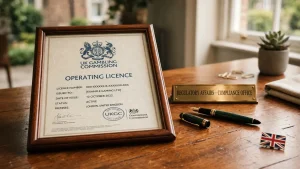
UK Online Casino Trustworthiness: Start with the Licence
Trust depends on verifiable UK licensing and how operators handle safeguards, terms, payments and withdrawals....

Non-GAMSTOP Casinos in the UK: What It Means
A site's absence from Gamban does not establish whether GAMSTOP applies or whether the casino...

Non-GamStop Curaçao Casinos and UK Oversight
The article separates offshore licensing claims from UK authorisation and explains why exclusion status and...

Non-GamStop European Casinos: UK Rules
A casino’s location, branding and audience do not determine whether its UK-facing operations fall within...

Non-UK Licence Casinos: How Overseas Regulation Works
The issuing authority shapes oversight and complaint options, so an overseas licence is not equivalent...

Non-UK-Registered Casinos: Licensing Explained
The guide separates a casino’s business location from its gambling regulator and examines the practical...

Non-UK Regulated Casinos: What UK Rules Cover
UK licensing depends on serving customers in Great Britain, while offshore permissions and safeguards vary...

Non-UKGC Licensed Casinos: UK Rules and Risks
The distinction between an operator’s UK licensing duty and an individual’s position shapes the risks...

Online Casinos With No Sister Sites in the UK
Shared ownership or technology can shape casino features, but familiar games, layouts and promotions are...

Online slots not on GamStop: what to know
GamStop blocks access at participating UKGC-licensed casinos; mobile play and unfamiliar offers do not change...

Safe Online Casinos in the UK: Player Protections
A practical guide to licensing, gambling limits, payments, bonus terms and security, without treating a...

Trusted Casinos Not on GamStop UK: What to Check
The guide weighs licensing, player protections, payments and promotional terms at casinos operating outside the...

Trusted UK Casino: Licensing, Checks and Safeguards
Licensing, identity checks, public records and payment terms help explain what can—and cannot—be verified about...

USA Casinos for UK Players: Access and Licensing
A guide to how licensing, safeguards, payments, bonuses and recourse differ for UK players at...

VPN-Friendly Casinos UK: Access, Licensing and Risk
A casino accepting VPN connections does not necessarily hold a UK licence or offer the...