
Non-UK Licence Casinos: How Overseas Regulation Works
 Available in GB

The issuing authority shapes oversight and complaint options, so an overseas licence is not equivalent to UK Gambling Commission regulation.
What a Non-UK Casino Licence Actually Covers
A casino licence identifies the authority under whose rules an operator says it is permitted to provide gambling services. In the online market, the phrase can sound like a single passport: one certificate, one common standard, one straightforward answer about what a site may do. In practice, the important first question is more basic: which regulator issued it?
A non-UK-regulated casino is an online gambling site operating without oversight from the UK Gambling Commission (UKGC). It may still hold a licence elsewhere. Malta, Curaçao, Gibraltar and Anjouan are among the jurisdictions commonly named in connection with such sites. The licence is therefore not necessarily absent; rather, the site is outside the UKGC’s supervisory system.
That distinction matters because “licensed” is not a description of a universal status. It says that a particular authority has granted permission under its own framework. The words alone do not establish what the authority checks, how it supervises the operator, or what avenues are available if a dispute arises. Those questions belong to the rules and institutions attached to the licence, not to the reassuring sound of the word itself.
A licence also has a scope. It relates to an operator’s permission under the issuing jurisdiction’s system; it is not a general endorsement that follows a company wherever it does business. Nor does the presence of a licence from one place turn the site into a UK-licensed online casino. “Overseas licensed” and “licensed by the UKGC” describe different regulatory relationships.
The language used in casino listings can blur these boundaries. A site may be called a licensed casino online, or a licensed online casino, with the issuing authority left in the background. That omission is not a small technicality. Without the jurisdiction, the label tells little about which rules apply. A licence is meaningful only when attached to the regulator and the operator it covers.
The same caution applies to the phrase “online casino licence”. It can refer to permission granted by a regulator in one jurisdiction, but it does not by itself say that the permission covers every market in which a site might be encountered. A casino licence is not a roaming document. Its relevance depends on the territory and the authority involved.
Safe Online Casinos in the UK: Player Protections
There is a social history in this vocabulary. Gambling has long been organised through borders: states decide which businesses may operate, which institutions supervise them, and what public obligations accompany permission. The internet made the operator’s location less visible to a customer, but it did not make jurisdiction disappear. A website can be encountered from one country while its licence belongs to another regulatory system. The screen is borderless; the authority behind it is not.
For that reason, references to non-UK licences should be read as descriptions of where regulatory oversight is based, not as interchangeable seals of approval. Malta, Curaçao, Gibraltar and Anjouan are not different spellings of the same regulator. Each name points to a separate jurisdiction. Their frameworks are not made identical by appearing together in a list, and a licence issued by one does not become a UKGC licence by being displayed on a website.
A new licensed online casino raises the same first question as an established one: licensed by whom? “New” describes the age or recent arrival of a site, not the nature or reach of its permission. The phrase may be useful as a market label, but it cannot settle what regulatory system applies. The licence’s issuer remains the essential part of the description.
This is the limited but important meaning of a non-UK licence in this context: it points to an operator’s connection with a licensing jurisdiction outside the UKGC’s oversight. It does not, on its own, explain the quality of supervision, the protections attached to the licence, or the status of the site in another country. Those are separate questions, and the licence name is where they begin—not where they end.
A label, not a guarantee.
Malta and Other Overseas Licensing Jurisdictions
A Malta-licensed online casino belongs to a different regulatory geography from a casino licensed in Curaçao, Gibraltar or Anjouan. Those places appear in the same broad conversation about non-UK-regulated casinos, but their names do not describe one shared licence or a single system of oversight. A jurisdiction is not a decorative stamp. It identifies where the operator’s licensing relationship sits.
Malta
Associated with the Malta Gaming Authority, a recognisable name in online gambling.
Curaçao
A distinct jurisdiction that is not a branch of a common overseas regulator.
Gibraltar
A separate regulatory authority and territory from other overseas jurisdictions.
Anjouan
A specific licensing jurisdiction with its own separate framework.
Malta is often prominent in this landscape, in part because its regulator, the Malta Gaming Authority, is a recognisable name in online gambling. But “licensed in Malta” answers a narrower question than it may seem to answer. It identifies the jurisdiction associated with the licence; it does not, by itself, establish that the casino is authorised to serve every market, or that a Malta-issued licence has the same effect as a UK licence.
The same care applies to the other places named alongside Malta. Curaçao, Gibraltar and Anjouan are distinct jurisdictions, not branches of a common overseas regulator. A list of places can make licensing sound like a set of interchangeable badges. It is closer to an address: useful for locating authority, but not a substitute for understanding what that authority covers.
That distinction matters because the phrase “Malta licensed online casinos” can group together operators on the basis of geography while telling little about the exact company or licence involved. The place name is a starting point, not a full account of the operator’s status. A casino’s branding may be familiar; the legal entity behind the service may be less visible. The licence’s issuer and scope are therefore more informative than a broad label on a homepage.
Online Casinos With No Sister Sites in the UK
There is also a difference between a licence’s origin and the market in which a site is being used. A Malta licence remains a Malta licence; it does not turn into a UK Gambling Commission licence when a British customer visits the site. The reverse is equally straightforward: the fact that a site is accessible from Britain does not tell what jurisdiction issued its licence. Geography and access are separate questions.
This is why comparisons between overseas jurisdictions need to resist the easy language of ranking. A country or territory cannot be treated as a guarantee of a particular standard merely because its name appears on a licence. Nor does the word “licensed” settle whether the licence matches the operator, the service, or the market in question. The same label can conceal different legal arrangements; the difference lies in the issuing authority and the boundaries it sets.
A useful way to read the landscape is to keep three details apart: the jurisdiction named, the authority associated with it, and the operator named in the licence information. Malta points towards the Malta Gaming Authority; Gibraltar towards its own regulatory authority; Curaçao and Anjouan are likewise separate entries on the map. None should be silently substituted for another. A place-name is not a universal seal.
The question of how to find a licensed casino therefore begins with identifying what “licensed” means in that particular case. It is not enough to see a flag, a logo, or a sentence in promotional copy. The jurisdiction tells where the licensing claim is anchored, while the licence itself defines its reach. Beyond that, the implications depend on the regulator and the market involved, rather than on the comforting sameness of the word “overseas.”
This geography is less tidy than advertising suggests. Malta, Curaçao, Gibraltar and Anjouan may all appear in descriptions of non-UK-regulated casinos, but they remain separate authorities and separate licensing contexts. The map matters. The label alone does not.
What “Best Licensed” Can—and Cannot—Mean
For UK players considering casinos without a UK licence in 2026, check the available information carefully before choosing where to play. This list offers a concise reference point, including the stated payout speed for each operator.
1. SlotoSport
Payout speed: 1-3 business days SlotoSport states a payout speed of 1–3 business days.
2. NightLuck
Payout speed: 1-3 business days NightLuck states a payout speed of 1–3 business days.
3. Britsino
Payout speed: 1-3 business days Britsino states a payout speed of 1–3 business days.
4. Dieselwin
Payout speed: 1-3 business days Dieselwin states a payout speed of 1–3 business days.
5. SpinFormula
Payout speed: 1-3 business days SpinFormula states a payout speed of 1–3 business days.
6. Revery Play
Payout speed: 1-3 business days Revery Play states a payout speed of 1–3 business days.
7. Amunbet
Payout speed: 1-3 business days Amunbet states a payout speed of 1–3 business days.
8. Jetsetspins
Payout speed: 1-3 business days Jetsetspins states a payout speed of 1–3 business days.
9. x3bet
Payout speed: 1-3 business days x3bet states a payout speed of 1–3 business days.
10. NightWin
Payout speed: 1-3 business days NightWin states a payout speed of 1–3 business days.
“Best licensed” sounds like a single judgement, but it combines two different questions: how closely a casino is overseen, and how well it suits a player’s priorities. An overseas licence may establish that an operator falls under another jurisdiction’s rules. It does not, by itself, show that those rules offer the same protections as UK Gambling Commission oversight.
That difference matters more than the adjective. Non-UK-regulated casinos can be subject to less demanding standards for responsible gambling and data protection than operators regulated by the UKGC. A licence name, displayed in a footer or on a registration page, cannot settle how much practical protection accompanies it. Nor does calling a site one of the best licensed online casinos make its safeguards equivalent to those required in the UK system.
The word “best” is therefore conditional. It might refer to a player’s preferred games, payments or terms, but those preferences do not answer the more consequential question of what happens when gambling becomes harmful or personal information is involved. A site can appear attractive on one measure and still offer a weaker protective framework. There is no useful overall ranking that makes those trade-offs disappear.
Non-UK-regulated casinos may have less demanding standards for data protection and responsible gambling than those overseen by the UKGC.
What a licence cannot promise
The licensing label should not be read as a general warranty of fair treatment. Rules differ between regulators, and the country named on a licence is not a substitute for understanding the protections attached to it. In particular, responsible-gambling requirements and data safeguards may be less stringent outside UKGC oversight. That does not mean every overseas operator behaves badly; it means the regulatory baseline may be different.
The practical consequences are not abstract. Someone using a non-UK-regulated casino cannot rely on the UK’s Financial Ombudsman Service in the way they could within the UK framework, and mandatory responsible-gambling tools available under that system do not follow them offshore. Those are meaningful losses, not footnotes to a ranking.
A comparison that counts only convenience or entertainment leaves out the institutional part of the bargain. The appeal of a platform may be real, but it cannot restore access to protections that do not apply there. The label has limits.
A more useful comparison
A considered assessment asks what the licence actually means for oversight, what responsible-gambling provisions apply, and how personal data is handled. It also separates a site’s marketing claims from the protections its regulatory setting requires. These questions do not produce a tidy podium. They produce a clearer account of risk.
The phrase “best licensed online casino” can also blur two meanings: the strongest regulatory framework, or the most appealing casino among those holding a licence. Those are not interchangeable judgements. A casino may be highly rated for its offer while operating under rules that provide fewer safeguards than UKGC regulation. Conversely, a stringent framework does not by itself establish that a particular site suits every preference.
The same caution applies to searches for the best UK-licensed casino or the best licensed crypto casinos. The first phrase points towards a UK regulatory category; the second foregrounds a payment preference. Neither phrase, on its own, proves that a platform is safest, most suitable or best protected. A payment method is not a measure of oversight.
Do
- Check the specific rules of the licensing regulator
- Verify available remedies for customers
- Assess actual responsible-gambling provisions
Don’t
- Trust a “best licensed” label as a guarantee
- Assume payment methods indicate oversight levels
- Treat all overseas licences as interchangeable
For 2026, as in any year, the sensible meaning of “best” depends on which standard is being judged. Where the issue is protection, the relevant comparison is not a polished ranking but the rules that govern the operator and the remedies available to its customers. In a market where licences cross borders more easily than protections do, “best” needs a qualifier. Otherwise, it is mostly decoration.
A UK Licence and an Overseas Licence Are Not the Same
The word “licensed” can sound like a complete answer. It is not. A licence identifies the authority under whose rules an operator is permitted to act; it does not, by itself, establish permission to serve every market. A casino may hold a licence somewhere and still lack the licence required for customers in Great Britain.
The distinction is one of scope, not merely geography. An operator’s registered base, the country named on its licence and the market it serves are separate details. For customers in Great Britain, the relevant requirement is clear: an operator offering gambling services must hold a licence from the UK Gambling Commission, wherever that operator is based. A foreign address does not remove that requirement, and a licence issued elsewhere does not become a UK licence by being displayed on a casino website.
That matters when comparing licensed online casino sites. “Licensed” without the name of the licensing authority leaves out the part that gives the word meaning. A UK-licensed casino is one operating under the UKGC’s authority; a site licensed by a different jurisdiction is not UK-licensed on that account. The two descriptions cannot be used interchangeably, even when both operators advertise a licence.
Casino Without a Swedish Licence: UK Player Guide
The distinction also resists a common piece of visual shorthand: a seal in a footer. A badge may point to a regulator, but it does not establish that the regulator is the one required for the market being served. The useful question is not simply whether a casino presents a licence, but which authority issued it and what market the operator is serving. A licence is not a universal passport.
This is why searches for licensed casinos in the UK can produce results that use the language loosely. A site might be licensed in another jurisdiction, yet that fact does not satisfy the UK licensing requirement for an operator serving Great Britain. Conversely, the operator’s physical location is not the deciding factor: the requirement follows the market, not the company’s postcode.
The word “overseas” can obscure this point. It may describe where an operator is based or where its licensing authority sits, but neither description changes the UKGC requirement. A company cannot substitute the authority of its home jurisdiction for the licence required to serve customers in Great Britain. Nor does calling a platform an international casino settle the question. Labels travel more easily than permissions.
The same logic applies to payment-themed labels. A licensed Litecoin casino, for instance, is not necessarily licensed for the British market merely because it accepts a particular digital currency or holds a licence elsewhere. The payment method and the licensing authority answer different questions. One concerns how funds move; the other concerns the operator’s regulatory permission. Conflating them makes a marketing description do the work of a legal one.
For casino licence requirements, then, the decisive distinction is not between a familiar brand and an unfamiliar one, or between a local and distant company. It is whether the operator serving Great Britain holds the UK Gambling Commission licence required for that market. “Licensed” is only the beginning of the sentence.
Licensing Requirement
Operators offering gambling services to customers in Great Britain must hold a licence from the UK Gambling Commission, regardless of where the operator is based.
Anjouan Licensing: Authority, Limits and Complaint Routes
An Anjouan casino licence has a defined reach. It does not authorise an operator to serve customers in the United Kingdom or in other markets listed as restricted. A licence issued there is therefore not a permission to operate everywhere; its significance depends on the territory it covers and the rules attached to it.
That boundary matters when a site describes itself as licensed. The label identifies a jurisdiction, not a universal approval. For an Anjouan-licensed casino, it does not mean that the operator has permission to serve the British market under that licence. Nor does the existence of a licensing authority mean that every dispute can be taken to it.
The complaint route is particularly limited. Anjouan’s authority does not take up player complaints, mediate between a customer and an operator, or decide who is right. The casino itself must respond to complaints within 30 calendar days under the framework, but that response obligation is not the same as independent adjudication. If the exchange goes nowhere, there is no Anjouan authority waiting to review the evidence and issue a ruling.
That absence changes the practical weight of a complaint. A player may raise a problem with the operator, but the licensing framework does not supply an independent dispute-resolution service comparable to one approved under UK Gambling Commission rules. The difference is not merely administrative. A complaint process has little force if the party being challenged is also the last party empowered to answer it.
There is a similar distinction around self-exclusion. Anjouan-licensed casinos are not required to connect to GAMSTOP, the UK-wide self-exclusion scheme. A person who has registered with GAMSTOP should not assume that the scheme will block access to a casino operating under an Anjouan licence. The licence does not bring the operator inside that system.
Non-GAMSTOP Casinos in the UK: What It Means
This is one reason the phrase “licensed casino” can sound more reassuring than it is. Licensing may establish a relationship between an operator and a jurisdiction, but the protections available to customers depend on the particular framework. In Anjouan’s case, the authority’s role does not extend to resolving individual disputes, and the operator is not required to provide the independent route familiar from UKGC-approved services. A badge cannot do that work by itself.
The distinction also resists a common shortcut in comparisons of non-UK licensed casinos: treating all overseas licences as if they carried the same scope and remedies. An Anjouan casino licence has its own limits. It does not grant UK market authorisation, guarantee a route to independent complaint adjudication, or require integration with GAMSTOP. Those are separate questions, and the word “licensed” answers none of them on its own.
For a dispute, the available first step is the operator’s complaints process. The framework sets a response period, but it does not turn the Anjouan authority into an appeal body. That is the central limit: a stated obligation to reply, without an independent decision-maker behind it.
Curaçao Licences, Crypto and the Payment Trade-Off
Curaçao is one of the jurisdictions associated with non-UK-regulated casinos, alongside Malta, Gibraltar and Anjouan. A Curaçao casino licence identifies the place from which a gambling operator claims regulatory authority; it does not, by itself, make the site part of the British licensing system. The distinction matters because a licence’s name can sound like a passport, when it is closer to an address.
A Curaçao casino licence identifies the operator’s claimed regulatory authority but does not integrate the site into the British licensing system.
Payment choices are one reason these sites attract attention. Offshore casinos may offer credit cards, e-wallets, bank transfers and cryptocurrency, sometimes using alternative payment processors. The available methods depend on the operator and its payment arrangements. A logo at the deposit stage is not a promise that the same route will be open when money is withdrawn.
That difference is especially visible with crypto. Cryptocurrency payments can avoid the UK ban on gambling funded by credit cards: the transaction is not charged to a credit card in the usual way. But this is a narrow payment distinction, not a change in the site’s licensing status. A crypto option does not turn a Curaçao-licensed casino into a UK-licensed one, nor does it settle whether the operator is authorised to serve customers in Great Britain.
The label “licensed crypto casino” can therefore conceal two separate questions. One concerns the operator’s claimed licence and the jurisdiction behind it; the other concerns how deposits and withdrawals actually work. Crypto may be accepted for a deposit without being offered for a withdrawal, which could instead have to use another method. The payment menu is not a complete map of the journey.
Nor does the presence of cryptocurrency establish that a site requires no identity checks. Payment technology and account verification are different matters. A casino’s advertised method does not establish what documents or checks may be required before funds are released.
VPN-Friendly Casinos UK: Access, Licensing and Risk
The trade-off is practical as well as regulatory. Familiar-looking options—cards, bank transfers or e-wallets—may sit alongside crypto, but the route used to put funds in does not guarantee a matching route out. The word “licensed” describes a regulatory claim; it does not certify every payment step or make the protections of one country’s system portable to another. Payment convenience travels more easily than accountability.
The UK Gambling Commission’s Reach—and Its Limits
The UK Gambling Commission’s reach is defined less by an operator’s address than by the market it serves. A company based abroad still needs the Commission’s permission to offer remote gambling to customers in Great Britain. A casino operating licence is therefore not simply a certificate attached to a company’s home country; for this market, the relevant question is whether the operator is authorised to serve it.
That principle gives a UK Gambling Commission licensed casino a particular status: its authority to operate in Great Britain comes from the British regulator, not from the place where its offices or servers happen to be. The same applies to online casinos offering casino games remotely. A foreign licence may govern activity elsewhere, but it does not replace the UKGC’s requirement for operators serving Great Britain.
This is the regulator’s reach. Its limits concern who is regulated by that rule. The Gambling Act 2005 is directed at businesses supplying gambling services into the British market, rather than at individual players. UK law does not expressly bar British citizens from using gambling services licensed abroad, and a player does not commit a criminal offence merely by gambling on a site without a UKGC licence. That distinction is not an endorsement. Online gambling is legal in the UK only through licensed and regulated sites, while an overseas site remains outside the Commission’s system.
UK Law and Overseas Sites
UK law does not expressly bar British citizens from using gambling services licensed abroad, and players do not commit a criminal offence by gambling on a site without a UKGC licence.
The boundary is easy to blur because websites travel more readily than regulators. A casino may present a licence issued elsewhere and appear accessible from Britain, but accessibility is not the same as authorisation to serve Great Britain. Nor does an operator’s application for a casino licence in another jurisdiction establish that it has the UK casino operating licence required for this market. The location of the business and the location of its customers answer different questions.
A UK Gambling Commission licensed casinos list, where consulted, is useful only insofar as it identifies operators authorised by the British regulator. It cannot turn every foreign permission into a UK one, or settle the status of a site simply because the site is reachable. The comparison between an MGA and UKGC licence belongs to that same distinction: each authority has its own remit, and one does not stand in for the other.
Regulation follows the market. The player’s position is not identical to the operator’s, but that does not make an unlicensed site part of the UK system. A narrow boundary, with real consequences.
MGA Licensing in the Wider European Picture
Malta appears regularly in discussions of non-UK-regulated casinos because it is one of the jurisdictions that licenses online gambling operators. The Malta Gaming Authority (MGA) is the regulator associated with that licence. Its presence in a casino’s terms or footer therefore identifies a regulatory connection to Malta; it does not, by itself, establish that the casino is authorised to serve every market in which its website or app can be reached.
Merkur Casino Online in the UK: Games and Rules
That distinction matters in Britain. A Malta-licensed casino is not thereby a UK Gambling Commission-licensed casino. Operators offering real-money gambling to customers in Great Britain must hold the relevant UKGC licence, wherever the business is based. A licence issued in Malta cannot stand in for that domestic requirement.
The two labels answer different questions. An MGA licence points to the jurisdiction under whose framework an operator is licensed. A UKGC licence concerns permission to serve the British market. Treating one as a portable substitute for the other turns geography into a false guarantee. The word “European” does not erase the border between regulatory systems.
Nor does the word “licensed” settle every practical question about a particular site. The label alone does not establish what protections apply to a British customer, which complaint route is available, or whether the operator is authorised for the market being targeted. Those details depend on the relevant rules and the operator’s actual permissions, not on the reassuring weight of an acronym.
The same distinction holds for an app. A casino app is a way of accessing gambling services, not evidence that the service has a UK licence. Its appearance in an app store, or its smooth operation on a British phone, does not change the jurisdiction named in the operator’s licence. Software travels lightly; regulatory authority does not.
Malta is often grouped with Curaçao, Gibraltar and Anjouan in descriptions of casinos outside UKGC oversight. That grouping identifies places associated with licensing, not a single shared system or a uniform level of permission. An MGA-licensed casino and a casino licensed elsewhere should not be treated as interchangeable simply because both are outside the British regulator’s scheme.
Regulatory Distinctions
- An MGA licence is not a substitute for a UKGC licence in the British market
- Regulatory authority does not travel with the software or app
- Malta, Curaçao, Gibraltar, and Anjouan are separate authorities, not a single system
- The decisive factor for British customers is the presence of a UKGC licence
For British-market purposes, the decisive question remains whether the operator holds the UKGC licence required to serve customers in Great Britain. Malta may explain where a licence comes from. It does not answer that question. A small distinction, until money is involved.
Casinos Without a UK Licence: What the Difference Means
A list of UK-licensed online casinos is, in principle, a list of operators within the UK Gambling Commission’s system. A casino without a UK licence sits outside that system, even if it accepts British customers or displays a licence issued elsewhere. The distinction is not cosmetic: it changes which safeguards and complaint routes apply.
The phrase “non-UK casino” can make the difference sound like geography. In practice, a non-UK-regulated casino may be operated from abroad, but the important point is that it is not overseen by the UKGC. A foreign licence does not turn it into a UK-licensed casino. Nor does an operator’s appearance on a list of licensed sites, by itself, establish that it holds the licence required to serve the British market.
The most immediate difference for people who use self-exclusion is GamStop. Casinos not on GamStop do not participate in the UK Gambling Commission’s self-exclusion scheme. A self-exclusion registration therefore does not extend to those sites. The boundary is institutional, not a technical promise that every gambling site will recognise one central block.
There are wider consequences. At an offshore casino, players lose access to the UK’s Financial Ombudsman Service and to responsible-gambling tools that are mandatory for UK-licensed operators. Measures such as deposit limits and self-exclusion may be absent or governed by the operator’s own arrangements. A label such as “offshore licensed casino” says nothing, on its own, about whether those protections are available or how a complaint would be handled.
That is why a directory of casinos with no UK licence cannot serve as a counterpart to a list of UK-licensed operators. The entries may share a lack of UKGC oversight while differing in the licence they hold, their terms and the practical routes available when something goes wrong. The common feature is the missing UK framework.
A licence from elsewhere may describe the rules of another jurisdiction. It does not supply UKGC oversight, GamStop participation or access to UK complaint mechanisms. The distinction is less about a flag beside a company name than about which institution stands behind the rules. A thinner safety net.
New Licences, Old Questions of Authority
“Newly licensed” sounds like a clean beginning: fresh paperwork, a new name on a register, perhaps a casino presented as a recent arrival. But the adjective says nothing by itself about where the licence applies. A new MGA-licensed casino and a new UK-licensed casino are not equivalent categories simply because both are new.
A licence has a jurisdiction and a scope. Its date may matter to the operator’s history; it does not turn one regulator’s authority into another’s. Nor does a recent launch establish that a casino is authorised to serve customers in Great Britain. The central question is not how recently a licence was issued, but whether it is the licence required for the market in which the operator is offering gambling.
That distinction can disappear in promotional language. “New” is easy to print and gives a site the sheen of an opening night. Authority is less decorative. A casino may hold a licence from a regulator outside the UK system, yet that fact alone does not satisfy the requirement for operators serving Great Britain. The regulator named in a headline is therefore not a substitute for checking what the licence permits.
The same caution applies to lists of new casinos. A recent appearance online does not establish the relevant licence, and a licence associated with Malta does not make a casino UK-licensed. Labels describe fragments; jurisdiction determines the boundary.
The rule for the British market is plain: operators serving customers in Great Britain must hold a UK Gambling Commission licence, wherever the business is based. Anyone considering an overseas gambling service remains responsible for checking the laws that apply and understanding the implications. Newness is not authority.
Is it legal for a UK player to gamble at an Anjouan-licensed casino?
UK law does not explicitly prohibit British players from using gambling services licensed abroad, and players do not commit a criminal offence by gambling on an unlicensed site. However, an Anjouan licence does not authorise a casino to operate in the UK; operators serving customers in Great Britain need a UKGC licence.
What payment methods work best at non-UK regulated casino sites?
Offshore casinos may accept credit cards, e-wallets, bank transfers and cryptocurrencies, sometimes through alternative processors. Some also allow payments via a mobile phone bill or prepaid balance; withdrawals can take from 24 hours to five business days, or up to three or four weeks.
Is an Anjouan licence as good as MGA or UKGC?
An Anjouan licence does not provide protections comparable to UKGC oversight: it does not require RNG testing, audits or segregation of player funds, and it offers no comparable independent dispute-resolution route.
Are Anjouan-licensed casinos safe and fair?
An Anjouan licence alone cannot guarantee that a casino is safe or fair: the framework does not require RNG testing, audits or segregation of player funds. The Anjouan authority also does not handle or adjudicate player complaints.
What payment options are available at non-UK casinos?
Non-UK casinos may accept credit cards, e-wallets, bank transfers and cryptocurrencies, often through alternative processors. Some also accept payments charged to a mobile phone bill or deducted from a prepaid balance.
Safety

Anjouan Casino Licence in the UK: What It Means
An Anjouan authorisation applies under its own jurisdiction and does not by itself permit an...

Best foreign casinos for UK players: what to know
The label refers to accepting British customers without a UK Gambling Commission licence, not simply...

International Casinos for UK Players: Licensing
Understand how UK authorisation differs from overseas access, and why bonuses, withdrawals and player safeguards...

Offshore Casino Sites for UK Players: Rules and Risks
The guide examines licensing, business relationships, bonus terms, crypto withdrawals and safeguards beyond a site's...

Offshore casinos for UK players: risks and rules
Offshore sites may accept British visitors, but access does not mean authorisation or the safeguards...

British Casinos Not on GamStop: What It Means
GamStop applies to UK-licensed operators, so a site's regulatory status affects whether a registered self-exclusion...

Casino Sites Not Registered with GamStop in the UK
GamStop blocks registered UK residents from gambling at UKGC-licensed online casinos, but does not cover...

Casino Without a Swedish Licence: UK Player Guide
A foreign licence is not a UKGC licence, and a casino’s location does not determine...

Casinos That Bypass GamStop: What UK Players Should Know
GamStop applies to UKGC-licensed operators; access beyond that system does not carry the same regulatory...

Curacao Casino Licence in the UK: What It Means
A Curaçao licence identifies a jurisdiction, but does not establish UK regulation, customer access or...

Gibraltar Casino Licence and UK Legal Status
A Gibraltar link identifies an operator’s declared regulatory setting, but does not determine its UK...

Merkur Casino Online in the UK: Games and Rules
Merkur titles are products in an operator’s changing catalogue, while the casino platform is responsible...
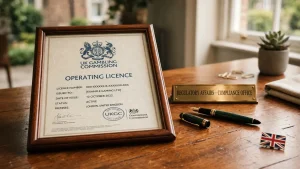
UK Online Casino Trustworthiness: Start with the Licence
Trust depends on verifiable UK licensing and how operators handle safeguards, terms, payments and withdrawals....

Non-GAMSTOP Casinos in the UK: What It Means
A site's absence from Gamban does not establish whether GAMSTOP applies or whether the casino...

Non-GamStop Curaçao Casinos and UK Oversight
The article separates offshore licensing claims from UK authorisation and explains why exclusion status and...

Non-GamStop European Casinos: UK Rules
A casino’s location, branding and audience do not determine whether its UK-facing operations fall within...

Non-UK-Registered Casinos: Licensing Explained
The guide separates a casino’s business location from its gambling regulator and examines the practical...

Non-UK Regulated Casinos: What UK Rules Cover
UK licensing depends on serving customers in Great Britain, while offshore permissions and safeguards vary...

Non-UKGC Licensed Casinos: UK Rules and Risks
The distinction between an operator’s UK licensing duty and an individual’s position shapes the risks...

Malta MGA Licence for UK Online Casinos: What It Means
A Malta licence regulates an operator in Malta, while real-money offers to Great Britain require...

Online Casinos With No Sister Sites in the UK
Shared ownership or technology can shape casino features, but familiar games, layouts and promotions are...

Online slots not on GamStop: what to know
GamStop blocks access at participating UKGC-licensed casinos; mobile play and unfamiliar offers do not change...

Safe Online Casinos in the UK: Player Protections
A practical guide to licensing, gambling limits, payments, bonus terms and security, without treating a...

Trusted Casinos Not on GamStop UK: What to Check
The guide weighs licensing, player protections, payments and promotional terms at casinos operating outside the...

Trusted UK Casino: Licensing, Checks and Safeguards
Licensing, identity checks, public records and payment terms help explain what can—and cannot—be verified about...

USA Casinos for UK Players: Access and Licensing
A guide to how licensing, safeguards, payments, bonuses and recourse differ for UK players at...

VPN-Friendly Casinos UK: Access, Licensing and Risk
A casino accepting VPN connections does not necessarily hold a UK licence or offer the...