
£2 Minimum Deposit Casinos in the UK: What to Know
 Available in GB
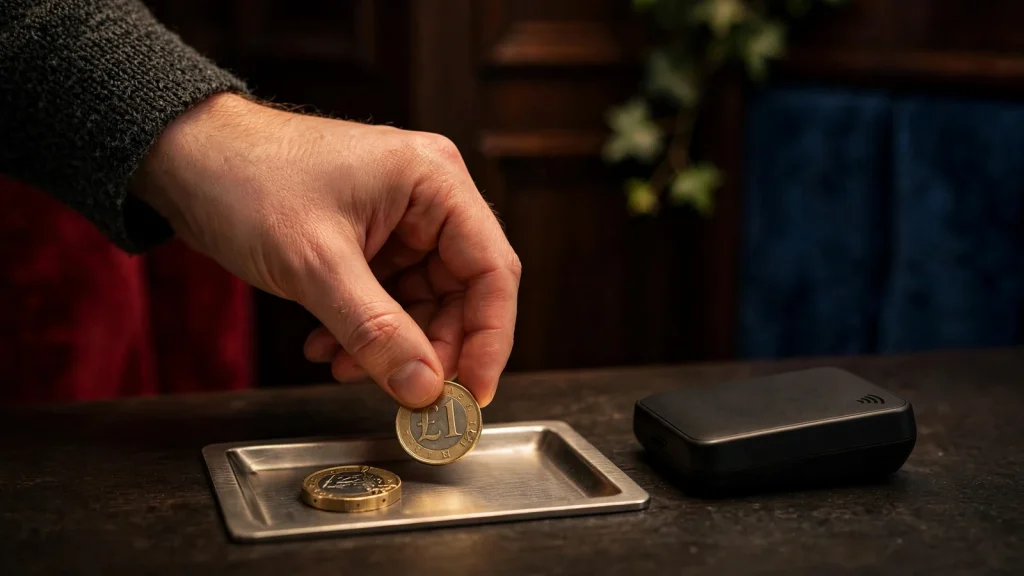
A low cashier minimum does not set game stakes or withdrawal rules, so each stage needs checking separately.
What a £2 Deposit Actually Buys
A £2 minimum deposit is a boundary set by a casino’s cashier, not a promise that every part of the account will work in £2-sized steps. If a deposit of that amount is accepted and credited, the account balance rises by £2. That is the straightforward part. What the figure does not tell anyone is how much must be staked before play can begin, whether every game permits a suitably small bet, or what balance is needed before a withdrawal can be requested.
Those are separate rules, attached to separate stages. The cashier decides whether the payment can enter the account. The games determine how quickly a balance can be used. The withdrawal policy decides when money can leave. One small number at the front door cannot answer all three questions.
This distinction matters because “minimum deposit” sounds like a measure of the whole experience. It is only a measure of one transaction. A casino may accept £2 without requiring a larger first payment, but that does not make £2 a universal unit of play or cash-out. Nor does it mean that a player can deposit, place a stake, and immediately withdraw any remaining balance under identical conditions. The account has its own terms, and the cashier threshold is only one of them.
If you are looking for a casino with a £2 minimum deposit, check the deposit terms before signing up, as no minimum-deposit details are provided here. The listed payout information may help you assess withdrawal timing.
1. SlotoSport
Payout speed: 1-3 business days SlotoSport lists a payout speed of 1–3 business days.
2. NightLuck
Payout speed: 1-3 business days NightLuck lists a payout speed of 1–3 business days.
3. Britsino
Payout speed: 1-3 business days Britsino lists a payout speed of 1–3 business days.
4. Dieselwin
Payout speed: 1-3 business days Dieselwin lists a payout speed of 1–3 business days.
5. SpinFormula
Payout speed: 1-3 business days SpinFormula lists a payout speed of 1–3 business days.
6. Revery Play
Payout speed: 1-3 business days Revery Play lists a payout speed of 1–3 business days.
7. Amunbet
Payout speed: 1-3 business days Amunbet lists a payout speed of 1–3 business days.
8. Jetsetspins
Payout speed: 1-3 business days Jetsetspins lists a payout speed of 1–3 business days.
9. x3bet
Payout speed: 1-3 business days x3bet lists a payout speed of 1–3 business days.
10. NightWin
Payout speed: 1-3 business days NightWin lists a payout speed of 1–3 business days.
A balance is also an accounting figure, not a guarantee of a particular result. Once a deposit is credited, it is available according to the operator’s account rules; it does not become a separate pile of notes, nor is it protected from being spent through play. A small starting balance can be used up quickly or remain in the account, depending on what is staked and what happens in the games. The deposit itself does not set the pace.
The £2 threshold sits within a broader low-deposit landscape. Some UK casinos accept deposits as low as £1, so £2 is not the lowest possible cashier minimum. A specialist review reported that six UK Gambling Commission-licensed casinos had been verified as accepting a genuine £1 minimum deposit. That is a snapshot reported by that kind of publication, not a permanent count of the market: cashier terms can change, and a figure recorded at one point should not be mistaken for a lasting category.
£3 Minimum Deposit Casinos in the UK: Key Facts
The difference between £1 and £2 may seem modest, but the label can conceal a practical distinction. A genuine £1 minimum means the cashier accepts a deposit at that amount, rather than advertising a small figure that applies only under conditions a customer cannot meet. Even then, the deposit minimum says nothing by itself about other account thresholds. A site’s smallest accepted payment and its minimum withdrawal can be quite different figures.
That gap is where a low entry point can become less useful than it first appears. Many UK casinos have withdrawal thresholds in the £10 to £20 range, according to a specialist review. The point is not that every operator follows that range; it is that a small deposit and a small cash-out are not automatically paired. If the balance remains below the operator’s withdrawal threshold, the available options depend on that operator’s rules. The initial payment may have been accepted perfectly correctly, while the exit remains governed by another minimum.
This is not a contradiction. Businesses often divide transactions into stages, each with its own floor. A ticket may be cheap to buy but not redeemable in every circumstance; a casino account applies the same kind of institutional logic to money in and money out. The smaller the starting sum, the more visible that logic becomes. A larger balance can pass unnoticed through the thresholds. A small one makes them the main event.
So a £2 minimum deposit casino is best understood as a place where the cashier may accept £2, not as a promise that £2 will be enough for every purpose. The distinction is plain, though easy to miss amid large type and promotional language. Deposit, play and withdrawal are not synonyms. They are three different permissions, each with its own terms.
That is what the £2 buys: entry at a stated price, if the cashier’s rules allow it. It does not buy a particular amount of play, a guaranteed withdrawal route, or a balance that can be treated as separate from the games. Small sums make the fine architecture of an account easier to see. The door is only the door.
Attention: A minimum deposit is only a measure of one transaction; it does not guarantee that the same low amount applies to betting stakes or withdrawal thresholds.
Why the Lowest Deposit Is Not Always the Best Value
A low cashier minimum looks like a small promise: the account will accept a modest payment. It does not promise that the payment will unlock an offer, meet its qualifying conditions or make a particular promotion worthwhile. The word “best” therefore depends on what the deposit is meant to do. For someone who wants to try real-money play without committing much, a £2 minimum may matter more than a welcome package. For someone comparing advertised offers, the same threshold may be beside the point.
That distinction is easy to miss because the cashier and the promotion sit beside one another on the same screen. The deposit field states what the operator will take. The bonus terms state what amount must be paid to qualify. Those figures can differ. A platform may accept a small deposit for the balance while setting a higher entry point for its welcome promotion. The transaction can succeed and the offer still remain inactive. Nothing has gone wrong; two separate conditions have simply been mistaken for one.
A specialist review reported that some UK casinos exclude their lowest deposit bracket from welcome promotions. It also described welcome offers with qualifying deposits between £5 and £10, while noting that a £1 payment may fund an account without activating a deal. These are reported terms, not a rule applying to every casino. The point is the gap between being allowed to deposit and being eligible for a promotion. A £2 payment can fall on the wrong side of that gap even when the cashier accepts it.
Online casinos without registration in the UK: explained
The same distinction can appear at a higher threshold. A specialist review reported cases where a casino accepted £5 deposits but required £10 to qualify for a bonus. In that arrangement, the advertised cashier minimum remains accurate, yet it tells only part of the story for anyone depositing with an offer in mind. The deposit amount that opens the account’s real-money balance is not necessarily the amount that opens the promotional balance.
This is why a low minimum deposit casino is not automatically the best-value choice. “Value” can mean several different things: keeping the initial outlay small, receiving a promotion, or avoiding an offer whose conditions make it inconvenient. A bonus headline may look generous while the qualifying threshold excludes a small payment. Conversely, a casino with no suitable welcome offer may still meet the narrower aim of making a modest deposit possible. These are different forms of usefulness, not points on a single scale.
The word “legit” raises a separate question. In the UK, a real-money casino serving the market must hold the relevant Gambling Commission licence. A low deposit requirement does not establish that status, and a polished offer does not establish it either. Legitimacy comes from the operator’s regulatory position, not from the size of the minimum or the presence of a bonus. “Safe” and “trusted” are similarly not qualities proved by a low entry price. A small first payment limits the amount initially committed, but it is not a substitute for checking who is operating the site.
Nor does the appearance of a new casino settle the comparison. A newer brand may present a fresh welcome offer, but the useful questions remain ordinary ones: what payment qualifies, whether the offer applies to that deposit, and what happens if it does not. A promotion that cannot be activated at the intended amount has no practical value to that particular deposit, however prominent its headline may be. The same applies to offers that are available only after a qualifying choice has been made during registration.
Do
- Check if the deposit meets the specific qualifying threshold for a bonus
- Verify the operator’s Gambling Commission licence for legitimacy
- Distinguish between the cashier minimum and promotional requirements
Don’t
- Assume a low cashier minimum automatically unlocks a welcome offer
- Equate a low entry price with safety or trust
- Mistake a new brand’s headline offer for guaranteed practical value
For people looking specifically for online slots with a £2 minimum deposit, the deposit threshold should not be confused with the cost of each spin. Funding an account at that level says what can be paid in; it does not say how long the balance will last or which games suit it. Those questions belong to the games and their stakes. A bonus may change the balance shown on screen, but it does not turn the original deposit into a guaranteed amount of play.
A useful comparison therefore begins with the purpose of the payment, not the largest number in an offer banner. If the aim is simply to deposit a small amount, the cashier minimum is central. If the aim is to claim a welcome promotion, its qualifying deposit is central. If the aim is to choose a legitimate UK casino, the licence matters more than either figure. The lowest price can be the right price, but it cannot answer all three questions at once.
Small print, not spectacle.
Online Cashiers and the Minimums Behind Them
A cashier minimum is a rule about the amount an operator will accept in a deposit transaction, not a promise that every payment route shown on the page will accept that same amount. The distinction matters when a casino advertises a low entry point but offers several ways to pay. The figure can belong to the account as a whole, or to a particular method within the cashier. A £2 minimum deposit is therefore meaningful only when the selected route permits a payment of £2.
At many UK operators, the cashier minimum is aligned across the available payment methods. Some casinos, however, set a higher floor for direct banking than for card or e-wallet payments. The cashier is not always one door with one threshold; it can be a row of doors with slightly different rules. A displayed minimum may change when another method is selected, so the amount shown beside one route should not be assumed to apply to all the others.
Direct banking illustrates the difference. A specialist review of UK casino cashiers describes £10 as the typical minimum for this route, while recording operators that set it at £5 or £20 instead. That range makes a £2 deposit unlikely to fit the direct-banking threshold in many of the reviewed cases. It does not mean every operator follows the same pattern: the stated figures are a snapshot of cashier terms, not a permanent tariff for the whole market.
£20 Minimum Deposit Casinos in the UK: Explained
The term itself can cover banking-based payment options presented inside the casino cashier. What matters for a deposit is the minimum attached to that option, rather than the broad label. A player can encounter an operator whose card route allows a smaller payment while direct banking starts at a higher amount; elsewhere, the minimum may be shared. Both arrangements are possible under the observed pattern. The method name alone does not reveal the cashier threshold.
This makes comparisons between casinos less tidy than a single headline figure suggests. One site may advertise a low minimum deposit but apply it only to certain payment routes. Another may set a single threshold across its cashier, even if that threshold is higher than the lowest figure available elsewhere. Neither description, by itself, tells the whole story: the relevant question is what amount the chosen route accepts at that operator.
A £2 figure also needs careful reading. It may describe an operator’s lowest accepted deposit, rather than the minimum for every transaction method. If £2 is accepted only through a card or e-wallet route, it says nothing about the direct-banking option. Conversely, where the operator applies one cashier minimum across methods, switching payment routes may not lower the required amount. The number is attached to a particular set of terms, not floating freely above the cashier.
Payment screens can make these distinctions easy to overlook. A menu may display several methods together, while the threshold appears only after a route has been chosen or in the terms linked to it. The practical consequence is simple: the cashier minimum should be read beside the payment option it governs. A general claim about a casino’s minimum is less useful if the chosen route has a separate rule.
This is not merely a technicality in interface design. Payment methods are organised by different providers and systems, while the operator decides what its own cashier will accept. The result is a small piece of financial administration that can vary between routes inside one account. The low figure attracts attention; the route-specific condition determines whether it can actually be used.
Casino Features: Deposits, Payouts and Access
For anyone comparing online casinos with a £2 minimum deposit in the UK, the useful distinction is therefore between an operator-level minimum and a method-level minimum. The cashier can state one figure for the account, or a higher one for direct banking than for cards or e-wallets. A low threshold is real only when it applies to the selected payment route. Otherwise, it is a figure with a narrow address.
Direct banking remains worth checking separately rather than treating it as interchangeable with card payments. The review evidence places its typical threshold at £10, with some operators at £5 and others at £20. Those differences can matter to someone seeking to deposit only £2, but they do not establish a universal rule. The cashier’s own terms are the deciding detail, and the distinction between one method and another is where the apparent simplicity of “minimum deposit” begins to fray.
A cashier threshold is modest information, but it is precise information: the smallest amount accepted through a defined route. Read that way, the question is not simply whether an online casino has a £2 minimum. It is whether its cashier permits that amount through the payment method being considered. Two pounds may be the stated entry point, while direct banking carries a different floor. Small print, large effect.
Real-Money Play on a Mobile Budget
A £2 balance looks the same on a phone as it does on a larger screen: it is money credited to an account, not a promise that every part of the casino will accept it as a stake or later release it as a withdrawal. Mobile access changes the setting, not the account’s terms. A cashier can accept a small payment while the withdrawal screen applies a different threshold, and the available balance may therefore be real without being immediately transferable.
Debit cards and some e-wallets can support transactions as low as £1, while minimum withdrawal thresholds in some cases range from £1 to £5.
That distinction matters particularly when the whole budget is small. A specialist review reports that debit cards and some e-wallets can support transactions of £1, while minimum withdrawal thresholds in the examples it examined ranged from £1 to £5. Those figures describe reported arrangements, not a universal rule for UK casinos. The individual operator’s cashier and withdrawal terms determine what happens to a particular account. A £2 deposit may be possible, yet the route back out can still require a different balance.
On a mobile casino, the practical task is to keep those stages visible. Before confirming a deposit, the account should show what amount is being sent and what will be credited. The balance should then be checked before play begins; a payment pending at the provider is not the same thing as money ready to use. Later, a withdrawal request may have its own minimum and processing conditions. Small sums leave little room for confusion between deposited funds, playable balance and money eligible to withdraw.
Same Day Payout Casinos UK: How Timing Works
The phone makes those distinctions easy to overlook. Payment prompts, game screens and account menus compete for attention, while a small display can make important terms less conspicuous than the bright parts of the service. The useful measure of a mobile experience is not how quickly it opens a game, but whether the balance, transaction history, limits and withdrawal rules remain easy to find. Convenience has a quiet administrative side.
In Britain, real-money online gambling is for adults aged 18 and over, and operators must verify a customer’s age before permitting a deposit. A site serving British players must also hold the appropriate operating licence from the UK Gambling Commission. These are not details that a mobile layout can soften. The same checks apply whether an account is opened on a computer or a phone.
There is another step before money enters the account: new customers must be prompted to set a financial limit before their first deposit, with account-level controls available afterwards. This is not merely a setting to discover once a balance has begun to shrink. A limit gives a small mobile budget a boundary in advance, when the decision is still deliberate rather than reactive. It should be possible to locate and manage it through the account, not buried beneath repeated screens of play.
That requirement reflects a broader change in how gambling is organised. The phone has made the casino portable, but regulation treats that portability as a reason for controls to travel with it. A payment can be made in a few taps; the limit-setting prompt inserts a pause before that ease becomes habit. Not glamorous. Necessary.
The phrase “£2 minimum deposit mobile casino” can suggest a simple bargain: transfer a small sum, play, and withdraw whatever remains. In practice, those are separate actions governed by separate account conditions. The deposit threshold answers whether the cashier will accept the payment. It does not establish how much must remain before withdrawal, nor remove the age check or the need to set limits first.
A sensible mobile routine is therefore plain: confirm the account is verified, set a financial limit before depositing, check the credited balance, and know the withdrawal threshold before treating the sum as freely recoverable. With a £2 budget, each condition has visible weight. A small deposit can still be real-money play; it is simply not the same thing as frictionless access to every stage of the account.
Mobile Budget Routine
- Confirm the account is verified
- Set a financial limit before depositing
- Check the credited balance
- Verify the withdrawal threshold
Small Deposits, Bonuses and the Fine Print
A casino can accept a £2 deposit without treating it as a qualifying payment for a promotion. The cashier’s minimum and the bonus’s entry condition are separate rules: one governs whether money can be added to an account, the other whether an offer is triggered. A specialist casino review has reported that some operators exclude their lowest deposit bracket from welcome promotions. The offer’s own terms determine the position, not the size of the button that accepts the payment.
Some promotions set a minimum qualifying deposit of £10 even where the account can be funded with less. In that case, a £2 payment may reach the balance but leave the welcome offer untouched. Other terms may require a specific promotional code, opt-in or account status. Those conditions matter before the first qualifying deposit; a bonus that was not activated as required may not appear later simply because the account has been used.
“No-deposit bonus” describes a promotion that does not require a deposit as its entry condition. It is not another name for a small-deposit offer, and it does not mean that every player or account is eligible. The terms still establish who can claim it, what can be done with any bonus funds or winnings, and what conditions stand between those amounts and withdrawal. A small deposit should not be assumed to unlock a no-deposit promotion.
The wagering rule has changed
For UK-licensed casinos, the date matters. Since 19 January 2026, the UK Gambling Commission has limited wagering requirements on bonus funds to 10 times the bonus amount. Promotional language that suggests a larger requirement should therefore be read against that rule, rather than treated as an ordinary current condition for a UK-licensed offer.
Casino Not on GamStop: Instant Withdrawals Explained
Older or undated material can make the picture look different. A specialist casino review has reported free-spin winnings carrying wagering conditions of 30 to 65 times the amount won. That is a report of terms recorded in that review, not a reliable statement of what a current, UK-licensed promotion may require after the 2026 cap. Free spins also need to be read separately from a cash bonus: the advertised number of spins says little about the conditions attached to any winnings.
Wagering turns a headline amount into a conditional balance. A bonus may be visible in the account while remaining unavailable for withdrawal until its requirements are met. The distinction is easy to miss in a small-deposit offer, where the promotional figure can look large beside the cash paid in. The arithmetic is not the whole bargain.
Expiry changes the value
A bonus can lose practical value before its wagering condition is completed if it expires. A specialist casino review has recorded free-spin expiry periods ranging from 24 hours to 14 days. Those are reported examples, not a promise that every current promotion uses that window. The relevant deadline is the one in the live terms.
Expiry may apply to the spins themselves, to winnings from them, or to bonus funds after they are credited. The wording determines which clock is running. A promotion with a short period can be difficult to use if it requires several stages, while a longer period does not remove wagering or withdrawal restrictions. The time limit and the play-through rule work together.
A careful reading therefore separates four things: the deposit needed to qualify, the amount or spins granted, the wagering condition, and the expiry rule. If any one of those is unclear, the promotional headline cannot settle the question. For a £2 payment, the decisive detail is whether that exact deposit meets the offer’s qualifying threshold. A cashier accepting it is not evidence that a bonus will follow.
Bonus Essentials
- Qualifying deposits may be higher than the minimum cashier limit
- UK-licensed wagering requirements are capped at 10x the bonus amount from January 2026
- Bonus funds and free spins are subject to specific expiry deadlines
- A cashier accepting a £2 deposit is not evidence that a bonus will follow
Slots Where Small Stakes Can Last Longer
A £2 balance changes the character of slot play chiefly through the size of each spin. Many slots accept bets between £0.10 and £0.20 per spin, making it possible to choose a stake that does not consume the balance at once. That is a different proposition from expecting the money to provide a long session: a run of losing spins can still use it quickly, while a win can alter the balance in either direction.
The distinction matters because a slot displays outcomes one spin at a time, but the account balance keeps the full record. A small stake slows the rate at which money is committed; it does not make the game more predictable or soften its underlying randomness. A handful of unfavourable results can leave little room to continue. A favourable result may extend play, but it cannot be treated as a plan.
Small stakes make the pace of play more visible. When each spin costs less, the balance may pass through more individual decisions before reaching zero than it would under larger bets. That can feel like greater control, though it is control over the amount exposed on each spin, not over what the reels show. The distinction is easy to lose in the bright machinery of a slot, where repetition can make chance look almost procedural.
The practical question is therefore not simply whether a site has slots that accept a low stake. It is whether the available games show the stake clearly and allow it to be set before play. A displayed minimum is not the same as a sensible stake for a particular balance. Nor does a small minimum require every spin to be made at that level; the amount selected remains part of the player’s decision.
Jackpot Mobile Casinos in the UK: Games and Payments
A £2 minimum deposit slots search may lead to the mistaken idea that deposit size determines how long the games last. It does not. The deposit is only the balance available to play with; the stake chosen on each spin determines how quickly that balance is put at risk. A slot accepting a low bet can make a small balance usable, but it cannot turn the balance into a dependable allowance.
Game themes and animations may suggest very different kinds of entertainment, yet they do not change this basic arithmetic of exposure. Titles such as Gates of Olympus and Mega Moolah are names in a crowded genre, not guarantees of a particular stake or session length. Their presence in a casino lobby says nothing by itself about what a £2 balance will support. The relevant details are the stake options shown in the game and the amount remaining in the account.
There is also a difference between extending a session and improving its value. More spins can mean more time in the game, but each spin is another wager and does not promise a return. A lower stake can keep each individual decision smaller; it cannot remove the possibility that the balance will disappear. That is the limit of the advantage.
Small stakes, then, are a way of dividing a balance into smaller choices. For a player with £2, that may make slots with low per-spin options more relevant than games whose minimum bet is higher. It does not make any particular title suitable, profitable or unusually generous. The screen may keep turning. The balance decides when it stops.
PayPal and the Payment-Method Catch
A £2 cashier minimum does not automatically mean that PayPal can be used to deposit that amount. The operator sets the cashier rules, and PayPal is only one possible route through them: its presence as a payment option does not establish that it is available at every stake level or on every account. The relevant detail is the minimum shown for that method at the point of deposit.
£4 Minimum Deposit Casinos in the UK: What to Know
At a given UK casino, the cashier minimum is generally shared across payment methods, but this is not universal. Some operators set a higher threshold for direct banking than for cards or e-wallets. That distinction matters when a small deposit is the point: a payment method can be listed while still having a threshold that makes it unsuitable for a particular sum.
Fees add another complication. A specialist review has reported flat transaction charges of £1 to £3 from some payment providers. That is not a claim that PayPal itself applies such a charge; the cost depends on the provider and the transaction terms. But if a fee is taken from a small payment, it can materially reduce what reaches the gambling account. The cashier’s displayed minimum and the amount ultimately credited are therefore not always the same practical figure.
There is also a regulatory boundary around e-wallet funding. A gambling deposit must not use credit-card funds, including credit-card money routed through a wallet or another payment service. A wallet used for gambling must not make credit-card funds available for that purpose. In practice, payment eligibility depends not only on whether PayPal appears in the cashier, but also on the permitted funding source and the operator’s rules.
The useful comparison is therefore not simply “PayPal or no PayPal”. It is whether the method accepts the intended deposit, whether any transaction charge applies, and whether the credited amount matches the amount entered. Those details belong to the payment route and cashier, not to a bonus offer. A low headline minimum can still leave little room for fees. A small distinction; a real one.
SMS Billing, Mobile Payments and the £2 Threshold
Paying through a mobile phone can look suited to a small casino deposit: the charge is associated with a handset account rather than a separate card entry. But the convenience of the route does not establish that it is available for a particular cashier minimum. A £2 payment by SMS should not be assumed to work simply because the amount is small.
A specialist review describes the £1 deposit tier as rare and links it to particular mobile-billing services, including Boku and Payforit. That is a report about a narrow option, not a promise that every casino accepts those services, or that either will process a £2 deposit. Operators set their own payment rules, and a mobile charge may be absent from the cashier or subject to conditions that make it unsuitable.
There is also a regulatory distinction between using a phone and using an approved source of funds. Since the UK’s 2020 credit-card gambling ban, casino deposits must come from a debit card, an e-wallet funded by debit, or a bank account. A charge attached to a mobile account is not automatically one of those sources. The relevant question is therefore not merely whether a text can be sent, but whether the payment route and its funding comply with the rules for gambling deposits.
The ban was designed to prevent gambling money being borrowed on a credit card; it did not turn every alternative billing mechanism into an authorised deposit method. A mobile payment that ultimately relies on prohibited credit funding cannot become acceptable by passing through a phone bill or an intermediary. The distinction is unglamorous, and decisive.
For a £2 minimum deposit, SMS billing is best understood as a possible niche route rather than a dependable shortcut. The cashier’s displayed methods and conditions determine whether it is available, while the funding source determines whether it can be used. A small amount does not remove either test.
What is the best £1 minimum deposit casino in the UK?
NetBet is the only UKGC-listed casino identified with a £1 cashier minimum deposit. Check its current cashier and account terms before depositing, as minimums can change.
Which payment methods usually accept £1 deposits?
Debit cards and some e-wallets can support £1 deposits; Boku and Payforit mobile billing are also associated with the lowest deposit tier. Payment limits can vary by operator and method.
How should players choose a low-deposit casino in the UK?
Check the cashier minimum alongside the minimum withdrawal, since many UK casinos set withdrawals at £10–£20. Also check whether your deposit qualifies for a promotion and whether transaction fees could make a small payment poor value.
What is the current minimum deposit?
The lowest UK casino deposit tier is £1, but it is rare and may be limited to particular payment methods. Many casinos set higher minimums.
Is a £1 deposit casino worth it?
It can suit players who want to start with a small amount, but check the withdrawal minimum and any payment fee first. A £1 deposit may not qualify for a welcome offer, and some providers charge £1–£3 per transaction.
Features

£1 Minimum Deposit Casinos in the UK: What to Know
A low cashier threshold is only one rule; offer eligibility and withdrawal minimums are separate...

£10 Minimum Deposit Casinos in the UK: How It Works
A £10 threshold is an operator’s cashier rule, not a promise about withdrawal limits, payment...

£20 Minimum Deposit Casinos in the UK: Explained
A £20 floor is set by each operator; it is an access requirement, not a...

£3 Minimum Deposit Casinos in the UK: Key Facts
A £3 deposit becomes playable balance only if the casino cashier accepts and processes it,...

£4 Minimum Deposit Casinos in the UK: What to Know
A low cashier minimum is only one part of the picture: payment rules, withdrawal limits...

£5 Minimum Deposit Casinos in the UK: What to Know
A low cashier threshold is only an entry point; payment routes, bonus terms and spin...

Casino App UK: How Mobile Play Works
A practical explanation of how UK casino services work on phones, from app access and...

Best Instant Withdrawal Casinos UK: Payout Timing
A withdrawal’s speed depends on more than the casino: payment methods, checks, bonus conditions and...
Mobile casino payments by phone credit in the UK
Pay by Phone links a casino deposit to mobile service rather than a bank-card transaction,...

Casino Not on GamStop: Instant Withdrawals Explained
Withdrawal timing depends on casino processing, payment routes and checks, so “instant” does not always...

Casino No ID Verification UK: Checks Explained
A delayed document request is still a check, and UK rules require age and identity...

Fast Withdrawal Casinos in the UK: How Payouts Work
Payout speed covers the journey from confirmed withdrawal to funds arriving, with payment routes and...

Jackpot Mobile Casinos in the UK: Games and Payments
Progressive, fixed, daily or must-drop, and networked jackpots differ in how prizes change, connect, or...

No Account Casino UK: How the Model Works
The label describes an access route, not an exemption from UK licensing, identity checks or...

No ID Verification Withdrawals at UK Casinos
UK casinos may defer document requests, but age and identity checks can still arise before...

No Minimum Deposit Casino UK: What £1 Gets
A low entry amount is only one part of the picture: payment availability, game costs,...

Online casinos without registration in the UK: explained
Browser-based play avoids installing a casino programme, but account requirements, payments and verification remain separate...

Quick Casino Withdrawals in the UK: What Affects Speed
Payout speed depends on the payment route, casino processing and checks, so a quick request...

Same Day Payout Casinos UK: How Timing Works
A withdrawal wait includes both casino processing and the time it takes for money to...

Top Paying Online Casinos UK: How RTP Really Works
RTP describes a game’s theoretical return over time, not the outcome of an individual session...