
Playluck Verification and KYC: What Can Be Confirmed
 Available in GB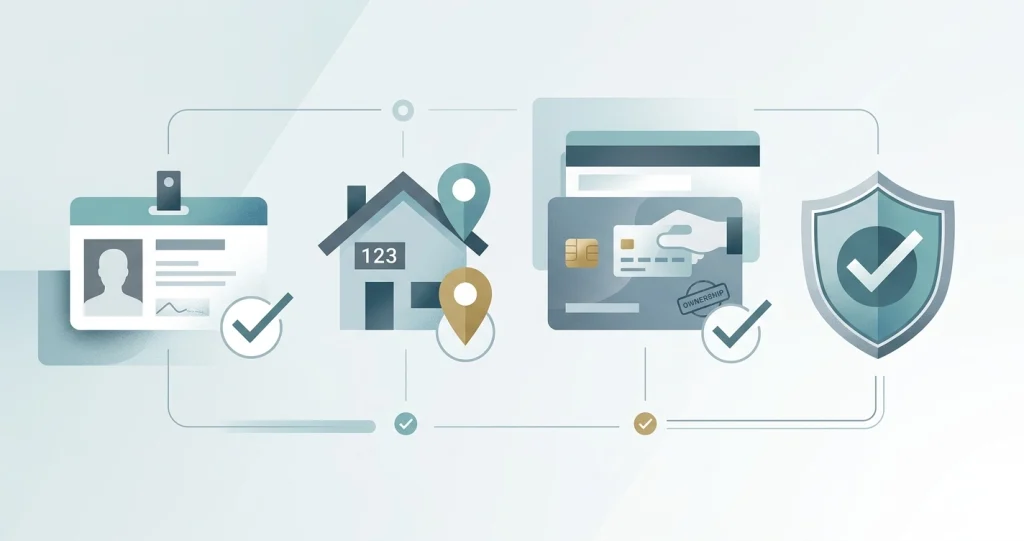
UK-regulated remote gambling requires identity verification before a customer is permitted to gamble, but there is no current official Playluck source confirming a brand-specific document list, verification threshold or completion time. The useful distinction is therefore between what UK rules clearly require and what would need to be checked inside a genuine current Playluck account.
Table of Contents
- What UK rules confirm about identity checks
- Documents may be requested, but there is no universal Playluck list
- Identity, address and payment ownership answer different questions
- Why source-of-funds questions can appear
- Financial vulnerability checks are not the same as document-heavy KYC
- Verification and withdrawals should not be artificially separated
- How long should Playluck KYC take?
- How to respond to a verification request safely
- Current Playluck status changes the risk of relying on old KYC articles
- How to prepare for Playluck verification without relying on outdated KYC lists
- Verification stages and responsible account checks
- Practical review points
- Information boundaries for readers
- Recommend
What UK rules confirm about identity checks
The UK Gambling Commission requires remote licensees to obtain and verify information that establishes a customer’s identity before that customer is allowed to gamble. Licence Condition 17.1.1 says the information must include, but is not limited to, name, address and date of birth.
The Commission’s August 2026 reminder reinforces the same principle: the verification process should give assurance that the customer exists and that those core identity details belong to the same person. This can be done electronically where reliable data is available, so a document upload is not automatically required for every customer.
For the earlier account-opening stage, see the Playluck registration guide. That guide explains why a live signup flow should not be reconstructed without current evidence.
For wider brand context, see the Playluck UK review.
Documents may be requested, but there is no universal Playluck list
The Gambling Commission’s consumer guidance gives examples of documents an operator can ask for, including passports, driving licences and household bills, while also making clear that the regulator does not prescribe one fixed set for every business. That is why publishing a Playluck-specific checklist without current brand evidence would overstate what is known.
A reasonable preparation strategy is category-based rather than document-based: be ready to prove who you are, where you live and, if relevant, that a payment method or source of funds is genuinely yours. The exact evidence should come from the operator’s current request and secure upload process.
Identity, address and payment ownership answer different questions
| Check | Question it answers | Possible evidence category |
|---|---|---|
| Identity | Is this person who they claim to be? | Trusted electronic data or identity document |
| Address | Does the stated residential address match the customer? | Independent database match or address evidence |
| Payment ownership | Does the funding method reasonably belong to the account holder? | Payment-account information where needed |
| Source of funds | Where did particular gambling funds come from when a legal or risk check requires this? | Financial information proportionate to the case |
These categories should not be read as a promise that every customer receives every check. Operators are expected to use proportionate systems and may resolve some questions electronically.
Why source-of-funds questions can appear
Gambling businesses have anti-money-laundering duties and customer-interaction responsibilities. Depending on the circumstances, an operator may need information that helps it understand whether gambling activity and funding make sense for the customer. The UKGC’s consumer guidance notes that bank statements can be used in anti-money-laundering checks and that operators may examine income patterns.
That does not support inventing a Playluck affordability threshold. A fixed trigger such as “verification begins at £X” would need current official evidence. Such questions can arise in legitimate checks, but a Playluck-specific trigger amount should not be assumed without current evidence.
Financial vulnerability checks are not the same as document-heavy KYC
The UKGC requires remote operators to carry out light-touch financial vulnerability checks using public information. In 2026 the regulator also described a staged approach to financial risk assessments for certain higher-spending customers, with the intention that the vast majority of customers will never need such an assessment and most assessments should be frictionless.
These systems overlap with customer protection but should not be confused with a universal demand for bank statements at signup. A customer can encounter identity verification, vulnerability screening and, in some cases, deeper financial or anti-money-laundering review for different reasons.
Verification and withdrawals should not be artificially separated
Licence Condition 17.1.1 says a withdrawal request must not trigger a demand for additional identity information if the operator could reasonably have requested that information earlier. The Commission’s 2026 reminder repeats this point because late verification can disrupt withdrawals and undermine trust.
There can still be situations where information is lawfully needed at withdrawal time because a new obligation or risk question has arisen. The difference is important: “we need this now for a current legal check” is not the same as postponing routine identity verification until the customer wants money back.
For transaction-specific questions, see the Playluck withdrawal guide. It avoids publishing unsupported current limits, processing times or fees.
How long should Playluck KYC take?
No current Playluck-specific processing time has been verified, so there is no defensible number to publish. The UKGC itself says it cannot provide a universal ID-check timescale because electronic verification may be immediate while document review can take longer.
A better way to assess a live case is to look for clear status messaging, a secure upload route, an explanation of what remains outstanding and a support path if the review stalls. A countdown copied from an old review is less useful than a current account message tied to your actual case.
How to respond to a verification request safely
- Verify the site first: do not upload identity documents to a mirror domain, unsolicited message or third-party file-sharing link.
- Read the request: identify which question the operator is trying to resolve instead of sending a larger bundle than necessary.
- Use the secure account channel: prefer the operator’s authenticated upload process over ordinary email where one is provided.
- Protect irrelevant data: follow the operator’s instructions and avoid exposing unrelated information unnecessarily.
- Keep records: note what was requested, when it was supplied and any confirmation received.
If the identity of the operator itself is uncertain, check the Playluck licence and trust page before sending sensitive information.
Current Playluck status changes the risk of relying on old KYC articles
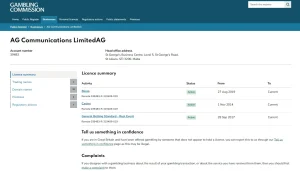
The UKGC public register currently marks www.playluck.com as inactive under AG Communications Limited. That makes old “how to verify Playluck” guides especially easy to misuse because archived images, document lists and support instructions may describe a historical customer journey rather than a current one.
The safest approach is to use historical material only for context and obtain any present document request from a verified current operator channel. A current request can then be checked against the UK principles above: identity should be established before gambling, requests should be proportionate, and routine verification should not be deliberately saved until withdrawal.
How to prepare for Playluck verification without relying on outdated KYC lists
Prepare accurate identity and address information, use payment methods that genuinely belong to you, and expect electronic verification to be attempted where appropriate. If more evidence is requested, respond to the specific question through a verified secure channel rather than guessing which documents an old Playluck article once listed.
Do not rely on a promised completion time or a generic source-of-funds threshold unless Playluck’s current official terms or support flow states it. For the surrounding journey, use the account setup guide, the withdrawal guide and the trust checks together rather than treating KYC as an isolated upload task.
Verification stages and responsible account checks
Identity verification in remote gambling serves several purposes. It helps operators confirm customer information, apply age restrictions and manage regulatory obligations. The exact documents requested can depend on the individual situation and the checks required by the operator.
For Playluck, no confirmed brand-specific verification checklist is available from current official information. As a result, general UK requirements should be separated from assumptions about a particular account system. A customer should rely on the instructions shown through a verified service rather than outdated descriptions.
Verification may also interact with other account processes, including payment ownership checks and requests for additional information. Clear communication about these steps is important because customers need to understand why information is requested and how account access is managed.
Practical review points
Additional evaluation should always start with confirmed information about the service itself. General industry practices can explain how a feature normally works, but they should not be presented as evidence that a specific Playluck function is currently active.
A careful review separates three areas: historical information, general UK gambling requirements and details that can only be confirmed through an active official platform. This structure makes it easier to understand what is known and what still requires verification.
Users looking at older casino brands often encounter descriptions that remain available after operational circumstances have changed. Checking the current status before relying on those details is therefore an important part of responsible research and decision-making.
Information boundaries for readers
Reliable information depends on keeping confirmed details separate from general explanations. A feature described by the wider gambling industry may explain a possible process, but it does not confirm that Playluck currently provides that feature.
This distinction is especially relevant for older brands, where historical pages can remain visible after changes to availability. Reviewing the current situation through trustworthy information helps avoid conclusions based only on archived descriptions.
Recommend

Playluck Games: Slots, Providers and Casino Range
Playluck UK Guide Historical multi-source evidence supports a Playluck catalogue built around slots and live...
Is Playluck Legit? UKGC Licence, Operator and Current Brand Status
Playluck UK Guide The strongest current evidence is mixed but not contradictory once operator and...

Playluck Bonus in the UK: Historical Offers and 2026 Wagering Rules
Playluck UK Guide There is no verified current Playluck welcome offer to quote for UK...

Playluck Payment Methods for UK Players
Playluck UK Guide Historical Playluck sources support GBP and a cashier that included cards, bank...

Playluck Mobile Casino: Browser Experience and App Status
Playluck UK Guide Historical sources consistently describe Playluck as available through a mobile-optimised website. That...

Playluck Registration for UK Players: Account Setup and Checks
Playluck UK Guide There is no verified live Playluck registration route for UK readers today....